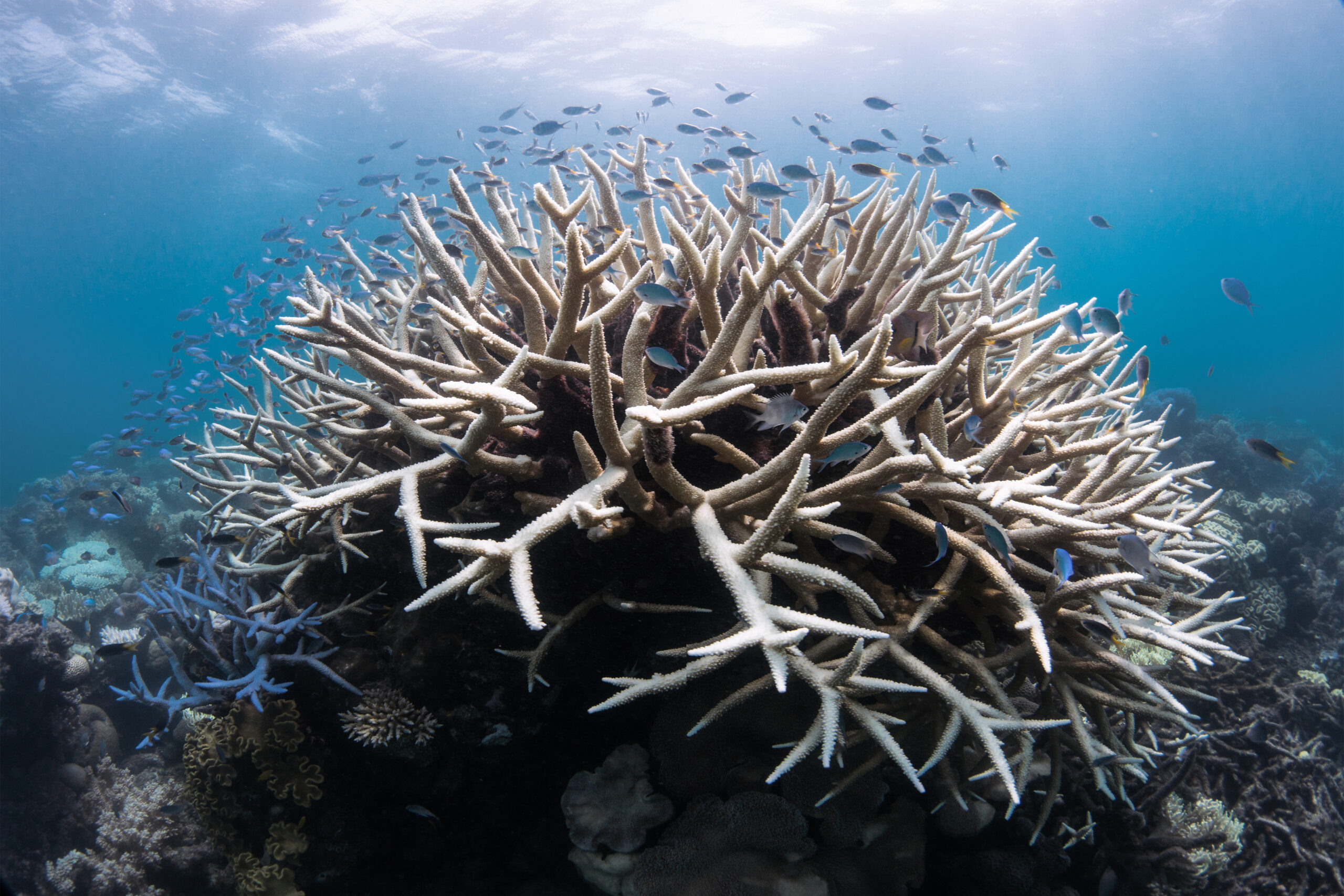
We are currently visiting a remote coral reef about 150 kilometers off the northern coast of New Caledonia called Cook Reef, where we’ve seen an unusually high abundance of top predatory fish. The large numbers of predatory fish are likely due to the remote nature of reefs, which are inaccessible to most fishers. One family of fish that we have seen in particularly high numbers have been the groupers. Groupers include a variety of genera and species. They are important fish in coral reef ecosystems around the world because of their role in controlling population sizes of other lower trophic level fishes. The word grouper is thought to come from the Portuguese word garoupa, meaning “fish,” which is believed to have originated from an indigenous language in South America.
At Cook Reef, we have seen many grouper species: the peacock grouper (Cephalopholis argus), masked grouper (Gracila albomarginata), honeycomb grouper (Epinephalus merra), Blacksaddled coral grouper (Plectropomus laevis), Leopard coral grouper (Plectropomus leopardus), and Malabar grouper (Ephinephelus malabaricus) to name but a few. We even had a sighting of the giant grouper (Epinephelus lanceolatus), which grow up to 230 centimeters (7 feet) and can weigh around 300 kilograms (650 pounds)!
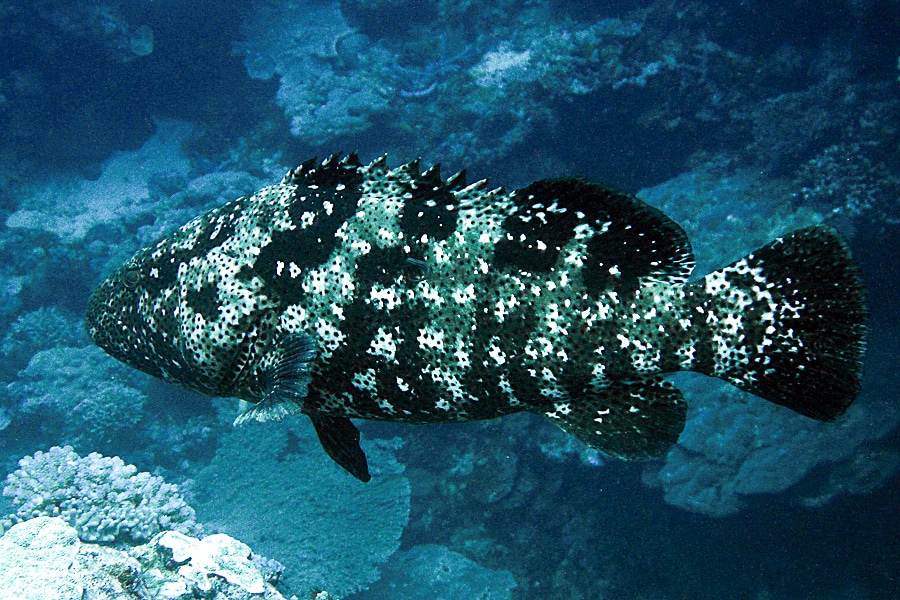
Malabar Grouper (Epinephelus malabaricus)
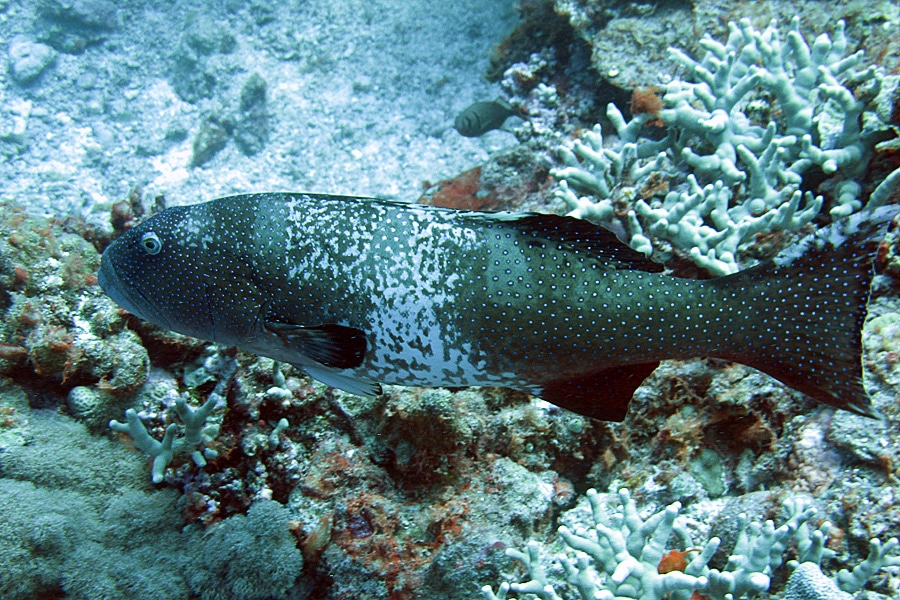
Blacksaddled coral grouper (Plectropomus laevis)
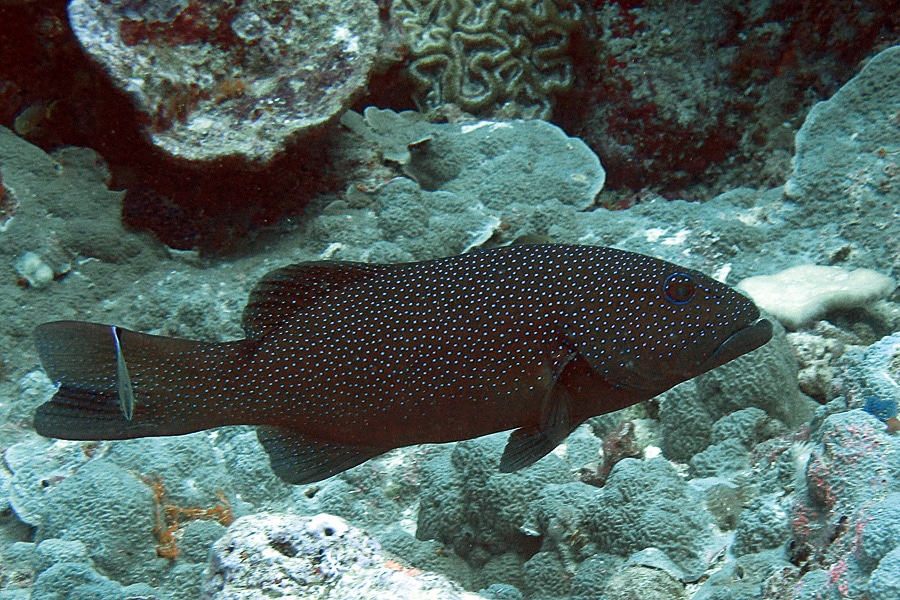
Leopard Coral Grouper (Plectropomus leopardus)
Overfishing of Groupers
Groupers are an important subsistence and commercial food fish. Their lean, white flesh, is highly sought after for the restaurant trade and a menu favorite. The life of a grouper is quite different from many other fish. Groupers are long lived, some species live up to 50 or 60 years, and may take ten years to become sexually mature. Some grouper species form dense aggregations to breed traveling from distant locations to a specific location at a predictable time to spawn. Many grouper species have the ability to change gender! Smaller fish tend to start out as female, but will switch to being a male at a certain size.
Because of their predictable spawning habits grouper populations are easily a target for overfishing, even when fishing pressure is seemingly low. Overfished populations take a long time to recover and build back to a sustainable level. This is because they take so long to reach maturity, and because overfishing removes the larger animals first. Such selective removal may upset the ratio of males to females in a population.
One thing we can do to ensure that fish populations in aquatic ecosystems around the word remain in balance is to purchase our fish wisely at markets or in restaurants. One tool that you can use to help you decide what might be a sustainable seafood choice is a sustainable seafood selection guide, such as that published by the Monterey Bay Aquarium (http://www.montereybayaquarium.org/cr/seafoodwatch.aspx). These guides provide you with information on which seafood items are best choices, which should be avoided, and what might be good alternatives. The guides are regularly updated based on the latest scientific findings and assessments of fish populations, and can either be printed online or sent to you in the mail. The best part is that they fold up small enough to fit into your wallet or purse. Bon appetite!
Photos: 1-3 Antoine Gilbert