We’ve been seeing quite a number of reef sharks in New Caledonia, particularly in the northern atolls. There are grey reef sharks (Carcharhinus amblyrhynchos) on almost every dive, as well as silvertip sharks (Carcharhinus albimarginatus) and whitetip reef sharks (Triaenodon obesus). On one dive, a few days ago at Cook Reef, we even saw an immature tiger shark (Galeocerdo cuvier)! Fishing pressure on shark species is likely low in the northern atolls which are remote, and protected within a national park. On our dives, we have also noted an abundance of reef fish, which likely help sustain the local shark population.
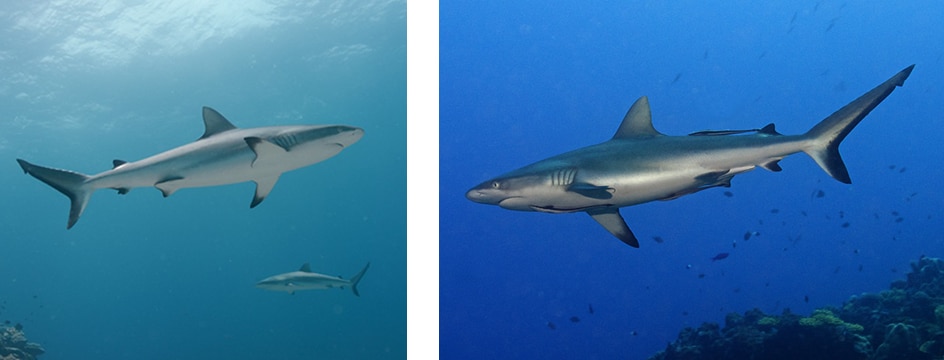
Grey Reef Sharks (Carcharhinus amblyrhynchos)
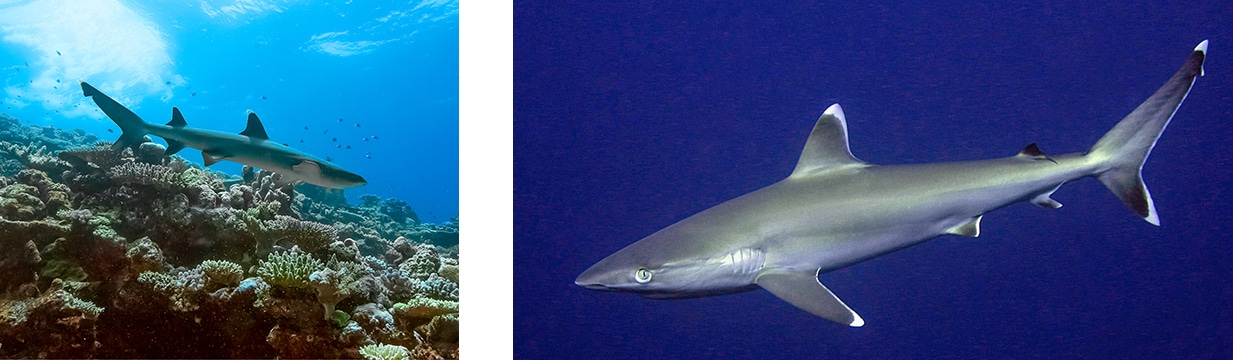
Whitetip (Triaenodon obesus) and Silvertip (Carcharhinus albimarginatus) Reef Sharks
Sharks are an ancient group of fishes, believed to have been roaming the seas for over 400 million years. A well-known family of carnivores, sharks have a fearsome reputation as killing machines. This reputation is fueled by sensational media coverage of the occasional shark attacks that occur and by dramatic portrayals by the film industry. In reality, shark attacks are uncommon. Worldwide, only a few people are killed by sharks, while the shark fishing industry hunts upward of 100 thousand of these remarkable animals each year.
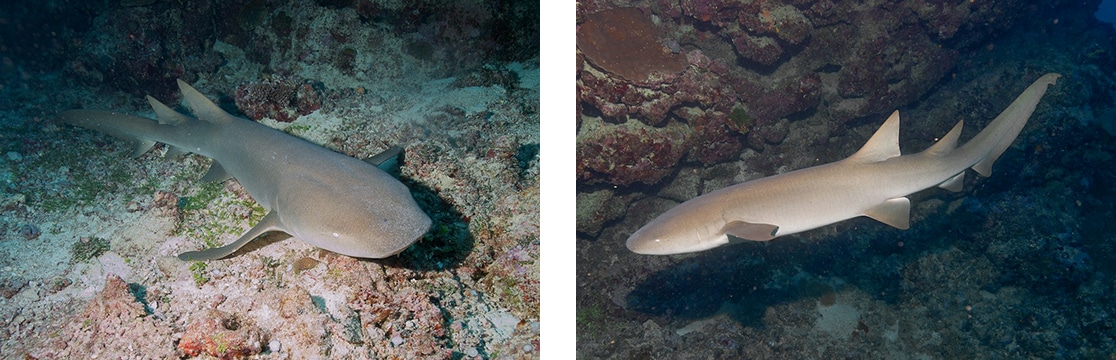
Nurse Sharks (Ginglymostoma cirratum)
Most divers who have been in the water with sharks have long since lost any irrational fear of these carnivores. Instead they hold a healthy respect for the role of sharks as predators and scavengers. Tiger sharks, such as the one seen at Cook Reef, are a species with a particularly fearsome reputation. Being scavengers tiger sharks will eat almost anything, and so are unlikely to swim away as other sharks often do. The individual that I saw was young, about 3 m long (adults grow up to 4.5 m) and still displaying its characteristic ‘tiger’ stripes, which fade with maturity. The shark cruised slowly along the wall where we were diving, passing between groups of divers between 15 and 25 m depth. It showed no signs of feeding or aggressive behaviour. The only screams elicited from the scientific divers were excited exclamations – for many, a first-time sighting!
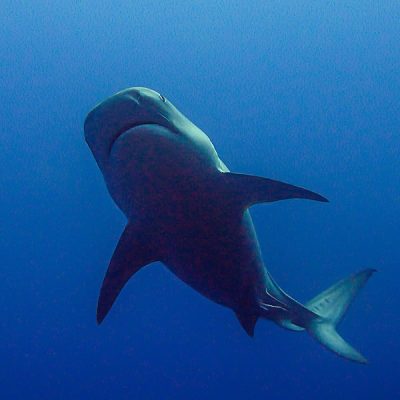
Tiger Shark (Galeocerdo cuvier)
Photos: 1,2,5,6 – Joao Monieiro; 3 – Serge Andrefouet; 4,7 – Antoine Gilbert