search-icon
Island Education

Written by Toni Saul

It is early morning as we make our way on circuitous dirt and pothole roads, dodging a menagerie of farm animals from the tiniest piglet to unbridled horses and cows. We petition friendly locals for fine-tuned directions to the seemingly hidden school structure within one of the many small, close-knit villages on this island kingdom.
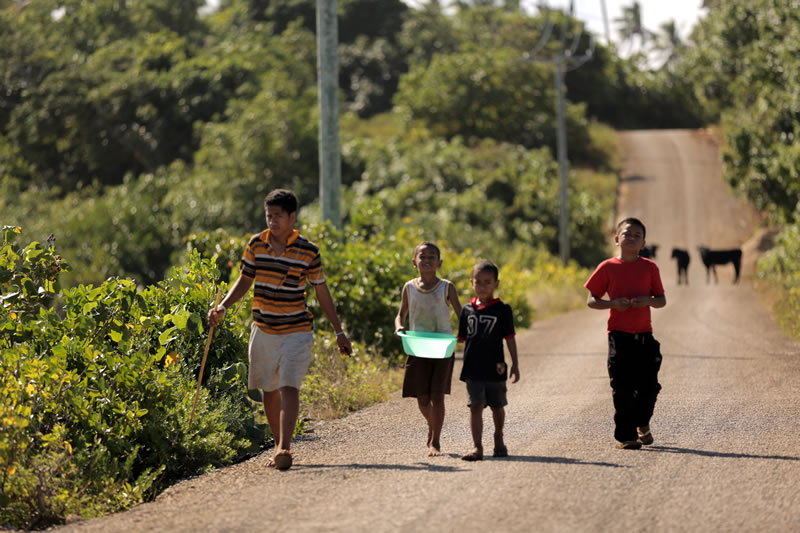
Children gave us directions to the Vava'u school.
There was always somebody helpful to ask for directions. Children certainly knew the way to the school.

Upon arrival, teachers direct their wide-eyed and curious students into a common classroom. The children kick off their sandals at the doorway and place themselves in close proximity, one to the other, on long wooden benches or the cement floor. Illustrations and simple vocabulary in Tongan and English embellish the walls. In more “affluent” schools, children don uniforms in school colors – boys in shorts or tupenus (traditional skirts) and girls in jumpers or skirts with bright ribbons in their meticulously braided hair.

These Vava'u school kids were eager to take part in the presentation.
These Vava’u school kids were eager to take part in the presentation.

In this makeshift auditorium, we tape a white sheet to the chalkboard and begin our lesson. What is a coral reef? Where are reefs located around the world? Why are they important? Why are they at risk? How can we protect them?
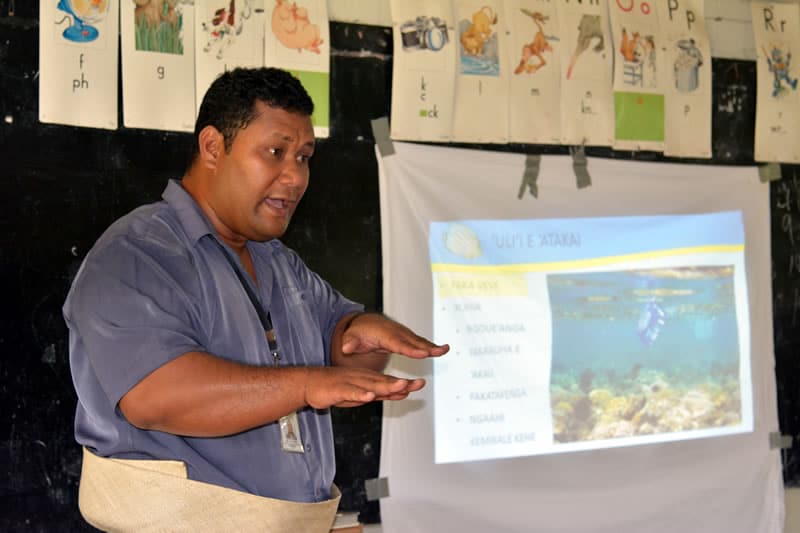
Apai Moala explains the intricacies of coral reefs to students.

Teachers and principals appreciate our visit. “I didn’t know how important coral reefs are until I heard this talk; we really need to take good care of our reefs,” comments one teacher; another responds, “Most parents are subsistence fishers. We hope that our students will pass this message on to their parents and community.”

The foundation's Education Director, Amy Heemsoth, talks students through a questionnaire.
The foundation’s Education Director, Amy Heemsoth, talks students through a questionnaire.

In the many schools participating in this pilot program, children’s responses were the same. They shouted with excitement when they saw photos of commonly enjoyed food sources such as feke (octopus) and toke (eel). They were surprised to learn that corals are animals and they were amazed by the footage of the undersea world literally steps from their door. It is precisely upon these steps that the Living Oceans Foundation hopes to build trust, knowledge and stewardship.
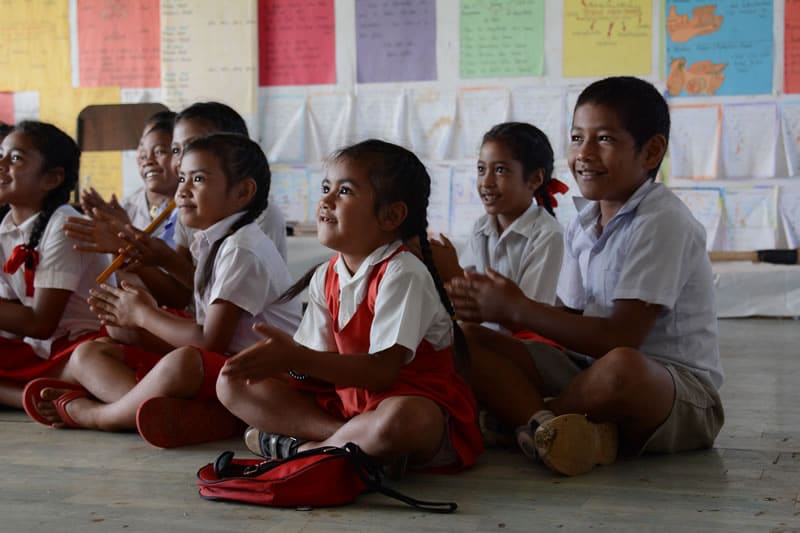
The younger children were eager to learn about coral reefs.

Photos by: 1- James Ball; 2-5 Amy Heemsoth
Related Posts

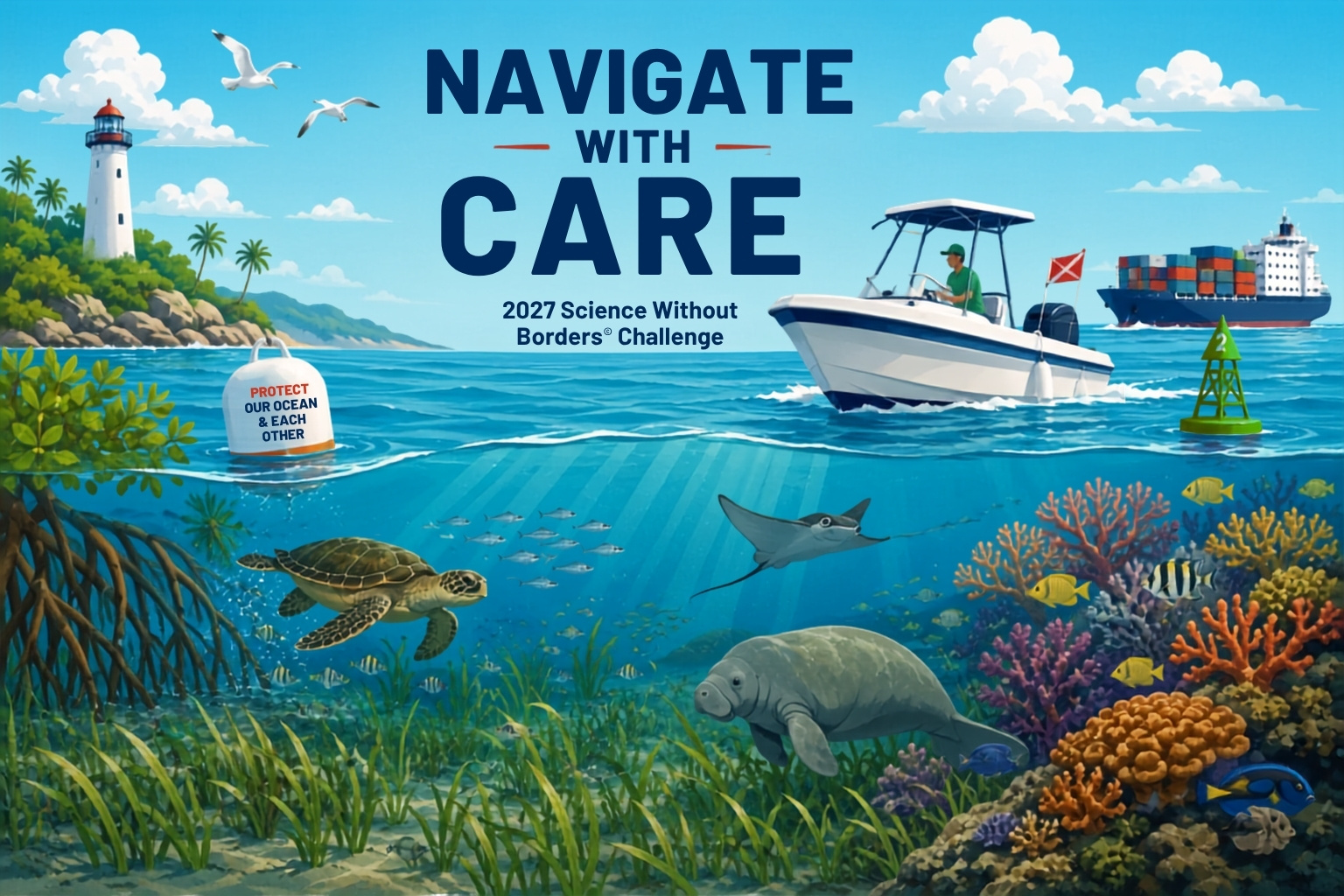
Announcing the 15th Annual Science Without Borders® Challenge: Navigate with Care

Every day, fishing boats, ferries, sailboats, kayaks, research vessels, cargo ships, whales, sea turtles, dolphins, seabirds, and countless other marine animals share the same waters. While people rely on the ocean for transportation, recreation, research, fishing, and exploration, it is also home to some of the most diverse and important ecosystems on Earth.

That simple but powerful idea is the inspiration behind the 15th Annual Science Without Borders® Challenge.

Read More

2025-2026 B.A.M. Student Voices

Throughout the Bahamas Awareness of Mangroves (B.A.M.) and Jamaica Awareness of Mangroves in Nature (J.A.M.I.N.) programs, we evaluate each phase of the mangrove education and restoration process to better understand how students are learning, growing, and connecting with their coastal environments.

Before the programs begin, students share what they already know about mangroves and how they feel about them. As the program progresses, we continue to gather feedback to see how their knowledge evolves from identifying mangrove species and understanding food webs to recognizing the role mangroves play in coastal protection and climate change mitigation.

But the surveys go beyond science content.

We also ask students…

Read More
Privacy Overview

This website uses cookies so that we can provide you with the best user experience possible. Cookie information is stored in your browser and performs functions such as recognising you when you return to our website and helping our team to understand which sections of the website you find most interesting and useful.  You can view our complete Privacy Policy here.

Strictly Necessary Cookies

Most of our cookies are used to improve website security and reduce spam. These cookies should be enabled at all times. They also enable us to save your preferences for cookie settings.

3rd Party Cookies

This website uses Google Analytics to collect anonymous information such as the number of visitors to the site, and the most popular pages. Keeping this cookie enabled helps us to improve our website.