search-icon
Hiding in Plain Sight

The Broadclub Cuttlefish (Sepia latimanus)—the second largest species of cuttlefish (to 50 cm)—is the most commonly seen species of cuttlefish on tropical reefs. Though it ranges from the Andaman Sea in the west to as far east as Fiji, this is the first time during the Global Reef Expedition that we’ve encountered them during our survey work. As this species is a master of camouflage it’s not surprising that they have remained elusive. When at rest they can assume mottled color patterns and even contract their skin to raise small tabs on their bodies to give it a rough texture.
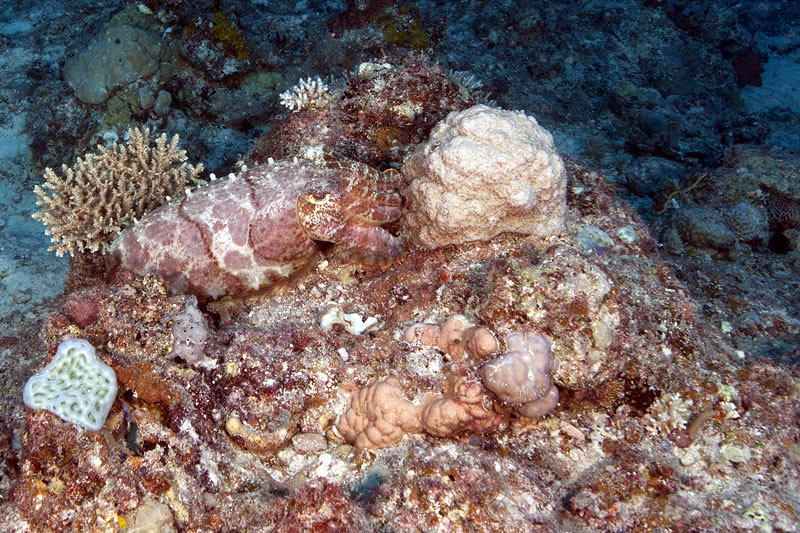
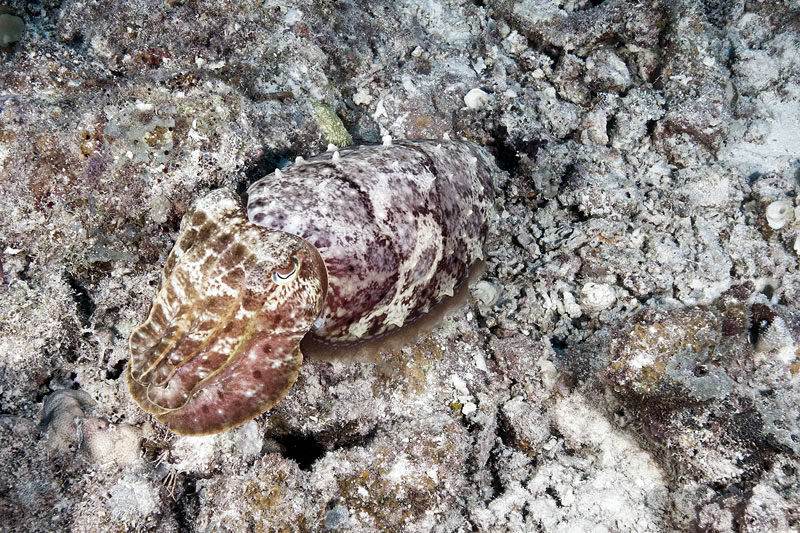
Broadclub Cuttlefish using camouflage to blend with its surroundings on a coral reef.Broadclub Cuttlefish using camouflage to blend with its surroundings on a coral reef.

The Broadclub Cuttlefish is a master of camouflage blending in with its surroundings.
(Click thru on images for greater detail.)

Cuttlefish and other cephalopods (octopus and squid) can consciously control their color and markings by contracting or relaxing special pigmented cells in their skin called chromatophores. In addition to using colors and patterns for camouflage, a cuttlefish can signal its mood when trying to attract a mate or defend one from a rival male during courtship. When hunting small crustaceans or fishes they can produce a rhythmic pulsation of darkened bars that travel the length of their bodies. This may serve to mesmerize their prey. The speed at which cuttlefish can change their coloration is remarkable and always makes encountering one on the reef a great treat.

Cuttlefish Abandoning Its CamouflageCuttlefish Abandoning Its Camouflage

Images of the same individual taken mere seconds apart as it abandons its camouflage and pales while heading out over a sandy area.
(Click thru on images for greater detail.)

Photos by Ken Marks.
Related Posts

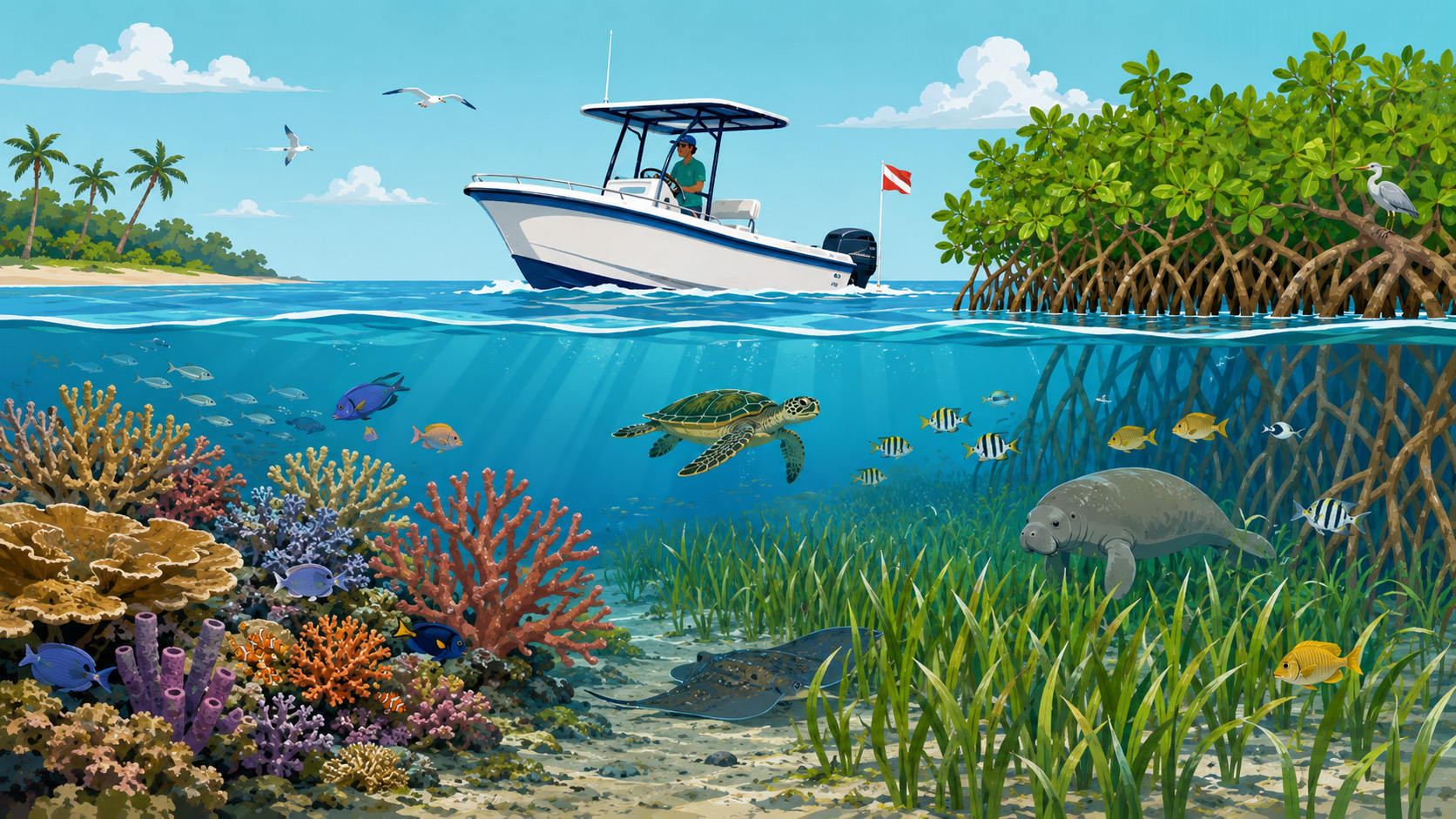
Friend or Foe? Part 1: Meet the Underwater Meadows

You’re swimming in the glistening, turquoise ocean, feeling totally at peace as the water cools you under the beaming sun. Hang on—what’s that? A slippery, slimy, twisty thing brushing your foot? Ew! Argh.

That’s seagrass! And believe it or not, we love it. You don’t need to be afraid. It’s actually one of the most important ecosystems in the ocean, and it definitely won’t hurt you. Let me tell you more…

Read More
Privacy Overview

This website uses cookies so that we can provide you with the best user experience possible. Cookie information is stored in your browser and performs functions such as recognising you when you return to our website and helping our team to understand which sections of the website you find most interesting and useful.  You can view our complete Privacy Policy here.

Strictly Necessary Cookies

Most of our cookies are used to improve website security and reduce spam. These cookies should be enabled at all times. They also enable us to save your preferences for cookie settings.

3rd Party Cookies

This website uses Google Analytics to collect anonymous information such as the number of visitors to the site, and the most popular pages. Keeping this cookie enabled helps us to improve our website.