search-icon
Spring Break?

Expedition Log: BIOT – Day 3

School is definitely in session here in Chagos! The fish team has had our hands full trying to identify, count, and size all the fish we’ve been seeing in our surveys. The reefs here are full of huge schools of fish of all sizes, shapes, and lifestyles. From the very small, decorative scalefin anthias (Pseudanthias squamipinnis), to typical schoolers like blue and yellow fusiliers (Caesio teres), and even large, predatory fish like red and black snappers (Lutjanus bohar and Macolor niger), it seems like nobody is too cool to school! We’ve seen schooling fish from every level of the food web, from various types of herbivorous surgeonfishes (family Acanthuridae), to goatfish and triggerfish (families Mullidae and Balistidae), who prefer invertebrates, and high level predators such as snappers (family Lutjandae). Sharks, although not schoolers, are also found in high abundance here, with silvertip (Carcharhinus albimarginatus), whitetip (Triaenodon obesus), and blacktail sharks (Carcharhinus wheeleri) becoming a common sight.

Why are there so many fish in Chagos? The main reason is the lack of fishing pressure. With only one inhabited island, and a ban on fishing across the archipelago, fish populations here remain intact. The Chagos Marine Protected Area is one of the largest no-take reserves in the world, covering 640,000 square km (397,667 square miles), or twice the size of the UK!
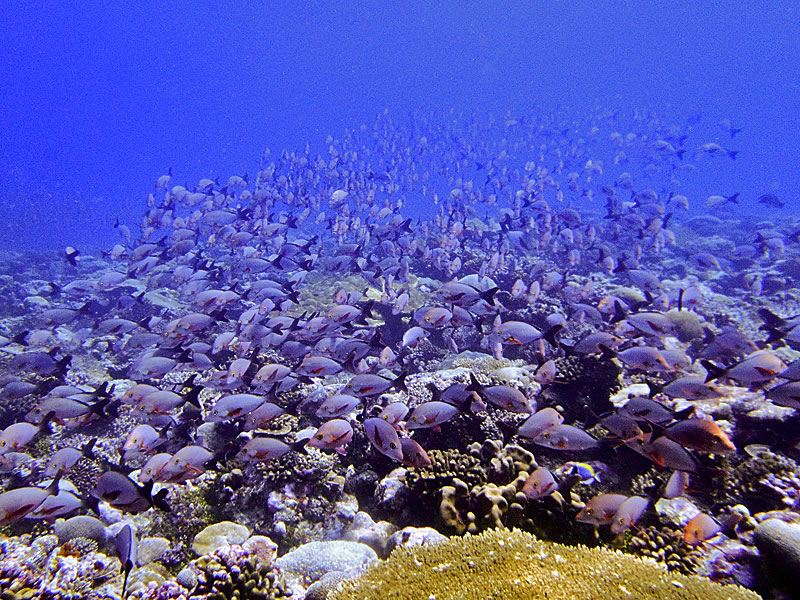
large school of humpback snapper (Lutjanus gibbus)
A large school of humpback snapper (Lutjanus gibbus) descends on the reef.
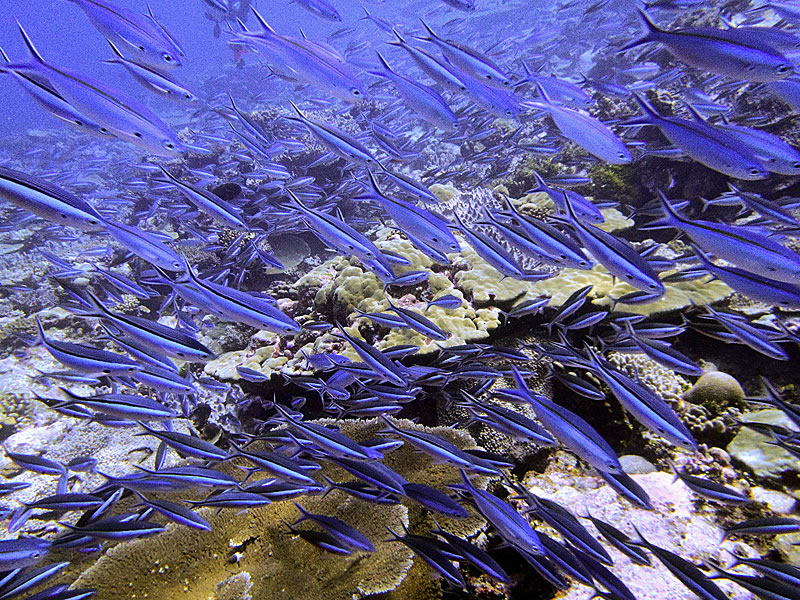
Schools of bluestreak fusiliers (Pterocaesio tile)
Schools of bluestreak fusiliers (Pterocaesio tile) can get so dense,
it gets hard to see much else!
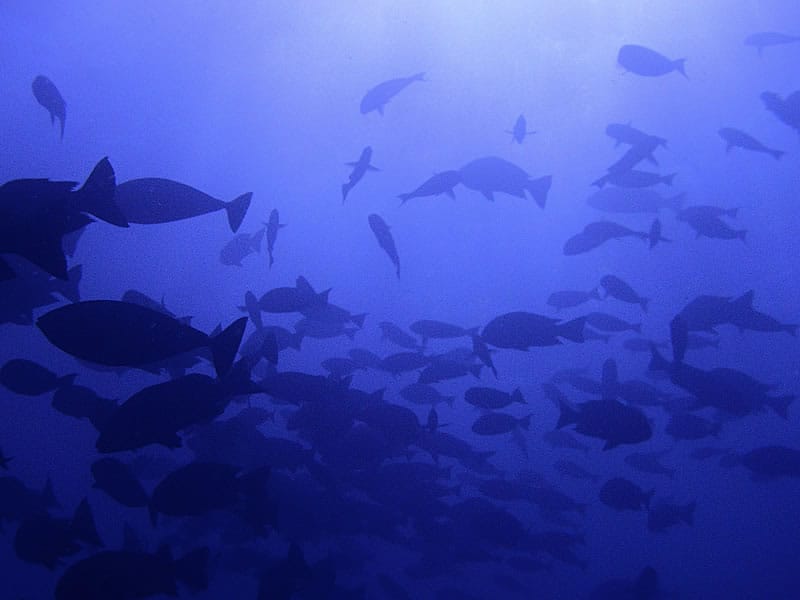
mixed school of unicornfish (Nasinae) and snappers (Lutjanidae)
A mixed school of unicornfish (Nasinae) and snappers (Lutjanidae).
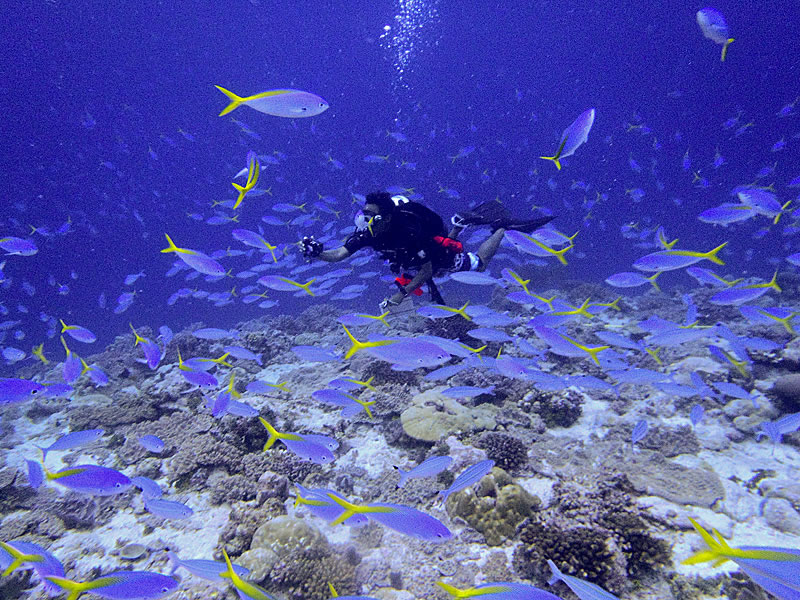
science diver surrounded by  school of blue and yellow fusiliers (Caesio teres)
Fish team leader Badi surrounded by a school of blue and yellow fusiliers (Caesio teres).
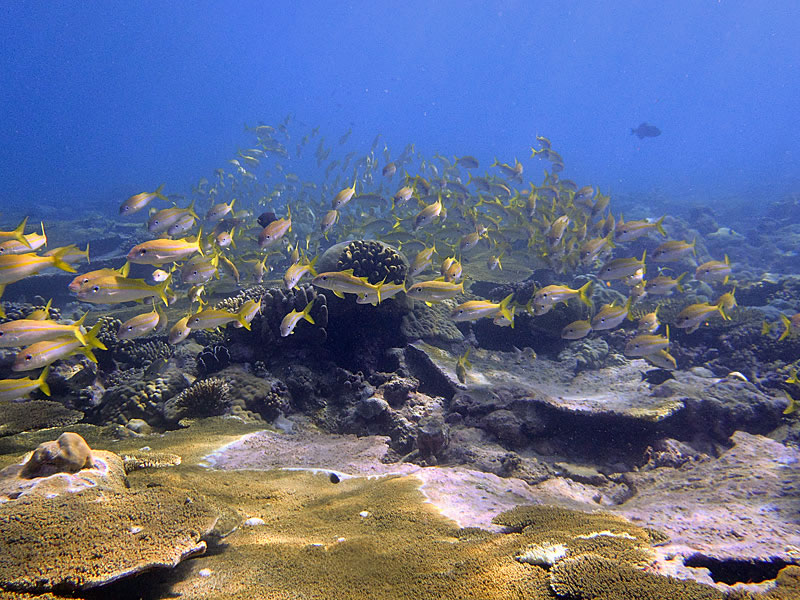
school of yellowfin goatfish (Mulloidichthys vanicolensis)
A school of yellowfin goatfish (Mulloidichthys vanicolensis).


Photos by Katie Lubarsky.


For more great images from Chagos, visit our BIOT Photo Album

BIOT Photo Album

Related Posts

After the Storm: Standing with Our J.A.M.I.N. Family in Jamaica

There are moments in this work that feel heartbreakingly familiar.

Two weeks after we completed our Jamaica Awareness of Mangroves in Nature (J.A.M.I.N.) programming, Hurricane Melissa made landfall. A powerful Category 5 hurricane, Melissa is now tied with Hurricane Allen in 1980 for the strongest winds ever recorded in an Atlantic storm. Like Hurricane Dorian, which devastated The Bahamas in 2019, Melissa will be remembered as one of the strongest hurricanes on record in the region.

For 11 years, the University of the West Indies Discovery Bay Marine Laboratory and William Knibb Memorial High School have been more than program partners. They have welcomed us into their classrooms and labs, shared meals and laughter, and committed themselves to educating their students about mangroves and coastal resilience. These colleagues and students are not distant collaborators. They are family.

And they were hit hard…

Read More

B.A.M. Turns 10: A Year of Milestones, Resilience, and Growth

The 2025–2026 academic year was one of those defining years for our Bahamas Awareness of Mangroves (B.A.M.) and Jamaica Awareness of Mangroves in Nature (J.A.M.I.N.) programs. It was a year marked by celebration, challenge, growth, and powerful full-circle moments, and a reminder of why mangrove education matters.

In The Bahamas, B.A.M. reached a major milestone: ten years of partnership and environmental education in Abaco. Since 2015, in collaboration with Friends of the Environment, we have worked alongside Patrick J. Bethel High School and Forest Heights Academy to bring hands-on mangrove science into classrooms and into the field. This year, we were proud to expand the program to S.C. Bootle High School, increasing access for students who live…

Read More
Privacy Overview

This website uses cookies so that we can provide you with the best user experience possible. Cookie information is stored in your browser and performs functions such as recognising you when you return to our website and helping our team to understand which sections of the website you find most interesting and useful.  You can view our complete Privacy Policy here.

Strictly Necessary Cookies

Most of our cookies are used to improve website security and reduce spam. These cookies should be enabled at all times. They also enable us to save your preferences for cookie settings.

3rd Party Cookies

This website uses Google Analytics to collect anonymous information such as the number of visitors to the site, and the most popular pages. Keeping this cookie enabled helps us to improve our website.