
search-icon
Mangrove Scavenger Hunt!

Expedition Log: Caribbean Mangroves – Day 3

My favorite part of our mangrove education program is taking students into a mangrove forest. Their faces light up with excitement when we’re in the field. This experience is one of the most important parts of the program. Students get to see and touch the mangroves – some for the first time ever. For others the field trip imparts a deeper understanding of something they walk by every day. It’s one thing to show students a photo of a mangrove, but it’s an entirely different experience to take them out to explore this ecosystem themselves.

On the morning of our first field trip, I hop into the van with FRIENDS Education Specialist Cassandra Abraham and we head to Camp Abaco, a mangrove site FRIENDS has helped restore. The students we are working with in The Bahamas already know quite a bit about mangroves and I was confident they would be able to identify the different species of mangroves on their own. Mangrove educational standards are included in the science curriculum in The Bahamas. Usually, I give a guided tour through the mangroves, but this time we decided to have a mangrove scavenger hunt!

Caribbean Mangrove Scavenger Hunt
Students from Abaco Central High School on the mangrove scavenger hunt.

When all of the students got off the bus, Cassandra explained the rules of the Caribbean mangrove scavenger hunt to the students. “You need to collect a red, black, and white mangrove leaf, as well as three red mangrove propagules.”

I pipe in saying, “Make sure that you pick healthy and large propagules because you will be raising these seedlings in your classroom for the next eight months.”

I can feel the students energy rising as they lurch into action. Some students stay on land, but the majority head out into the water. Immediately, I hear shrieking and laughing. I don’t even have to look to know that the students are sinking in the mangrove mud. I know because I almost lost a shoe in the mud yesterday.

A student happily drudging through the mangroves
A student happily drudging through the mangroves.

They hold on to each other for balance and one by one they maneuver through the mud looking for their treasure. Some even find other creatures in the water.

A student picks up a crab climbing in the roots of the mangroves
A student picks up a crab climbing in the roots of the mangroves.

After a few minutes, I’m bombarded with questions from students. They ask, “Are these mangrove propagules healthy?” and “Are these propagules large enough?”

Students from Forest Heights Academy proudly show their red mangrove propagules.

Once we have given the students enough time, we reign them all in and we have a mini review session on the beach. We go over how to identify all of the mangrove species in Abaco.

KSLOF Director of Education, Amy Heemsoth teaching students about the different type of mangrove propagules.
Here I am teaching students about the different types of mangrove propagules.

Students from Forest Heights Academy taste mangrove leaves.
Students tasting mangrove leaves.

The students remember how to identify mangrove leaves with lyrics I learned in college:

  • Red, red pointy head (red mangrove leaves are pointed)
  • Black, black salty back (black mangroves get rid of salt by secreting it through their leaves.)
  • White, white sweet delight (white mangrove leaves have two nodules that secrete sugar)

As they chanted the lyrics together, I challenged them to use them to create their own song. I’m hoping to hear them when I return to The Bahamas for the next phase of the Bahamas Awareness of Mangroves (B.A.M.) Program.

Students from Forest Heights Academy

Students from Abaco Central High School


Photos: Amy Heemsoth
Related Posts

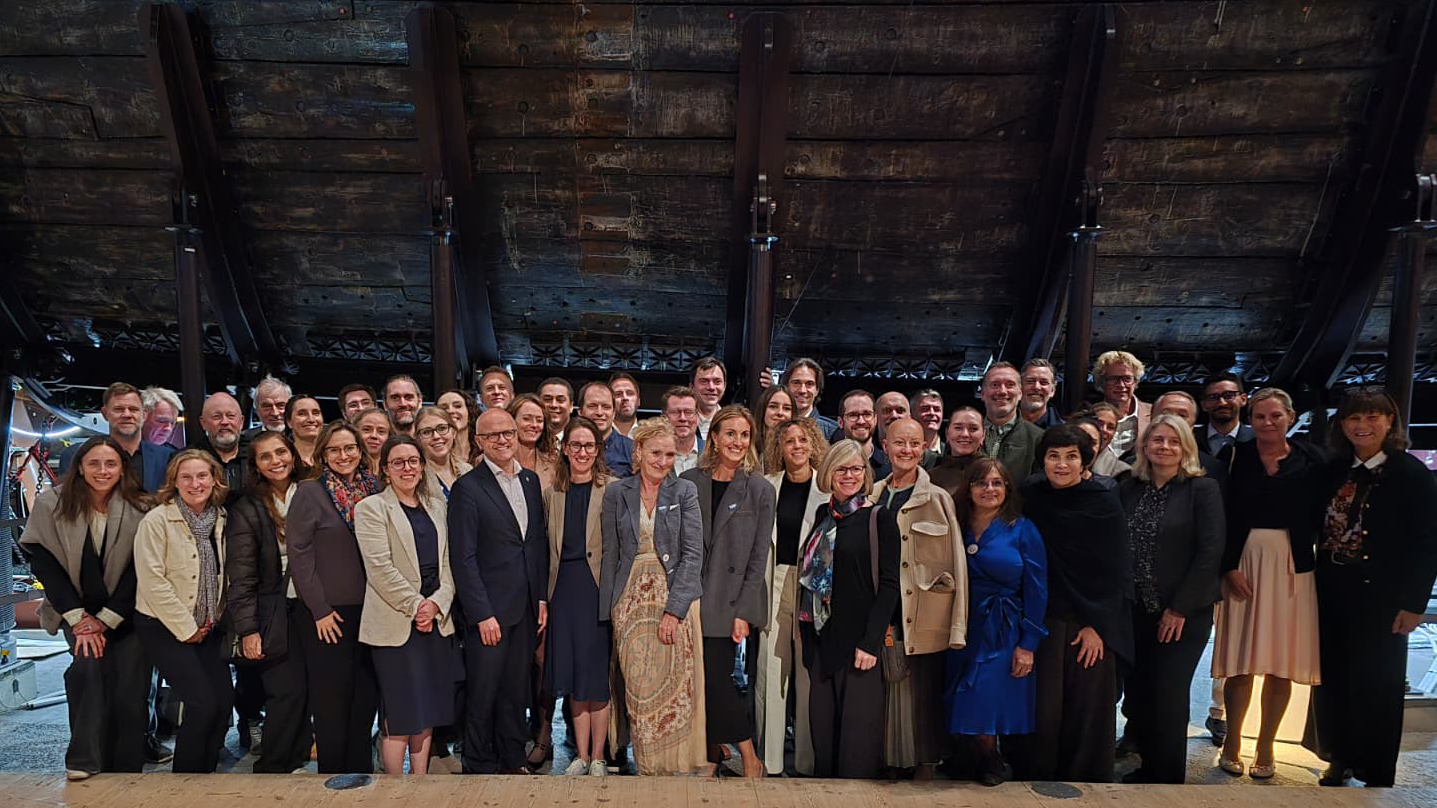
From Dialogue to Action: Ocean Foundations Gather in Stockholm

What can philanthropy accomplish when foundations working across ocean science, conservation, and sustainable development come together around a shared purpose?

That question was at the heart of the 6th UN Ocean Decade Foundations Dialogue, held September 7–9 in Stockholm, Sweden. The Khaled bin Sultan Living Oceans Foundation joined philanthropic organizations from around the world for three days of discussion, collaboration, and planning focused on accelerating progress during the second half of the UN Decade of Ocean Science for Sustainable Development.

Facilitated by UNESCO’s Intergovernmental Oceanographic Commission (IOC), the UN Ocean Decade Foundations Dialogue is a growing network of more than 30 philanthropic organizations committed to advancing ocean science, collaboration, and action. Since its creation within the framework of the Ocean Decade, the Dialogue has provided foundations with a space to exchange ideas, develop partnerships, and explore how philanthropy can help advance a healthy and resilient ocean.

Hosted by the Voice of the Ocean Foundation (VOTO), this year’s gathering began with From Depth to Action, an Opening Forum that brought nearly 100 leaders from the Swedish and international ocean community together at…

Read More

Meet IFAN: Helping Bring Navigate with Care to the Next Generation

If you’ve ever seen a lighthouse flashing from the shore or a brightly colored buoy bobbing in the water, you’ve seen Aids to Navigation at work.

Aids to Navigation, often called AtoNs, help mariners navigate safely. They can mark channels, warn of hazards, help vessels determine their position, and provide other information people need to make safe decisions on the water. Around the world, these systems help guide everything from small recreational boats to large commercial or container ships. 

But safe navigation isn’t only about protecting vessels and the people aboard them. The choices mariners make can also affect the animals and ecosystems beneath and around them.

That connection between maritime safety and ocean conservation is at the heart of this year’s Science Without Borders® Challenge—and of our partnership with this year’s theme sponsor, the International Foundation for Aids to Navigation (IFAN).

Read More
Privacy Overview

This website uses cookies so that we can provide you with the best user experience possible. Cookie information is stored in your browser and performs functions such as recognising you when you return to our website and helping our team to understand which sections of the website you find most interesting and useful.  You can view our complete Privacy Policy here.

Strictly Necessary Cookies

Most of our cookies are used to improve website security and reduce spam. These cookies should be enabled at all times. They also enable us to save your preferences for cookie settings.

3rd Party Cookies

This website uses Google Analytics to collect anonymous information such as the number of visitors to the site, and the most popular pages. Keeping this cookie enabled helps us to improve our website.