
search-icon
Findings from J.A.M.I.N. Mangrove Disease Research

By Ryann Rossi

Since I started researching mangrove disease in The Bahamas, I have become really interested in looking at other Caribbean nations to determine if they too have disease present.  When I first started talking to Amy Heemsoth, Education Director at the Khaled bin Sultan Living Oceans Foundation about partnering to integrate my research into their Mangrove Education and Restoration Programs, I was really excited to continue my research not only in The Bahamas, but also in Jamaica, where no one has studied mangrove disease.

Thanks to the hard work of Amy and the J.A.M.I.N. participants from William Knibb High School, I was able to receive fungal cultures that they had isolated in Jamaica. This was no easy feat, as we had to obtain special permits for shipping fungal cultures between countries and ensure that the cultures were not contaminated on their journey. Thankfully the cultures arrived at my lab in North Carolina State University on time and with little contamination.J.A.M.I.N. Mangrove Disease results 1

Fungal cultures isolated by students in Jamaica.

I was very excited when the cultures arrived as they were my first set of samples from Jamaica. Upon first glance, I thought that some of the cultures appeared similar to cultures from The Bahamas. However, in order to confirm whether any of the cultures from Jamaica were the same as those I have found in The Bahamas, I needed to keep the cultures growing for a couple of weeks. I grew replicates of each culture so that I could investigate the morphological characters and use pieces of the fungi for DNA extraction and sequencing.


J.A.M.I.N. Mangrove Disease results 2

J.A.M.I.N. Mangrove Disease results 3

   These images depict the product of DNA sequencing: a string of nucleotides (ACGT). I use the string of nucleotides and search online to determine the identity of the sample. This sequence was from one of the Jamaican samples and was identified as a species of Cytospora fungi.

Only one culture from Jamaica was similar to the fungus Pestalotiopsis that I have been studying in The Bahamas. The other cultures were different fungal species that are generally common and cause no harm. Using DNA sequencing, I was able to confirm that one culture from Jamaica was the same species that I found in The Bahamas. While interesting, this finding should be taken lightly because there were so few samples collected. In order to be certain that the same pathogen is or is not present in Jamaica would require a great deal more sampling of mangroves across the island.   
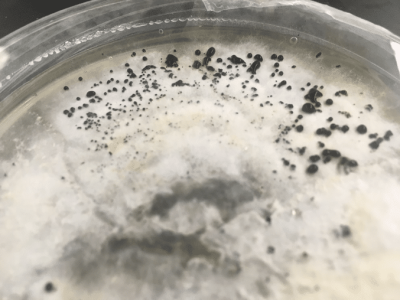
J.A.M.I.N. Mangrove Disease results 4

A culture from Jamaica with features similar to Pestalotiopsis, the fungus Ryann has been studying in The Bahamas.

Ideally, I would like to continue to sample in Jamaica with the help of students across the island to improve our understanding of mangrove diseases. Hopefully more students from Jamaica will be able to assist in continuing this research in the coming year!
Related Posts

After the Storm: Standing with Our J.A.M.I.N. Family in Jamaica

There are moments in this work that feel heartbreakingly familiar.

Two weeks after we completed our Jamaica Awareness of Mangroves in Nature (J.A.M.I.N.) programming, Hurricane Melissa made landfall. A powerful Category 5 hurricane, Melissa is now tied with Hurricane Allen in 1980 for the strongest winds ever recorded in an Atlantic storm. Like Hurricane Dorian, which devastated The Bahamas in 2019, Melissa will be remembered as one of the strongest hurricanes on record in the region.

For 11 years, the University of the West Indies Discovery Bay Marine Laboratory and William Knibb Memorial High School have been more than program partners. They have welcomed us into their classrooms and labs, shared meals and laughter, and committed themselves to educating their students about mangroves and coastal resilience. These colleagues and students are not distant collaborators. They are family.

And they were hit hard…

Read More

B.A.M. Turns 10: A Year of Milestones, Resilience, and Growth

The 2025–2026 academic year was one of those defining years for our Bahamas Awareness of Mangroves (B.A.M.) and Jamaica Awareness of Mangroves in Nature (J.A.M.I.N.) programs. It was a year marked by celebration, challenge, growth, and powerful full-circle moments, and a reminder of why mangrove education matters.

In The Bahamas, B.A.M. reached a major milestone: ten years of partnership and environmental education in Abaco. Since 2015, in collaboration with Friends of the Environment, we have worked alongside Patrick J. Bethel High School and Forest Heights Academy to bring hands-on mangrove science into classrooms and into the field. This year, we were proud to expand the program to S.C. Bootle High School, increasing access for students who live…

Read More
Privacy Overview

This website uses cookies so that we can provide you with the best user experience possible. Cookie information is stored in your browser and performs functions such as recognising you when you return to our website and helping our team to understand which sections of the website you find most interesting and useful.  You can view our complete Privacy Policy here.

Strictly Necessary Cookies

Most of our cookies are used to improve website security and reduce spam. These cookies should be enabled at all times. They also enable us to save your preferences for cookie settings.

3rd Party Cookies

This website uses Google Analytics to collect anonymous information such as the number of visitors to the site, and the most popular pages. Keeping this cookie enabled helps us to improve our website.