search-icon
Making the Grade: How we grade coral reefs
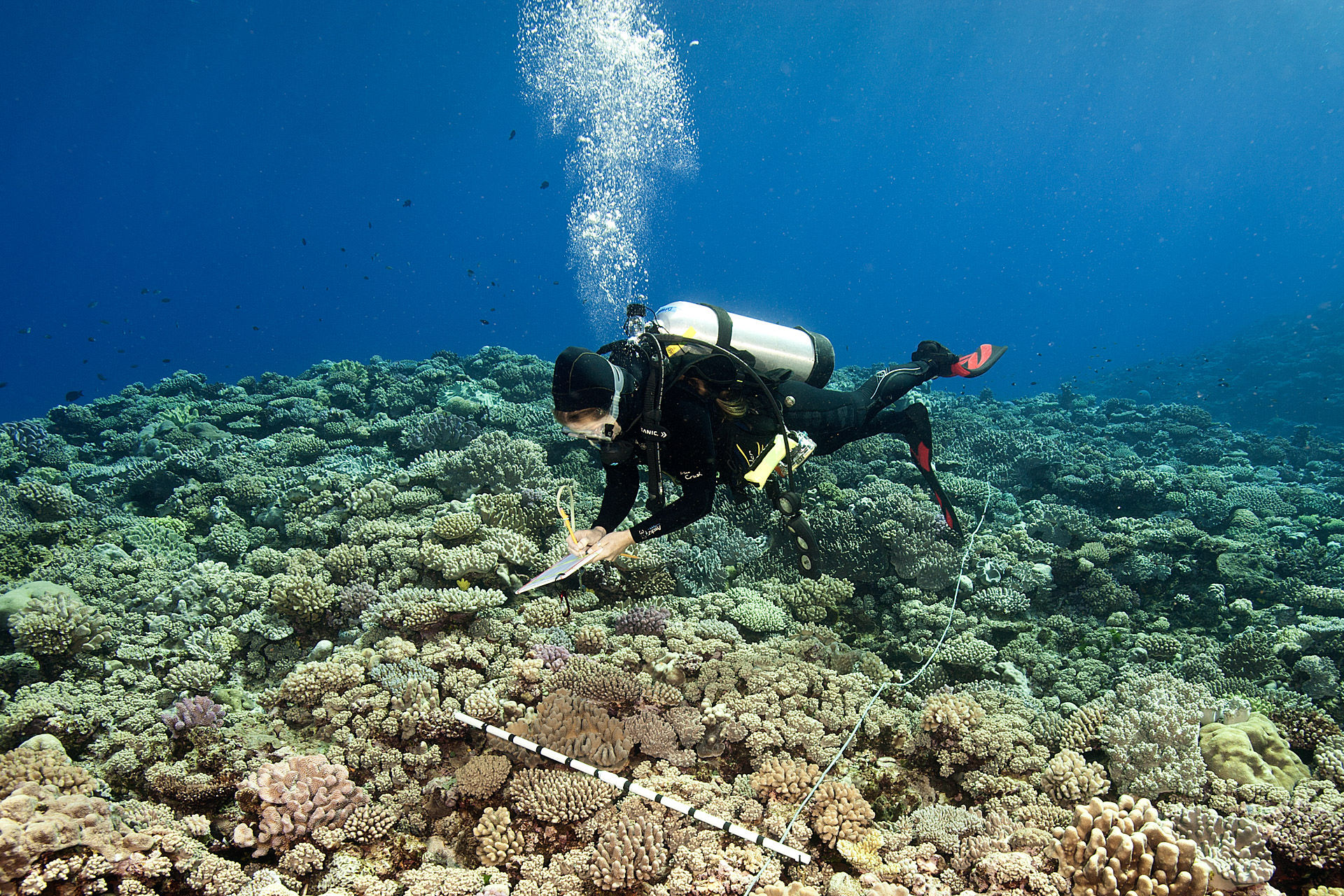
A scientist on the GRE conducts a benthic survey
A scientist on the Global Reef Expedition conducts a benthic survey of a healthy coral reef in Tonga. Photo by Ken Marks.

The Khaled bin Sultan Living Oceans Foundation recently published our findings on the health and resilience of the coral reefs in the Kingdom of Tonga. The report includes a unique grading scale we developed to indicate the relative health and resilience of the reef. For each survey site we visited in Tonga, we assessed the benthic community and classified the reef as being in “good,” moderate,” or “poor” condition.

This assessment was based on the overall live coral cover, algae, and invertebrate composition of the reef. These parameters are critical in understanding the complex interaction between the types of algae, total coral cover, and invertebrate composition and has been linked to the overall health of a reef system.

For example, crustose coralline algae (CCA) (also known as ‘live rock’) is the optimal smooth and clean surface that coral recruits can successfully settle. But too much fleshy macroalgae can take up prime real estate for CCA and makes it incredibly difficult for baby corals to settle. Having a healthy assemblage of coral and algae is also directly linked to supporting a healthy fish community. Higher rugosity, or more variable structure, due to a diverse coral community, provides a suitable habitat for fish through better shelter and food availability to support the fish community.

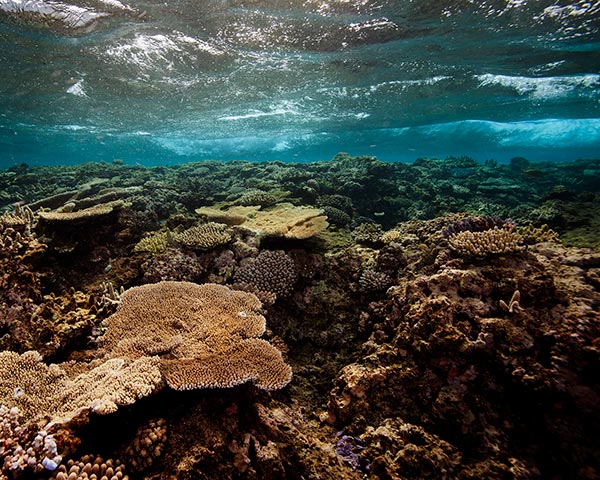
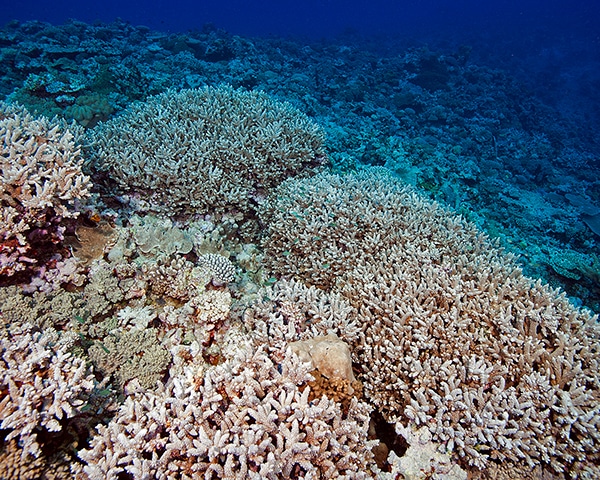
To create the reef health grading scale, we established a protocol for classifying the health of the reef into three categories, using existing scientific literature as a reference. Areas with high coral cover (>40%), low cover of macroalgae and soft coral, and high percentages of CCA are in “good” condition. Reefs with “moderate” reef conditions have live coral cover between 20–39%, with moderate to low macroalgae and soft coral cover, and moderate to high CCA. Reefs that were classified as being in “poor” condition have less than 20% overall live coral cover with moderate to high macroalgae and soft corals, and low CCA.
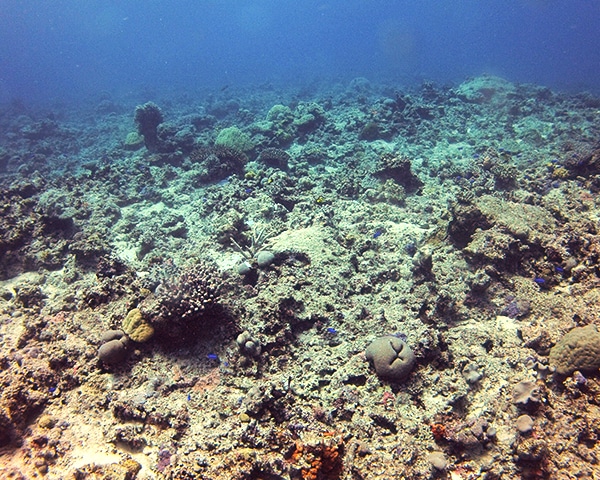
A poor reef on the reef health grading scale
“Poor”
A good reef on the reef health grading scale
“Good”
A moderate reef on the reef health grading scale
“Moderate”

We used a combination of quantitative methods to assess benthic reefs located in the Kingdom of Tonga. This standardized collection methodology provided us with robust data and important metrics that we used to grade reef sites. On the Global Reef Expedition mission to Tonga, scientists surveyed a total of 58 dive sites, specifically assessing the algae, coral, invertebrate, and total bare substrate at each site.
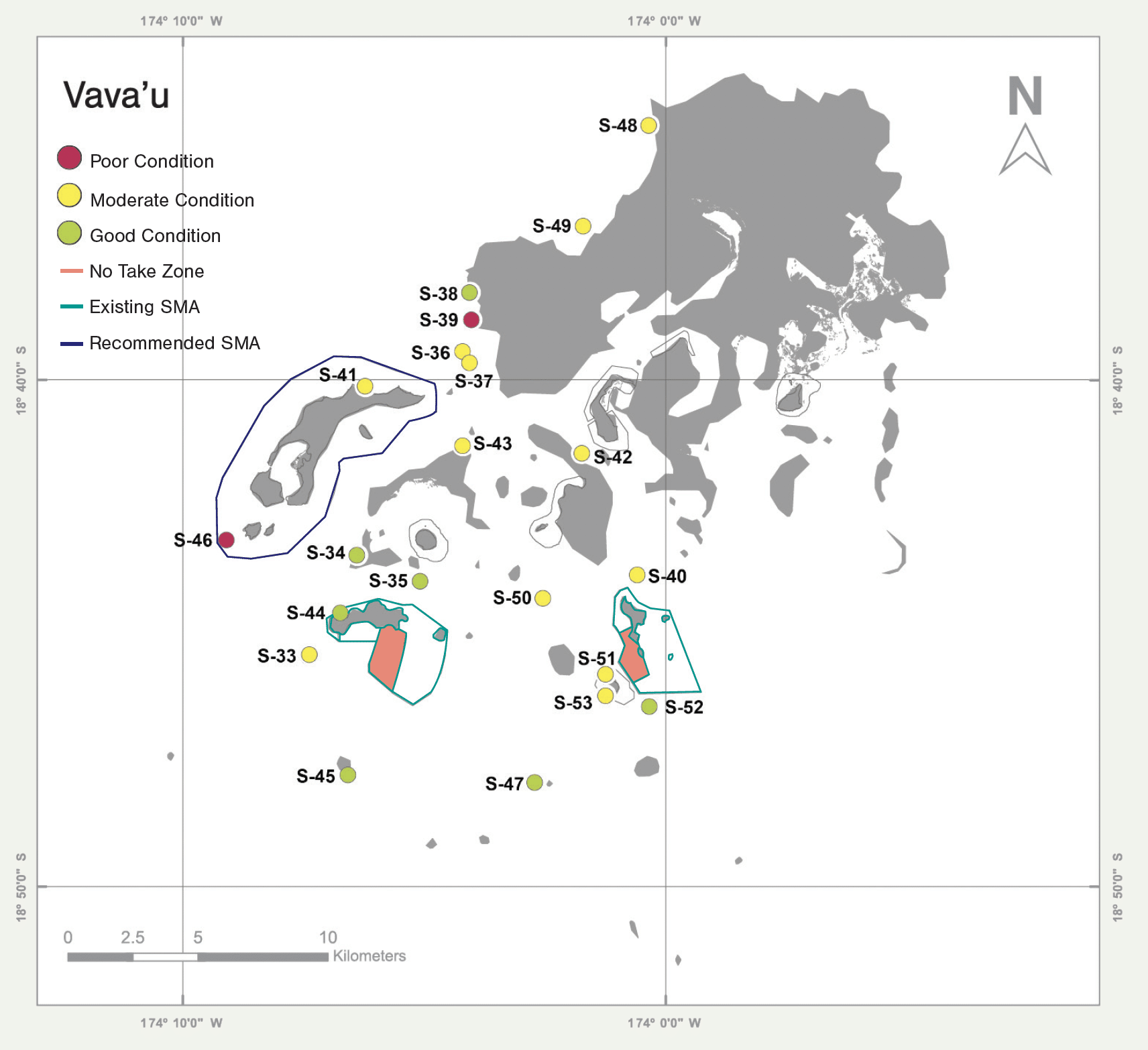
Coral reef health grades in Tonga
Dive sites around the island of Vava’u in Tonga. Green indicates a reef with “good” reef health, yellow has “moderate” reef health, and red indicates sites with “poor” reef health.

We found varying benthic coral reef community health among the three regions we surveyed in Tonga: Ha’apai, Vava’u, and around the island of Niuatoputapu. Most reefs were in “moderate” reef health, but the health of the reef varied greatly from site to site. This means there is moderate live coral cover (on average about 31%) across all sites visited. We attribute these findings as a byproduct of poor reef fish and invertebrate communities, as well as anthropogenic stressors such as fishing pressure and possibly nutrient runoff.

This type of grading scale analysis can help people who are working to protect and conserve the reef by providing them with an initial baseline assessment of the current state of the reef. It can help the people of Tonga identify which reefs need to be managed and protected and help them prioritize where to focus their conservation efforts. Reporting this type of information can also help track the progress of coral health over time and is a straightforward means of communicating the success of management efforts to the public.


Learn more about the reef health grading scale
Global Reef Expedition: Kingdom of Tonga Final ReportFor more detailed information on how we graded coral reefs in Tonga, and to see a full list of reef sites and their grades, please read our latest publication, the Global Reef Expedition: Kingdom of Tonga Final Report.


Related Posts

From Dialogue to Action: Ocean Foundations Gather in Stockholm

What can philanthropy accomplish when foundations working across ocean science, conservation, and sustainable development come together around a shared purpose?

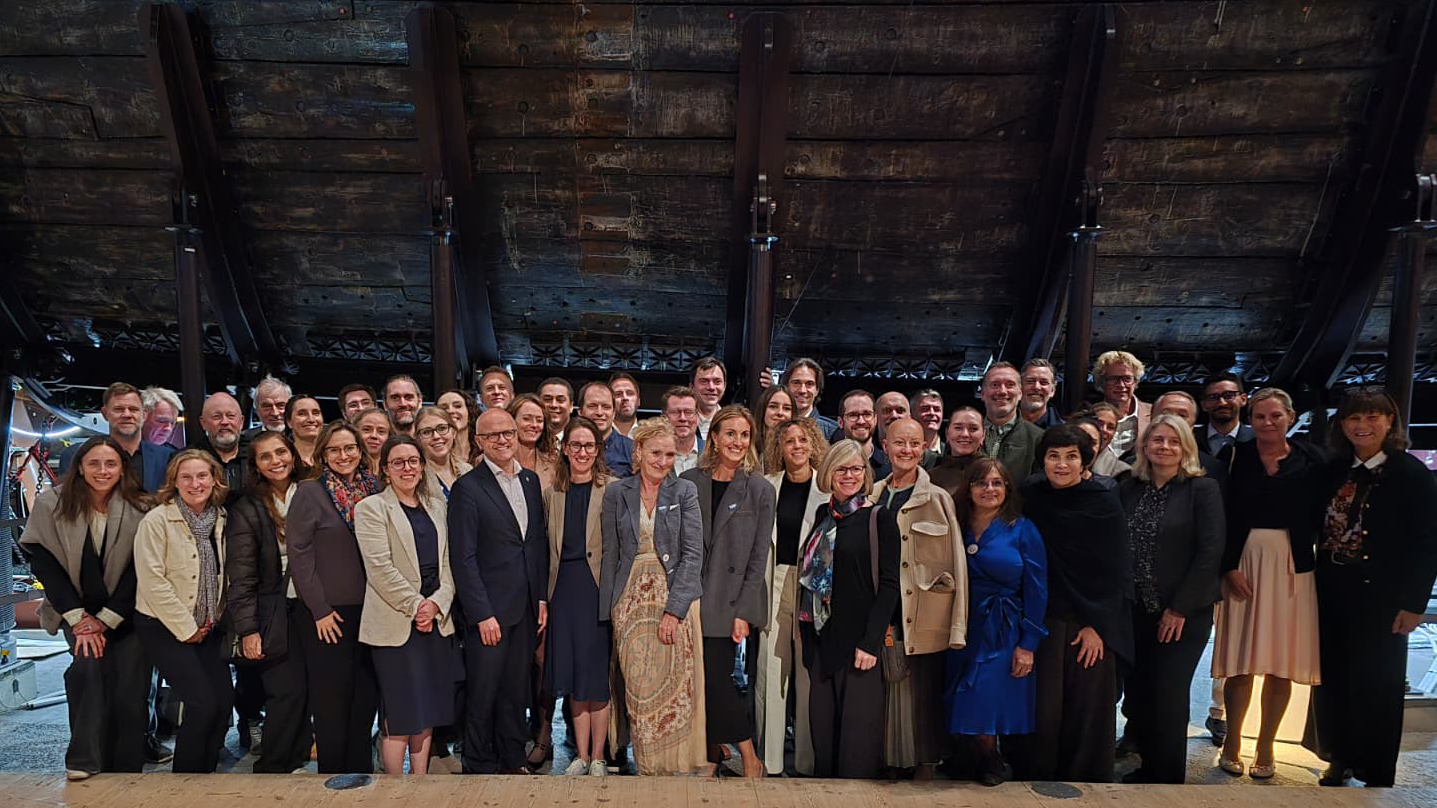
That question was at the heart of the 6th UN Ocean Decade Foundations Dialogue, held September 7–9 in Stockholm, Sweden. The Khaled bin Sultan Living Oceans Foundation joined philanthropic organizations from around the world for three days of discussion, collaboration, and planning focused on accelerating progress during the second half of the UN Decade of Ocean Science for Sustainable Development.

Facilitated by UNESCO’s Intergovernmental Oceanographic Commission (IOC), the UN Ocean Decade Foundations Dialogue is a growing network of more than 30 philanthropic organizations committed to advancing ocean science, collaboration, and action. Since its creation within the framework of the Ocean Decade, the Dialogue has provided foundations with a space to exchange ideas, develop partnerships, and explore how philanthropy can help advance a healthy and resilient ocean.

Hosted by the Voice of the Ocean Foundation (VOTO), this year’s gathering began with From Depth to Action, an Opening Forum that brought nearly 100 leaders from the Swedish and international ocean community together at…

Read More

Meet IFAN: Helping Bring Navigate with Care to the Next Generation

If you’ve ever seen a lighthouse flashing from the shore or a brightly colored buoy bobbing in the water, you’ve seen Aids to Navigation at work.

Aids to Navigation, often called AtoNs, help mariners navigate safely. They can mark channels, warn of hazards, help vessels determine their position, and provide other information people need to make safe decisions on the water. Around the world, these systems help guide everything from small recreational boats to large commercial or container ships. 

But safe navigation isn’t only about protecting vessels and the people aboard them. The choices mariners make can also affect the animals and ecosystems beneath and around them.

That connection between maritime safety and ocean conservation is at the heart of this year’s Science Without Borders® Challenge—and of our partnership with this year’s theme sponsor, the International Foundation for Aids to Navigation (IFAN).

Read More
Privacy Overview

This website uses cookies so that we can provide you with the best user experience possible. Cookie information is stored in your browser and performs functions such as recognising you when you return to our website and helping our team to understand which sections of the website you find most interesting and useful.  You can view our complete Privacy Policy here.

Strictly Necessary Cookies

Most of our cookies are used to improve website security and reduce spam. These cookies should be enabled at all times. They also enable us to save your preferences for cookie settings.

3rd Party Cookies

This website uses Google Analytics to collect anonymous information such as the number of visitors to the site, and the most popular pages. Keeping this cookie enabled helps us to improve our website.