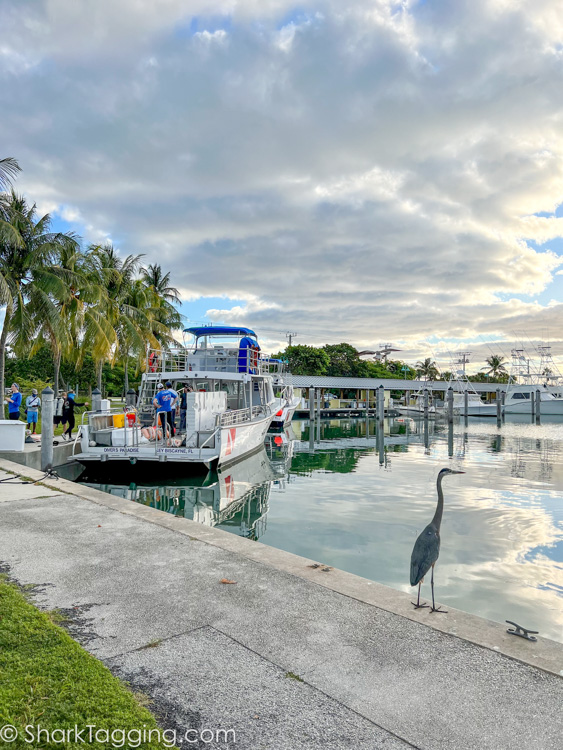
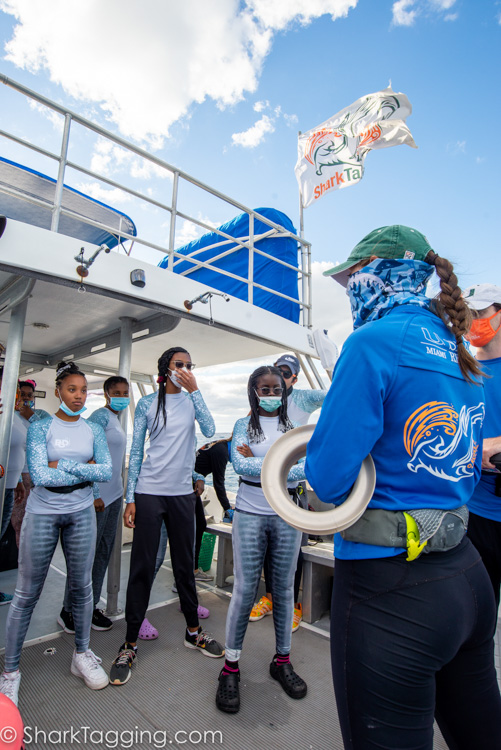
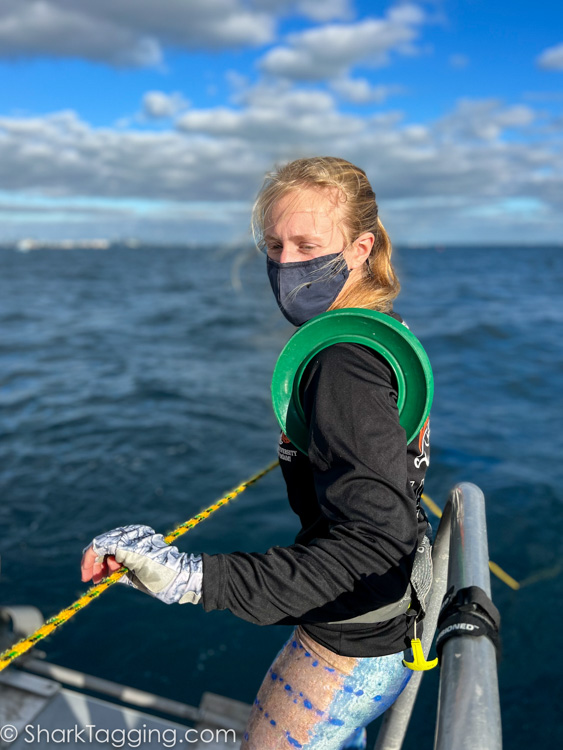
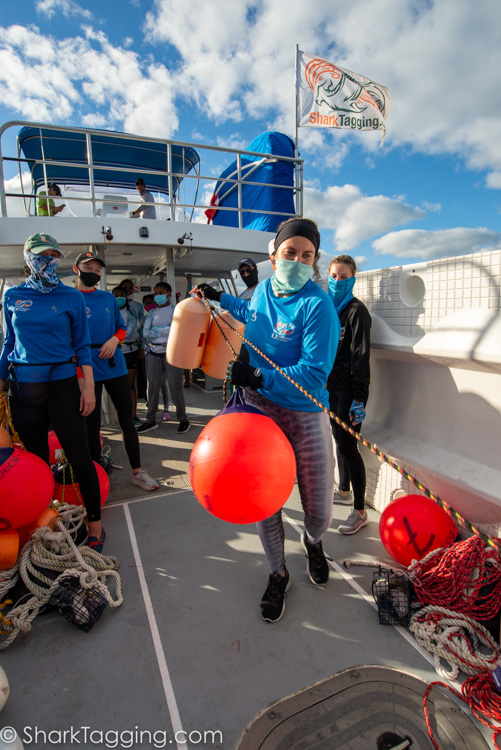
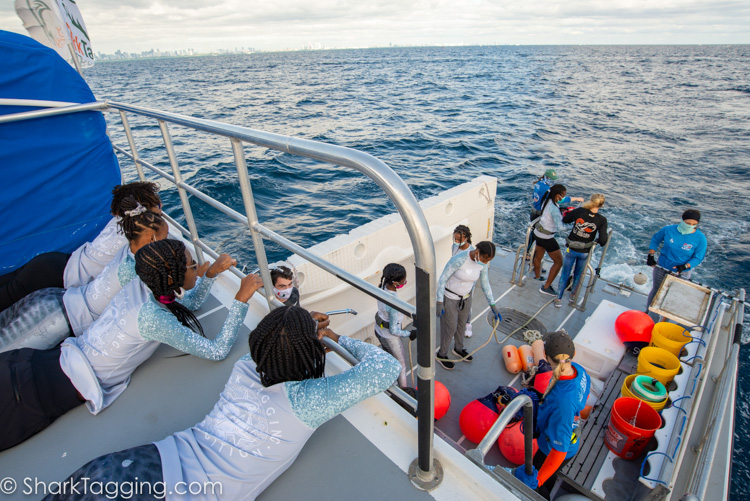
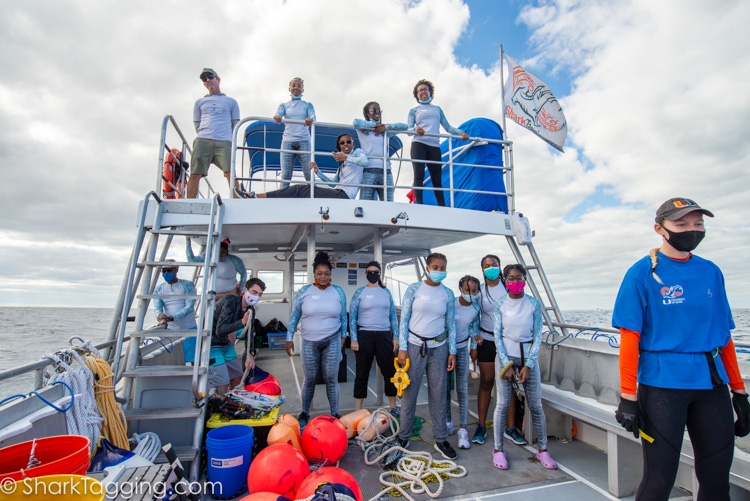
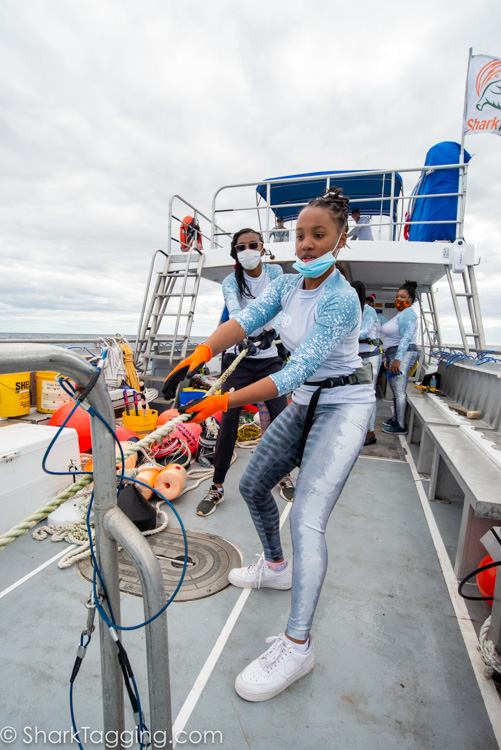
“There’s a shark on the line!” The young ladies from Black Girls Dive Foundation (BGDF) squirmed with anticipation and giggled with excitement. As their chaperone, I could feel my own adrenaline surging as we watched the University of Miami (UM) team scurrying around at the back of the boat. The chaperones fitted the first four students with gloves and life vests. Then the students lined up in single file to begin their assigned individual and group tasks. It was time to get to work.


In December, I had the honor of being asked to join our partners at Black Girls Dive Foundation on a shark tagging expedition with the UM Professor Neil Hammerschlag’s Shark Research and Conservation team at Rosenstiel School of Marine and Atmospheric Science. The trip is part of BGDF’s Science, Technology, Robotics, Engineering, Arts and Mathematics with SCUBA (STREAMS) program, which is designed to introduce black girls between the ages of 9 and 17 to a multitude of activities. The Shark Research and Conservation Capstone is a component of the STREAMS program that teaches about the behavioral ecology and conservation of sharks. After completing a series of lecture and lab activities, this part of the program culminates with a field-intensive research expedition: shark tagging.
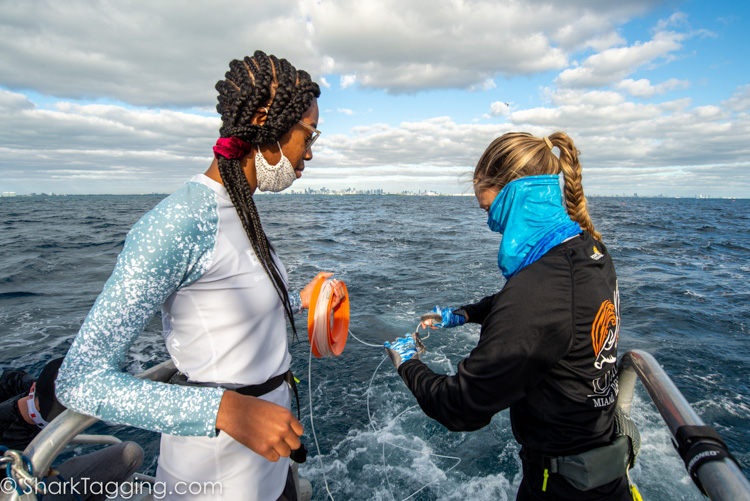
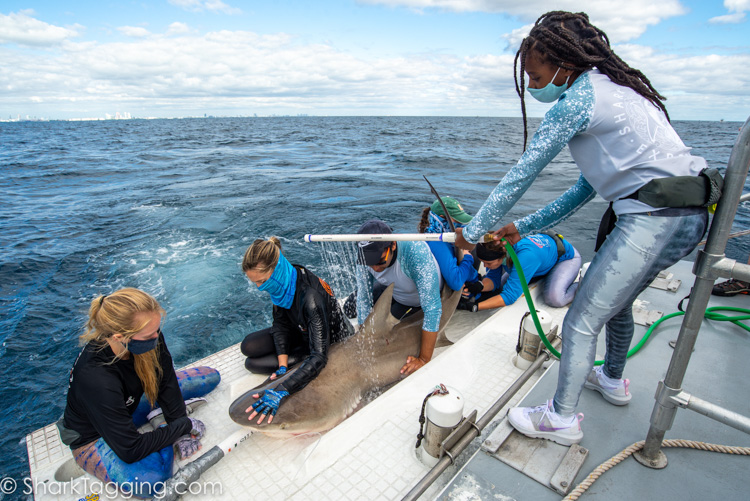
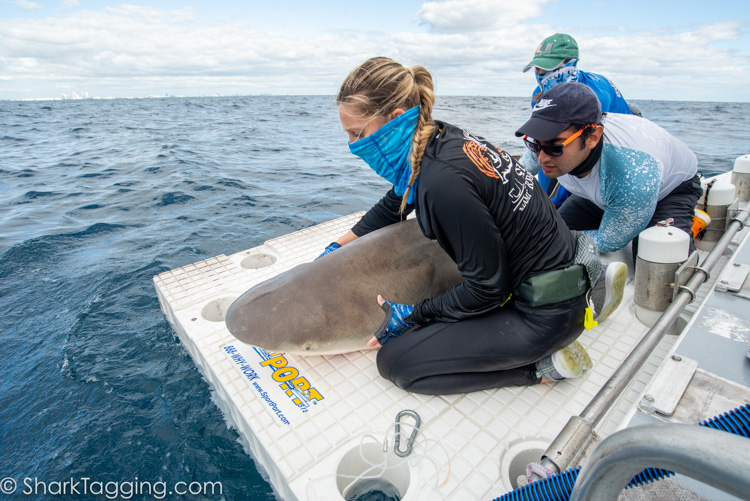
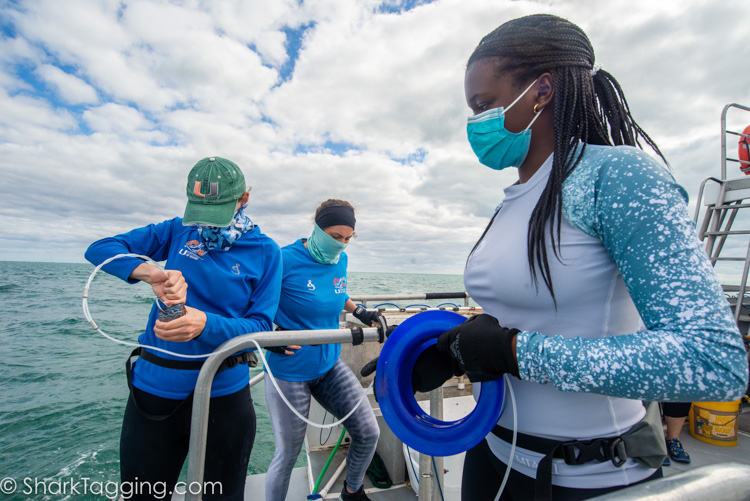
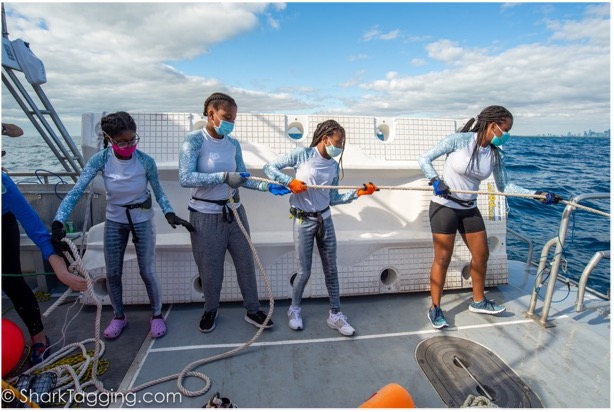
With our first catch of the day on the line, the UM team, composed of budding undergraduates to experienced doctoral students, started preparing for the shark. They handed the rope to the first four BGDF participants, and instructed: “Alright ladies, use your muscles and pull!” A caudal (tail) fin suddenly burst out of the water. “We definitely have a shark on the line,” yelled a UM team member. “Keep pulling, girls!” Using their combined strength, the BGDF team pulled the shark in close enough to where the UM team could intercept it and hoist it onto the floating platform at the stern of the boat. The brownish color and body shape told me it was a nurse shark.
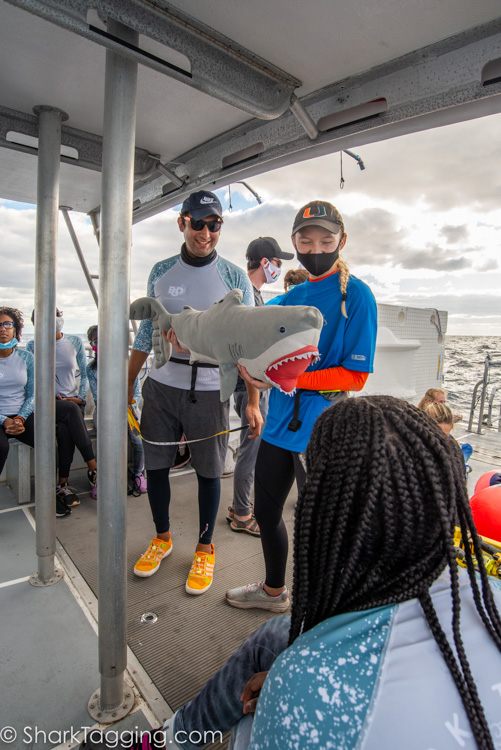
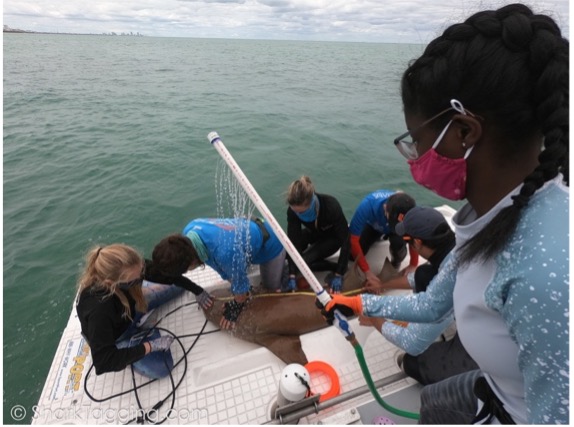
Each of the four BGDF girls, scientific tools in hand, were ready to conduct their individual tasks. The first BGDF participant was called forward. She kept water flowing over the nurse shark so that it could continue to pump water over its gills to breathe. Shortly after, the second young lady was called to take various measurements of the shark, which they had practiced on stuffed sharks beforehand. Next, it was time to collect a small DNA sample so that the genetics of the shark could be determined. A small end piece of the tough, leathery dorsal fin was clipped by another BGDF participant. The final task was to tag the shark. With a mallet in one hand and the tag in the other, the fourth girl was instructed where to place the tag on the dorsal fin. After a couple of hits with the mallet, the tag was successfully embedded.
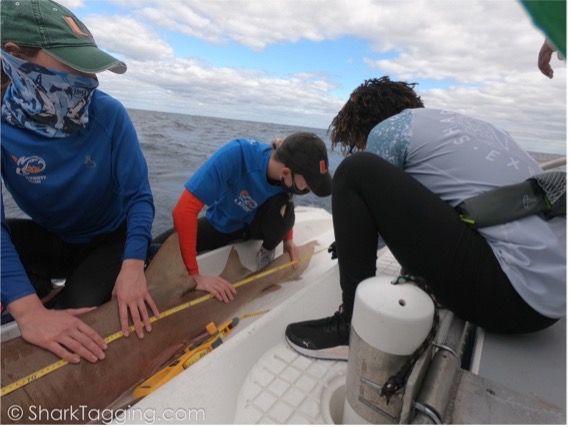
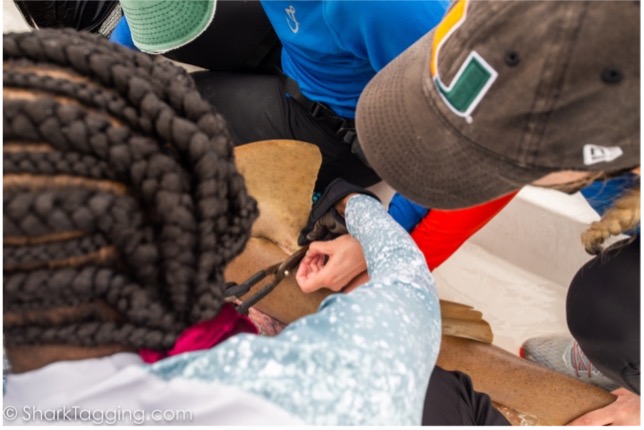
The BGDF team celebrated their first successful tagging with encouraging high fives from the rest of their group. In the meantime, the UM team finished collecting additional data and samples from the shark and then released it back to its environment. There was no time to waste with more sharks potentially being on the lines. The next BGDF team prepared for a second catch, with which the same data collection and tagging process would repeat. By the end of the day, these young ladies successfully tagged two nurse sharks and one bull shark. It was an eventful and fun-filled day.
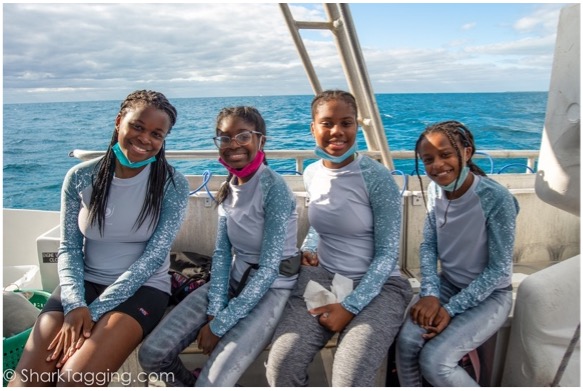
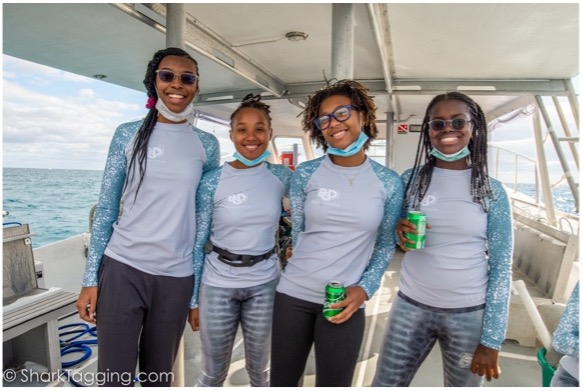
Many shark species around the world are in danger. Programs like this promote awareness about sharks and allow the public to get involved in actual research and conservation efforts. These young ladies at BGDF received an unforgettable opportunity that will leave a lasting impression. Perhaps it may even inspire some of them to pursue a career that could aid in the recovery and protection of these magnificent creatures that are so vital to our ocean.
As part of the same trip, these young women tested an educational virtual reality project that we have been working on in collaboration with UM. Stay tuned for more information!