Coral reef bleaching has been in the headline news this past summer, as it was the hottest three-month period on record. As ocean temperatures soared to 32°C (90°F) around the Florida Keys and the Caribbean, coral reefs were way past their temperature threshold and started to bleach. But what happens when a coral bleaches?
Coral bleaching is a phenomenon that occurs when coral polyps expel the symbiotic (mutually beneficial) algae called zooxanthellae from their tissues, causing the corals to lose their color and turn white or pale. These algae provide the corals with essential nutrients through photosynthesis and contribute to their vibrant colors. When coral polyps expel the zooxanthellae, it not only leads to the loss of color but also affects the overall health and survival of the coral reefs.
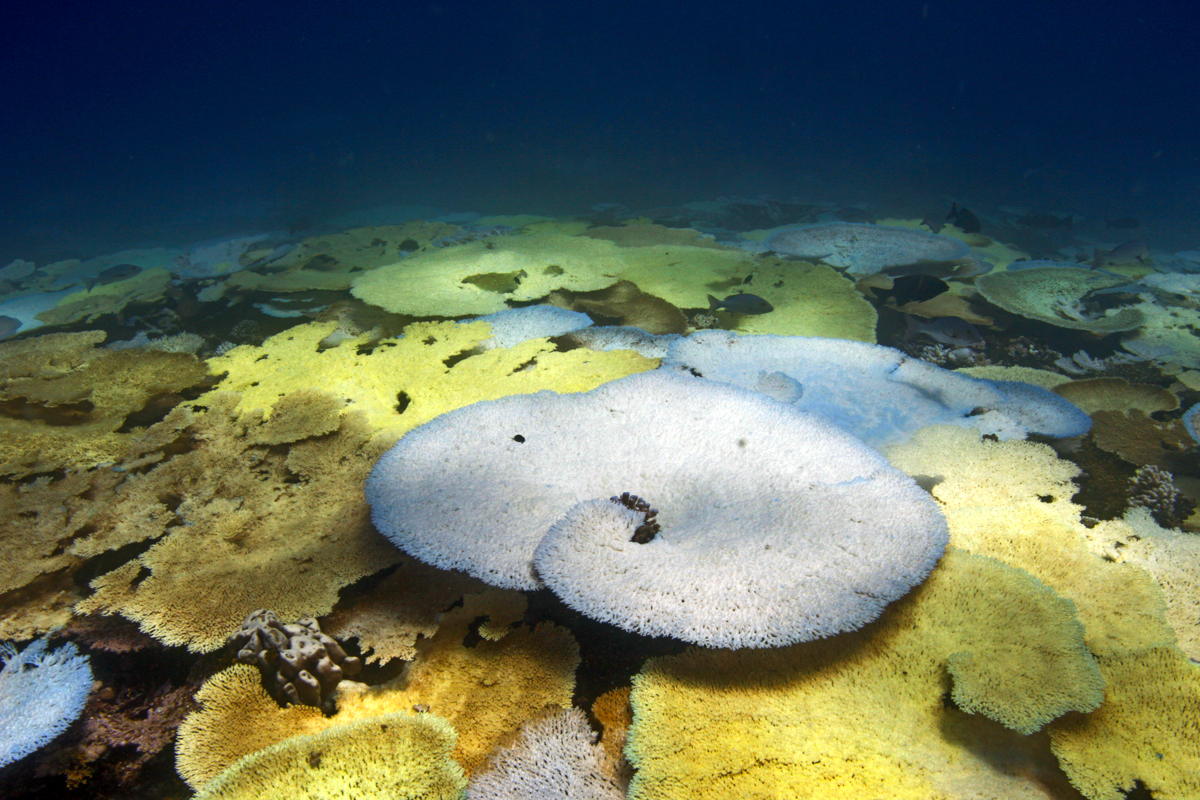
A good analogy for coral bleaching is the concept of a “ghost town” in a once-thriving city. Imagine a vibrant and bustling city as a healthy coral reef. This city is full of life, with people (coral polyps) living in their homes (coral structures) and going about their daily activities. The streets are lively, and everything is colorful and vibrant (coral reefs are known for their vivid colors due to the symbiotic relationship between corals and algae). Now, picture an environmental stressor, such as rising ocean temperatures, as a destructive force that gradually sweeps through the city. This destructive force is like a wave of heat that causes the residents (coral polyps) to abandon their homes (coral structures) because they can no longer tolerate the conditions. As a result, the once-thriving city becomes deserted and lifeless, like a ghost town.
In this analogy, the healthy city represents a thriving coral reef ecosystem. The destructive force symbolizes the environmental stressors that cause coral bleaching. The abandoned, lifeless city mirrors the bleached coral reef, where the coral polyps have expelled the colorful algae living within them, resulting in a loss of color and vitality.
However, coral bleaching is not a death sentence for corals, as they can recover, but it does leave the coral susceptible to other stressors, such as coral disease. Just as a ghost town represents the remnants of what was once a vibrant community, coral bleaching serves as a stark reminder of the impact of environmental stressors on once-thriving coral reefs.
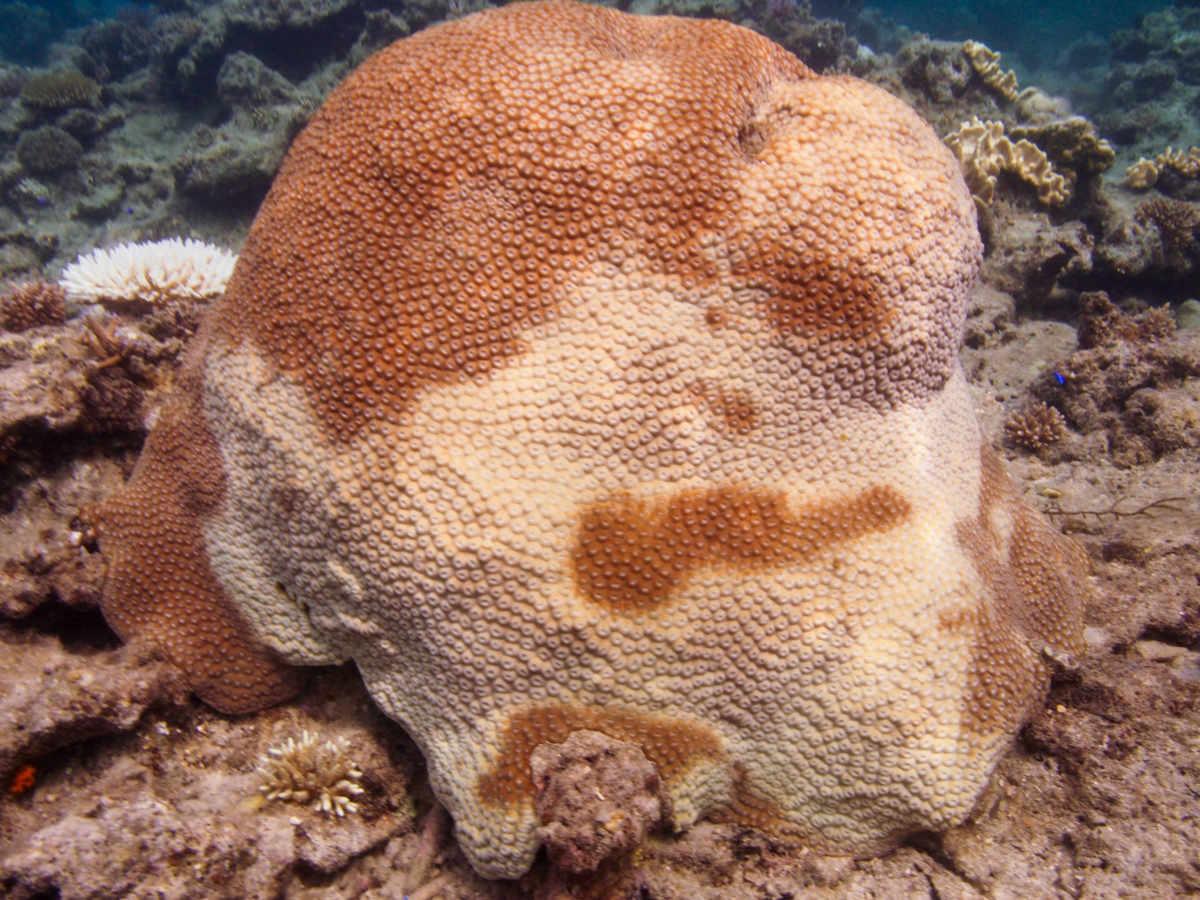
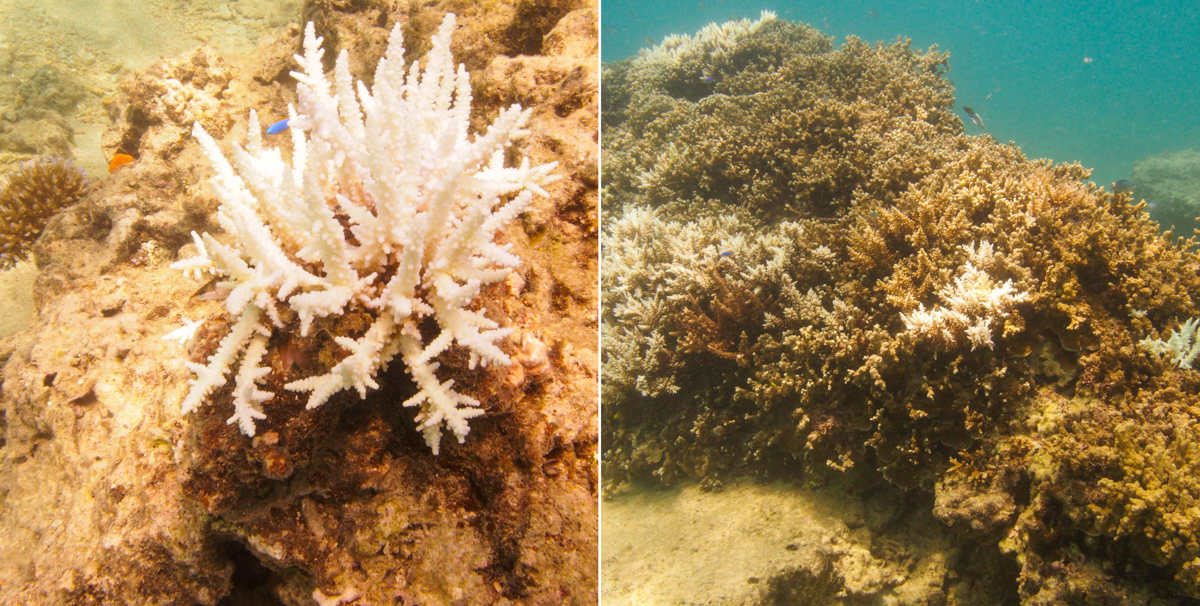
While the ocean waters were making the news this summer, other bleaching events occurred in other parts of the world earlier in the year. During our research mission to survey the reefs of Beqa Lagoon in Fiji in March-April 2023, the Khaled bin Sultan Living Oceans Foundation (KSLOF) and the Pacific Blue Foundation (PBF) saw the first haunting signs of coral bleaching.
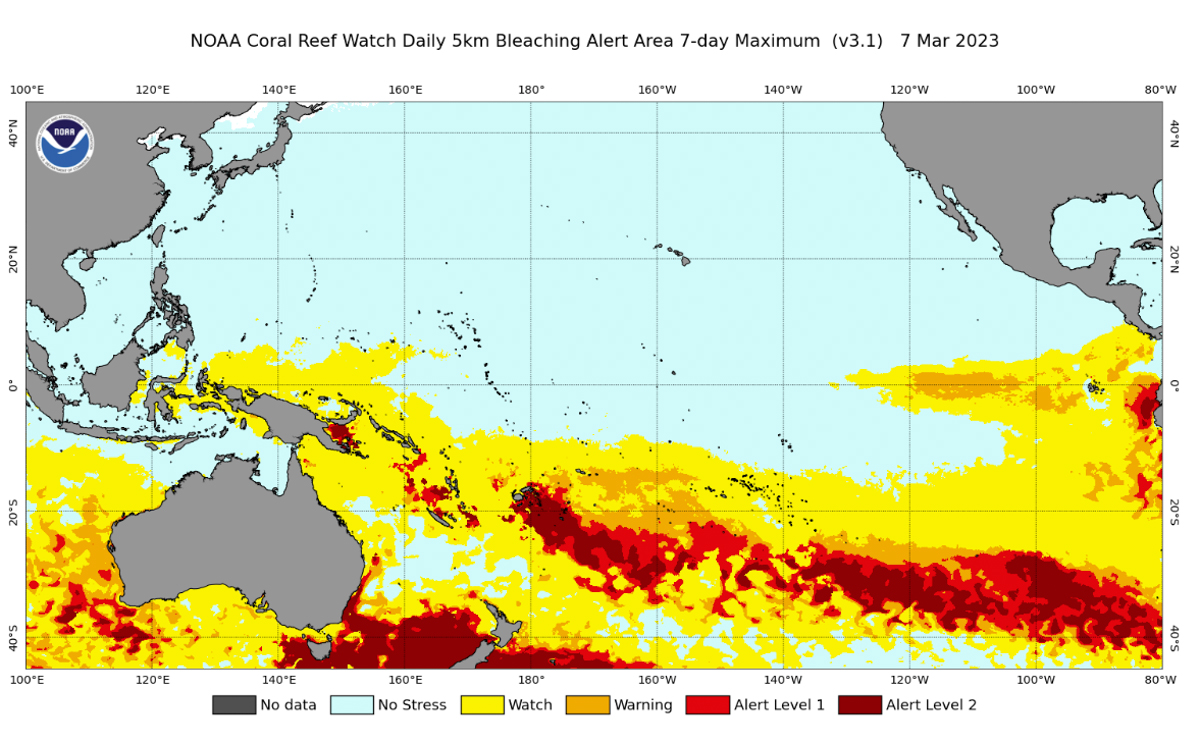
On the fringing reef near the village of Rukua, the community was starting to see corals turn stark white, even from the surface of the water. More often, the branching corals were observed to have bleached as they tend to have a lower heat tolerance than other massive corals. As the KSLOF and PBF team continue to analyze the data from this past spring, we are anticipating that the coral health indices that were recorded will show evidence of bleaching, and we will be following up on those surveys to record how the state of the reefs are faring after such an event. It is important for communities and marine managers to have robust bleaching monitoring and report protocols in place so they can track the status of the reef. Recovery is possible, but not if it stays too hot for too long.

Learn More: Coral Bleaching
Learn more about coral bleaching and how it impacts reefs in the new Conservation unit of our Coral Reef Ecology Curriculum. This educational resource is designed to help students and teachers learn about coral reefs and other tropical marine ecosystems.