
search-icon
Terrestrial and Marine Ecology of Desnoeufs, Amirantes, Seychelles

Terrestrial and Marine Ecology of Desnoeufs, Amirantes, Seychelles.

The Amirantes group, Seychelles, comprises 24 islands and islets lying between 5o and 6o south of the equator on the Amirantes Bank, western Indian Ocean. The islands were discovered by the Portuguese navigator Vasco de Gama on his second voyage to India in 1502, soon after acceding to the rank of Admiral, and the islands were subsequently named Ilhas do Almirante or Admiral’s Islands. Desnoeufs was the fifth island located by the Chevalier du Roslan in 1771 and he named it Ile des Neufs (Lionnet, 1970). It is the most southerly of the main group of Amirante islands, 138 km from the reefs and shoals of African Banks at the northern end. It lies 13 km south-west from its nearest neighbour in the Amirantes, the island of Marie-Louise and 290 km southwest of the island of Mahé in the granitic Seychelles. Desnoeufs was described as being well-wooded by the du Roslan Expedition in 1771 (Wilson, 1983). Today (2005) it is not wooded but it is well vegetated, a contrast to Baker’s observations in 1960 when he reported an island surface ‘bare of vegetation except for a small clump of littoral scrub on the sand by the landing place’ (Baker, 1963). In the mid-1900s, Marie-Louise developed both agriculture and guano production and it is thought that in these early days, Desnoeufs was run in a similar way, with the removal of 100 tonnes of guano, although agricultural production was much less successful than on the neighbouring island (between 1900 and 1910, about 300 pigs were free-ranged on the island (Wilson, 1983)). Five coconut palms were planted on Desnoeufs in 1900 (Ridley and Percy, 1958) and rows of pits indicate that there were once plans to develop a coconut plantation on the island but these never came to fruition. The original coconut palms are still standing on the island and were observed as the only trees on the island in 2005, with the exception of a single Hibiscus tree. Wilson (1983) speculated that, under guano exploitation, the almost complete removal of the littoral hedge at the same time as the removal of the natural woodland cover exacerbated the difficulty of tree regeneration…
 

Related Posts

Introducing Our New Website: A Fresh Look for the Foundation’s Future

As we celebrate the Khaled bin Sultan Living Oceans Foundation’s 25th anniversary, we are proud to unveil our newly redesigned website—a modern home for our science, conservation work, and educational programs. This launch marks an important moment for the Foundation as we honor our long history and look toward the future of ocean conservation.

For more than two decades, the Foundation has worked tirelessly to improve the health of our living oceans. We have advanced ocean science, led one of the largest coral reef research missions in history, restored mangrove forests with local communities, created award-winning education programs, and shared the wonders of the ocean with people around the world. Our new website reflects the organization we are today—focused on conserving coral reefs, restoring mangrove forests, and improving ocean literacy—while still highlighting the legacy of work that brought us here.

The redesigned site…

Read More

Connecting People, Art, and Oceans: Championing Conservation at the 2025 IUCN Congress

The IUCN World Conservation Congress brings together thousands of leaders and decision-makers from governments, non-profit organizations, civil society, Indigenous groups, and the private sector to shape global conservation policy and action. This influential gathering serves as a platform to share knowledge, build partnerships, and advance initiatives that protect our planet’s biodiversity.

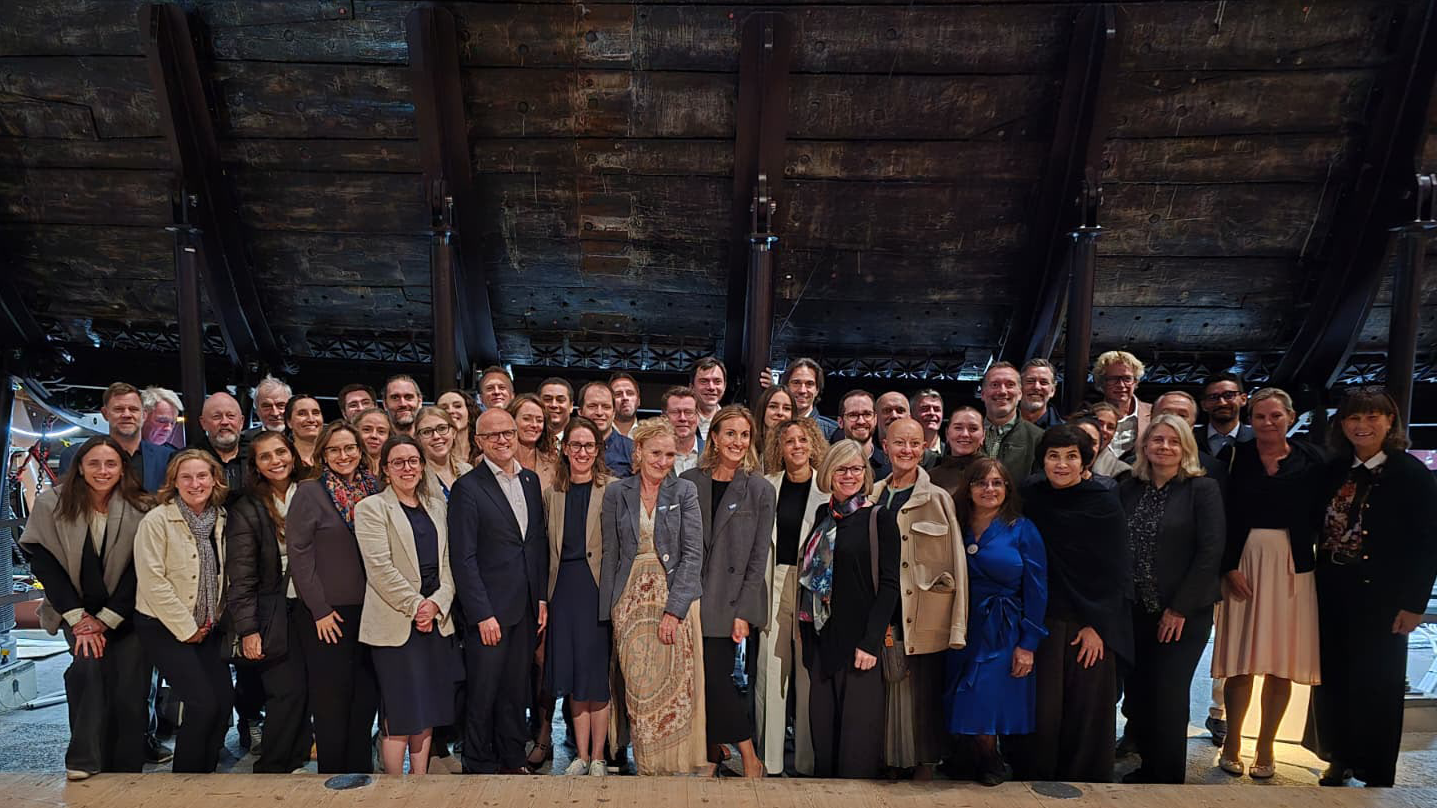
As a member of the International Union for Conservation of Nature (IUCN), the Khaled bin Sultan Living Oceans Foundation was honored to take part in the Congress, joining a global community of leaders, organizations, and changemakers committed to protecting nature and advancing sustainable futures.

Read More
Privacy Overview

This website uses cookies so that we can provide you with the best user experience possible. Cookie information is stored in your browser and performs functions such as recognising you when you return to our website and helping our team to understand which sections of the website you find most interesting and useful.  You can view our complete Privacy Policy here.

Strictly Necessary Cookies

Most of our cookies are used to improve website security and reduce spam. These cookies should be enabled at all times. They also enable us to save your preferences for cookie settings.

3rd Party Cookies

This website uses Google Analytics to collect anonymous information such as the number of visitors to the site, and the most popular pages. Keeping this cookie enabled helps us to improve our website.