search-icon
A massive subtidal aggregation of hermit crabs in Surprise Atoll lagoon, New Caledonia

This article, by LOF Science Team members, discusses the unique discovery of a massive hermit crab aggregation at Surprise Atoll lagoon during the Khaled bin Sultan Living Oceans Foundation mission to New Caledonia.

A massive subtidal aggregation of hermit crabs in Surprise Atoll lagoon, New Caledonia

Coral Reefs – Reef Site
April 11, 2015
Nathaniel Evans, Antoine Gilbert, Serge Andrefouet, and Gustav Paulay

A massive subtidal aggregation of hermit crabs in Surprise Atoll New CaledoniaMany hermit crab species can form large aggregations, sometimes numbering thousands of individuals (e.g., Gherardi and Vannini 1992). Research suggests that such clustering behavior can reduce predation risk and positively influence feeding, reproduction, and shell exchange. While clustering is well documented among lineages inhabiting terrestrial and intertidal zones, it remains poorly studied at subtidal depths where the greatest hermit crab diversity exists. The limited work that has examined this behavior across multiple habitats found clustering to be rare or entirely absent among species occupying subtidal depths (including in six Dardanus species; Barnes and Arnold 2001, but see Ramsay et al. 1997). Here, we report clustering behavior in the subtidal hermit crab species Dardanus scutellatus (H. Milne Edwards, 1848) that formed a massive aggregation of tens of thousands of individuals from 10 to 15 m depth (Fig. 1). Observations were made at approximately 0830 hrs, November 24, 2013 in the remote Surprise Atoll of Entrecasteaux Reef (New Caledonia), on a gently sloping lagoon bottom of sand-covering pavement near 18.4775°S, 163.0835°E. Though our survey was very limited (<25 min, covering approximately 250 m), we did not visually locate the end of this cluster. We also saw no obvious signs of a significant food source that might have attracted these crabs. No other benthic fauna was observed, but sea snakes swam through the area. To our knowledge, such a large subtidal aggregation has never been formally reported, although scientific divers recorded a similar event 15 December 2009 in a similar habitat on Beautemps-Beaupré Atoll (Laboute, pers. comm.). The novelty of this observation emphasizes that our knowledge of clustering behavior in hermit crabs remains incomplete…

Also check out our feature story on this same topic.
Related Posts

From Dialogue to Action: Ocean Foundations Gather in Stockholm

What can philanthropy accomplish when foundations working across ocean science, conservation, and sustainable development come together around a shared purpose?

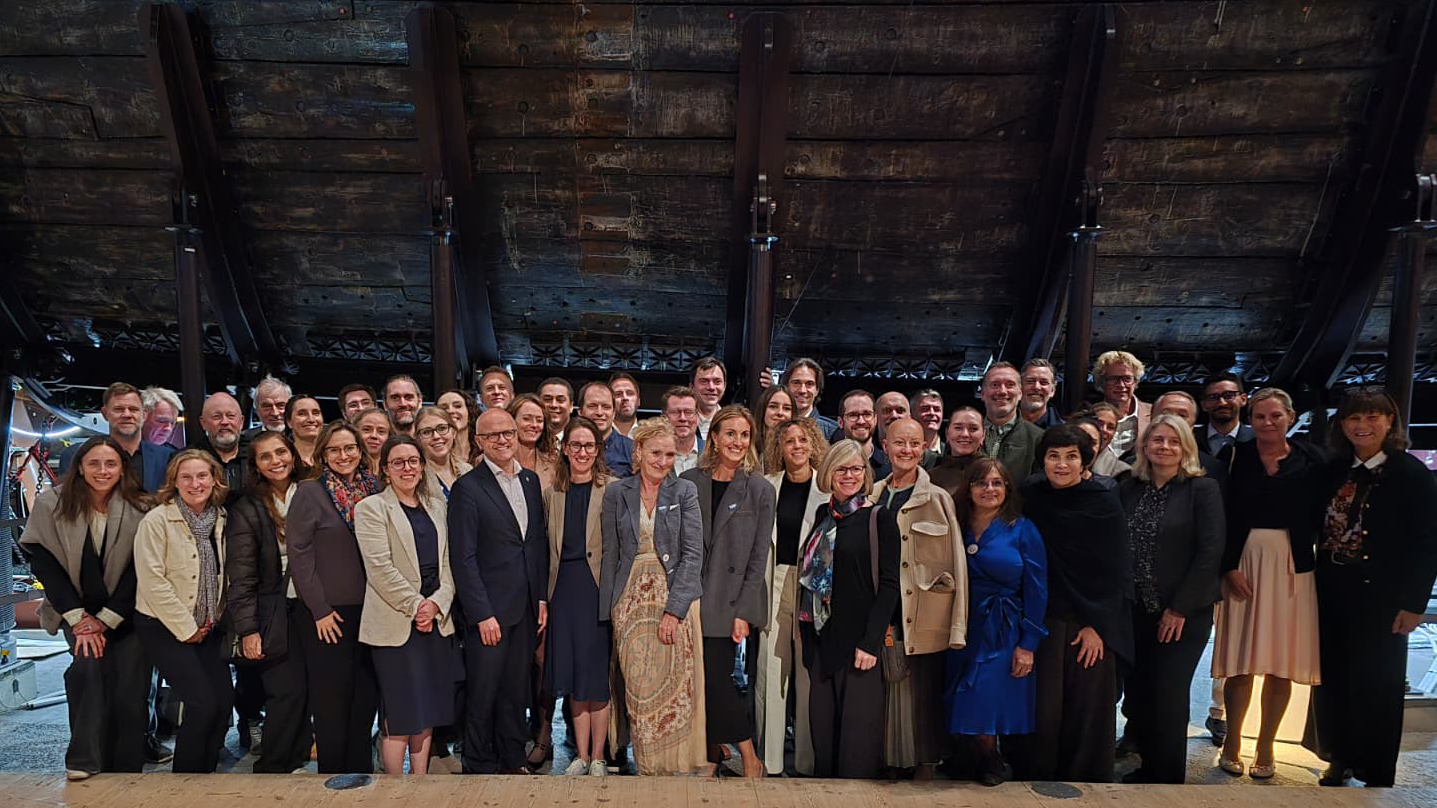
That question was at the heart of the 6th UN Ocean Decade Foundations Dialogue, held September 7–9 in Stockholm, Sweden. The Khaled bin Sultan Living Oceans Foundation joined philanthropic organizations from around the world for three days of discussion, collaboration, and planning focused on accelerating progress during the second half of the UN Decade of Ocean Science for Sustainable Development.

Facilitated by UNESCO’s Intergovernmental Oceanographic Commission (IOC), the UN Ocean Decade Foundations Dialogue is a growing network of more than 30 philanthropic organizations committed to advancing ocean science, collaboration, and action. Since its creation within the framework of the Ocean Decade, the Dialogue has provided foundations with a space to exchange ideas, develop partnerships, and explore how philanthropy can help advance a healthy and resilient ocean.

Hosted by the Voice of the Ocean Foundation (VOTO), this year’s gathering began with From Depth to Action, an Opening Forum that brought nearly 100 leaders from the Swedish and international ocean community together at…

Read More

Meet IFAN: Helping Bring Navigate with Care to the Next Generation

If you’ve ever seen a lighthouse flashing from the shore or a brightly colored buoy bobbing in the water, you’ve seen Aids to Navigation at work.

Aids to Navigation, often called AtoNs, help mariners navigate safely. They can mark channels, warn of hazards, help vessels determine their position, and provide other information people need to make safe decisions on the water. Around the world, these systems help guide everything from small recreational boats to large commercial or container ships. 

But safe navigation isn’t only about protecting vessels and the people aboard them. The choices mariners make can also affect the animals and ecosystems beneath and around them.

That connection between maritime safety and ocean conservation is at the heart of this year’s Science Without Borders® Challenge—and of our partnership with this year’s theme sponsor, the International Foundation for Aids to Navigation (IFAN).

Read More

Privacy Overview

This website uses cookies so that we can provide you with the best user experience possible. Cookie information is stored in your browser and performs functions such as recognising you when you return to our website and helping our team to understand which sections of the website you find most interesting and useful.  You can view our complete Privacy Policy here.

Strictly Necessary Cookies

Most of our cookies are used to improve website security and reduce spam. These cookies should be enabled at all times. They also enable us to save your preferences for cookie settings.

3rd Party Cookies

This website uses Google Analytics to collect anonymous information such as the number of visitors to the site, and the most popular pages. Keeping this cookie enabled helps us to improve our website.