Oceanographic Magazine
By Oceanographic Staff
October 21, 2021
ON 21 OCTOBER, THE KHALED BIN SULTAN LIVING OCEANS FOUNDATION PUBLISHED THEIR FINDINGS FROM THE GLOBAL REEF EXPEDITION, THE LARGEST CORAL REEF SURVEY AND MAPPING RESEARCH MISSION IN HISTORY. NEARLY EVERY LOCATION SURVEYED SHOWED SIGNS OF ECOSYSTEMS UNDER THREAT.
On 21 October, after years of conducting coral reef surveys around the world, the Khaled bin Sultan Living Oceans Foundation (KSLOF) released a comprehensive report of its findings from the Global Reef Expedition. The Global Reef Expedition Final Report provides valuable baseline data on the status of the world’s reefs at a critical point in time. The findings will help understand the health of the world’s reefs, while also identifying current threats and examining factors that enhance their ability to survive and recover from major events, such as bleaching events, the report argues.
Over several years, hundreds of scientists from around the world have conducted tens of thousands of standardised scientific surveys at over 1,000 reefs in 16 countries. They mapped over 65,000 sq. km of marine habitats, from the Red Sea through the Atlantic, Pacific, and Indian Oceans, while working closely with local experts, managers, educators, and government officials.
“The Global Reef Expedition was a monumental achievement. It owes its success to nimble planning and a common vision shared by a broad group of forward-thinking scientists, managers, and educators,” said Sam Purkis, KSLOF’s Chief Scientist as well as Professor and Chair of the Department of Marine Geosciences at the University of Miami’s Rosenstiel School of Marine and Atmospheric Science. “I have no doubt that the baseline determined by the Global Reef Expedition for the world’s reefs will remain a reference for centuries to come.”
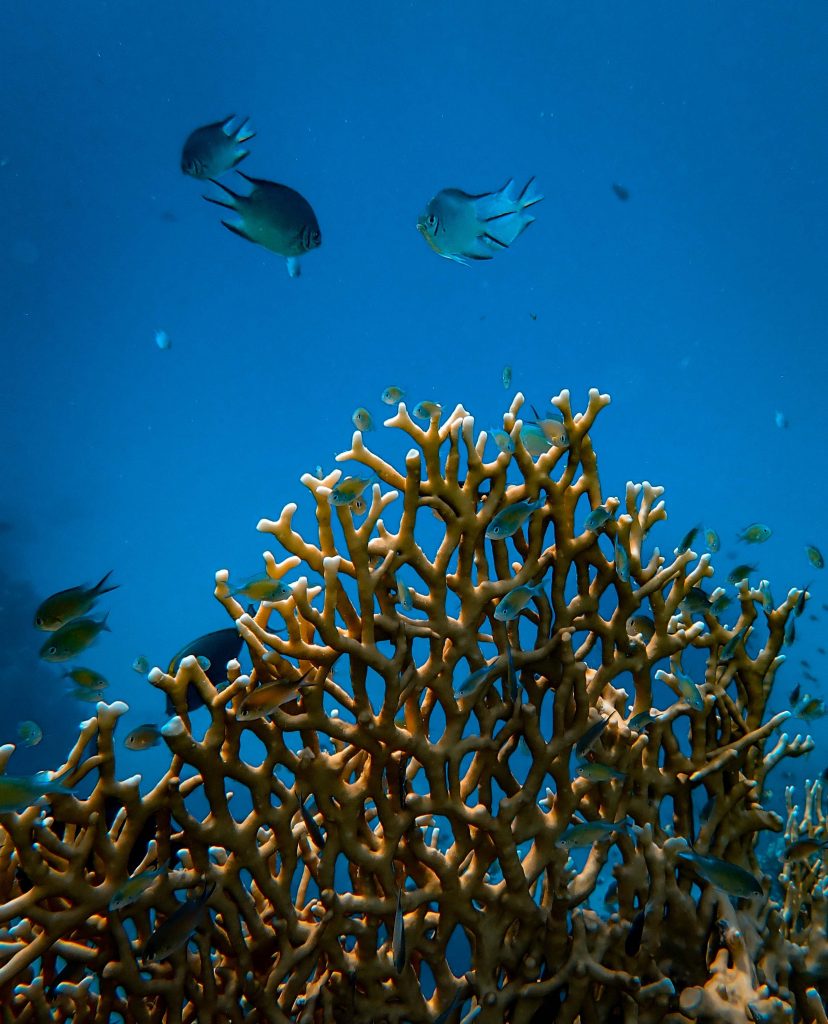
The coral reef survey report states that nearly every surveyed location showed signs of the coral reef crisis. Natural and human impacts were threatening coral reefs; and even remote, well-protected reefs showed signs of overfishing, coral bleaching and crown-of-thorns starfish outbreaks (the species can cause significant damage to coral reefs that are already distressed). Coastal development, pollution, disease, severe storms as well as climate change all had an impact on coral reef health.
Renée Carlton, a Marine Ecologist at KSLOF and the lead author of the coral reef survey, said: “One of our most significant findings from the Global Reef Expedition was that nearly every country we studied showed signs of overfishing. Even on some of the most remote and well-protected reefs.” She hasn’t lost hope though, as the best reefs tended to be the ones that were remote and well-managed, but not exclusively so. “We know marine protected areas work, in most instances these reefs had some of the best coral cover and reef fish communities, but climate change, storms, and outbreaks of crown-of-thorns starfish can still have deadly consequences to a reef, no matter how remote or well-protected it is,” she added.
The coral reef survey will be shared freely across all platforms and levels so that it can directly help provide answers to common questions. While engaging with local communities, involving local experts and government officials, the foundation was and will be able to provide countries with the information they need to manage their marine resources effectively. “Findings from the Global Reef Expedition are already helping countries protect and preserve their reefs and coastal marine resources,” said Alexandra Dempsey, the Director of Science Management at the Foundation. “Marine protected areas, fisheries closures, and traditionally managed areas have been established in The Bahamas, Jamaica, Fiji, and the Cook Islands, using information collected on the Expedition.”
As climate change becomes more and more evident and oceans continue to warm, coral reefs will have a hard time to survive. Scientists estimate that half of the world’s coral reefs have been lost in the last 40 years. While swift action will be needed to halt climate change, especially on a government level, the expedition found that in most cases, areas with the highest protection also had some of the best coral and fish populations. This highlights the success of marine protected areas in conserving reefs and establishing more of them might be able to help save the reefs that remain.
For more from our Ocean Newsroom, click here.
Photography courtesy of Unsplash and main image by Michele Westmorland/iLCP.