Over the last ten days we were fortunate to have excellent weather and a hard working research team. We completed surveys of representative reefs around both islands, hitting nearly every location we had planned. Throughout this series of blogs, I mentioned a lot about the reef-builders, but have said little about reef fish and other megafauna. We had a very talented team conducting quantitative belt transects to assess species abundance and size and local divers assessing species diversity. We now have a detailed picture of the species diversity and population dynamics of reef-associated fishes.
Like other locations in the Caribbean, we saw a lot of small reef fish, including large schools of chromis, bluehead wrasse, creole wrasses, hamlets, damselfishes, highhats and drums, soldierfish, and juveniles of many species. However, there were few large fishes and certain species were completely absent. Throughout the entire mission we did not see a single grouper and their close relatives, the hind and coney, were much smaller and less abundant than in most other locations. Snapper were notably absent. There was the occasional schoolmaster snapper, and a few other isolated individuals, but characteristic schools of schoolmaster snapper, large gray snapper, lane snapper, yellowtail snapper, mutton snapper and other species were rare or absent. Few pelagic predators were seen, other than a few small schools of horse eye jack and bar jack, and the isolated cero.
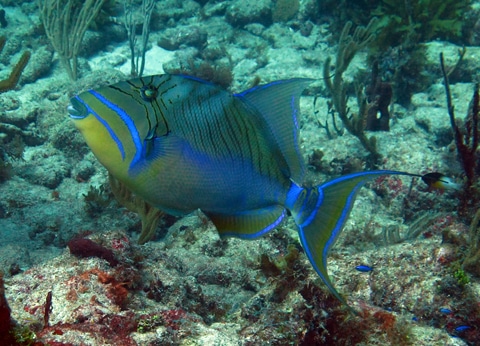
Butterflyfishes and angelfishes were present, but in very low numbers. Only a few locations supported schools of grunts, and individual margates, hogfish and porkfish were seen only once or twice. Queen triggerfish were also rare, but some exposed sites had large numbers of black durgon.
Herbivorous parrotfish and surgeonfish, which are critical indicators of reef health because of their role in preventing the proliferation of algae, were present, but in low numbers. Parrotfish were also represented primarily by juveniles and small initial phase fish, with few larger parrotfish species other than the stoplight parrotfish observed throughout the two islands.
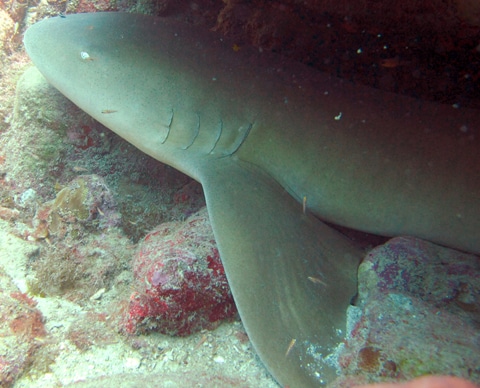
We did see a few larger animals, but sightings of these were also infrequent. A few reefs had a single nurse shark, one or two barracuda were present on only a few reefs, and single turtles were seen in five locations. Southern stingrays were present on several reefs and we observed three spotted eagle rays on dives off the leeward side of St. Kitts.
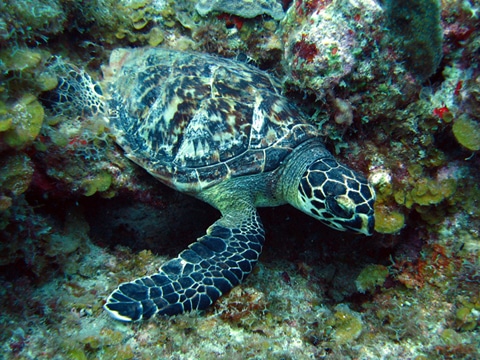
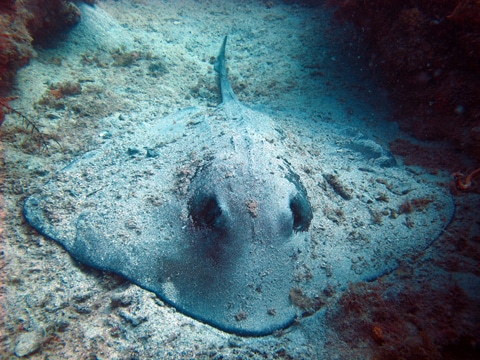
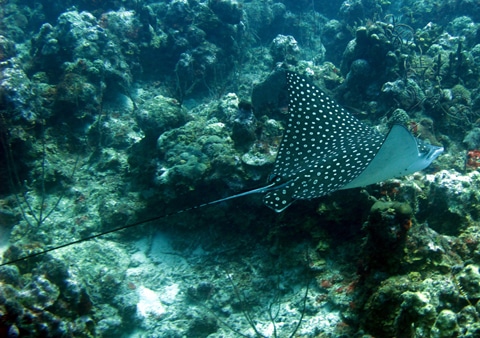
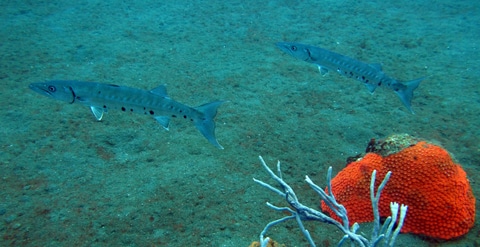
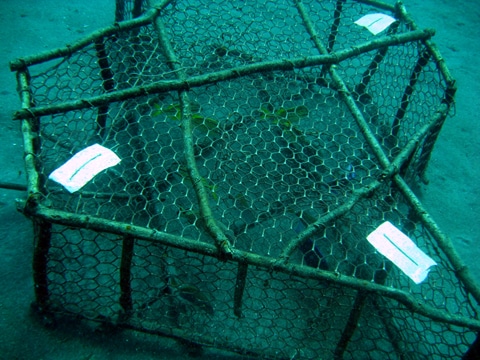
The low diversity and biomass of reef fishes, the presence of small fishing boats in nearly every bay, and a high number of reefs with fish traps were characteristic signs of Caribbean overfishing. On one reef, the dive operator retrieved a derelict fish trap. After several months, this contained primarily small stoplight parrotfish, a single snapper, a few surgeonfish and one red hind, all of which were 15-30 cm total length. All of these are eaten here, especially the parrotfish, which is not a good indicator of sustainable fishing.
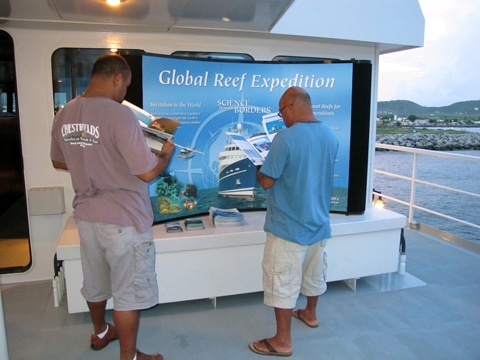
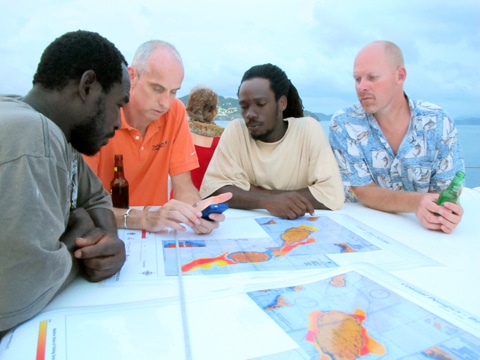
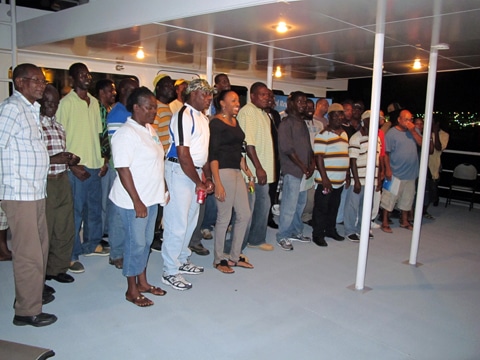
Earlier this week, we hosted a fisheries meeting about the M/Y Golden Shadow. Up on the Bridge Deck, about 35 local fishermen from St. Kitts and Nevis attended the meeting to discuss the research the Foundation has been conducting, as well as gaining a local perspective on the state of the fisheries and Caribbean overfishing of certain species.
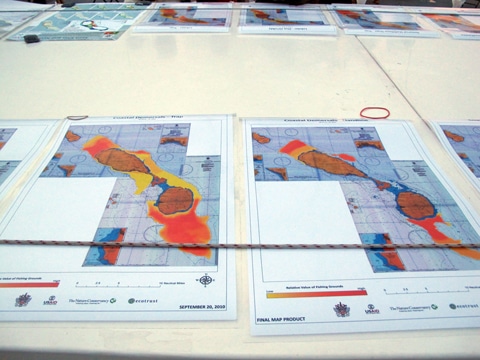
Ruth Blyther (The Nature Conservancy) displayed the fisheries valuation maps that the fishermen had participated in creating and spoke on the exciting opportunity the fishermen, scientists and all users of the ocean have to participate in properly managing natural resources. The fishermen had not yet seen the valuation maps, so it was a major conversation piece and they are looking forward to receiving copies of the maps.
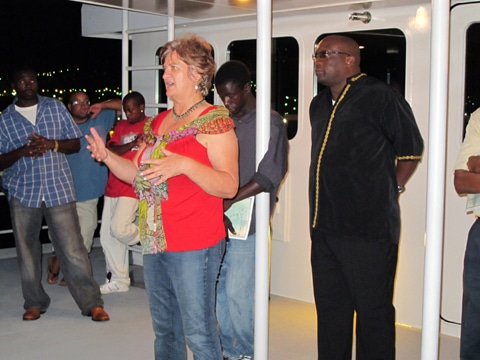
The meeting gave the scientists a chance to explain the importance of certain fish for reefs, as well as understanding the fish that are preferred and important to the citizens of St. Kitts and Nevis. The fishermen were interested in what is happening on the reefs and what we found out in our studies, such as coral bleaching, Caribbean overfishing, and overall coral health. Hon. Minister Tim Harris, Ph.D. (Government of St. Kitts and Nevis) gave an eloquent, heart-warming speech of the absolute need for sustainable fishing and management.
Another hot topic was the emergence of lionfish around St. Kitts & Nevis. Many fishermen had not yet seen a lionfish and didn’t even know what they looked like. We discussed why lionfish are bad for the reef, as they are like fish traps and consume anything they possibly can eat. Suggestions were made about the opportunity to try to control lionfish populations, such as educating fishermen and restaurants on proper handling and that they can be a delightful addition to the menu since they are a tender, buttery white fish, as well as creating a tourism draw to lionfish hunting.
Fisheries regulation in St. Kitts & Nevis is still young, so this was a unique opportunity to merge science and local economy together in one setting in order to better connect government fisheries regulation and its stakeholders. Fortunately, the governments of St. Kitts and Nevis have developed a draft zoning plan for the shallow marine habits that include conservation areas, and they are developing new fisheries measures in consultation with the fisher community. Together, these initiatives may help reduce Caribbean overfishing and begin restoring reef fish populations around these eastern Caribbean islands.
(Images/Photos By: 1-3, 5-6, Andy Bruckner; 4, 7-12 Amanda Williams)
To follow along and see more photos, please visit us on Facebook! You can also follow the expedition on our Global Reef Expedition page, where there is more information about our research and our team members.