Expedition Log: Cook Islands – Day 2
One of the most charismatic families of reef fish are the butterflyfish (Chaetodontidae). We’ve written about these species in previous blogs, but the importance of these species as an indicator of reef health is truly evident in Aitutaki.
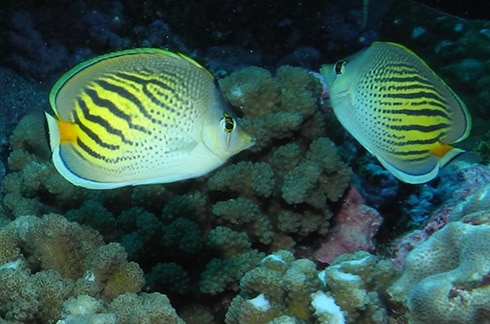
Chaetodon pelewensis
In Aitutaki we have found a reasonably high diversity of butterflyfish, but compared with other locations visited during the Global Reef Expedition, their abundance is definitely lower. After the first week of surveying, 16 species have been identified. The teardrop (Chaetodon unimaculatus), fourspot (Chaetodon quadrimaculatus) and reticulated (Chaetodon reticulatus) butterflyfish are the most common species.

Ornate Butterflyfish: Chaetodon ornatissimus
What was unexpected was just how uncommon each species was. Overall, butterflyfish abundance has generally been limited to just a few pairs on each dive, and in some locations, we did not see any at all.
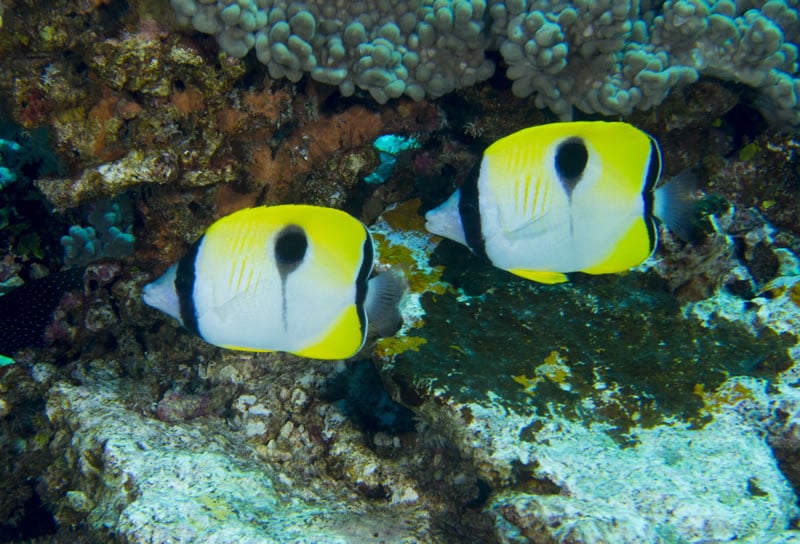
Teardrop Butterflyfish Chaetodon unimacultus
Only in the few sites, primarily fore reef communities located on the southeast corner of the atoll, their numbers increased. These reefs also had the greatest coral cover, with up to 60% live coral, of all the reefs we have surveyed so far in Aitutaki.
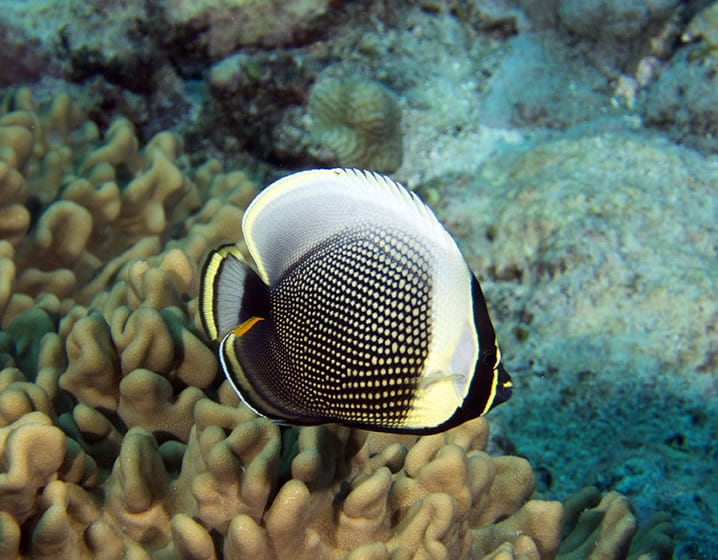
Reticulated Butterflyfish: Chaetodon reticulatus
There are a number of coral monitoring programs around the world using butterflyfish as indicators of healthy coral communities. This makes sense, as the majority of these fish are corallivores, feeding delicately on individual coral polyps. This pattern we are observing in Aitutaki does suggest that butterflyfish are good indicator species for coral cover as their abundance appears to be related to live coral cover.
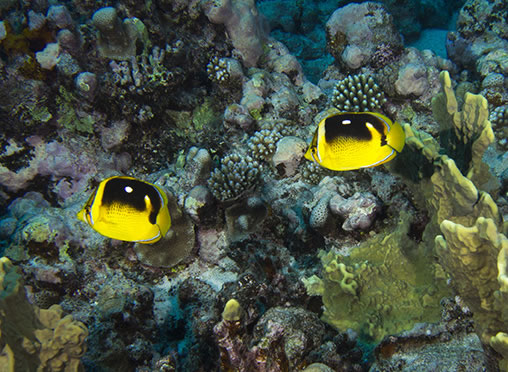
Fourspot Butterflyfish: Chaetodon quadrimaculatus
Photos: Andrew Bruckner