The Importance of Environmental Education
The sun is blazing intensely in a cloudless sky, and the lack of a breeze makes the sulfur, rotten egg-like smell even more intense. It feels like 95°F (35°C) and I am sweating profusely as I trudge through the mangroves, one of my favorite marine ecosystems. It feels like home to me.
After two and a half years of putting the J.A.M.I.N. program on hold, I am quickly reminded how much I missed not only teaching and interacting with students face-to-face, but also being in the mangroves. The same feelings happen to me every time I venture into this amazing ecosystem: feelings of curiosity, awe, and respect, mixed with a sense of calm tranquility. And it is these same kinds of feelings we hope to foster in our students while they participate in our program.
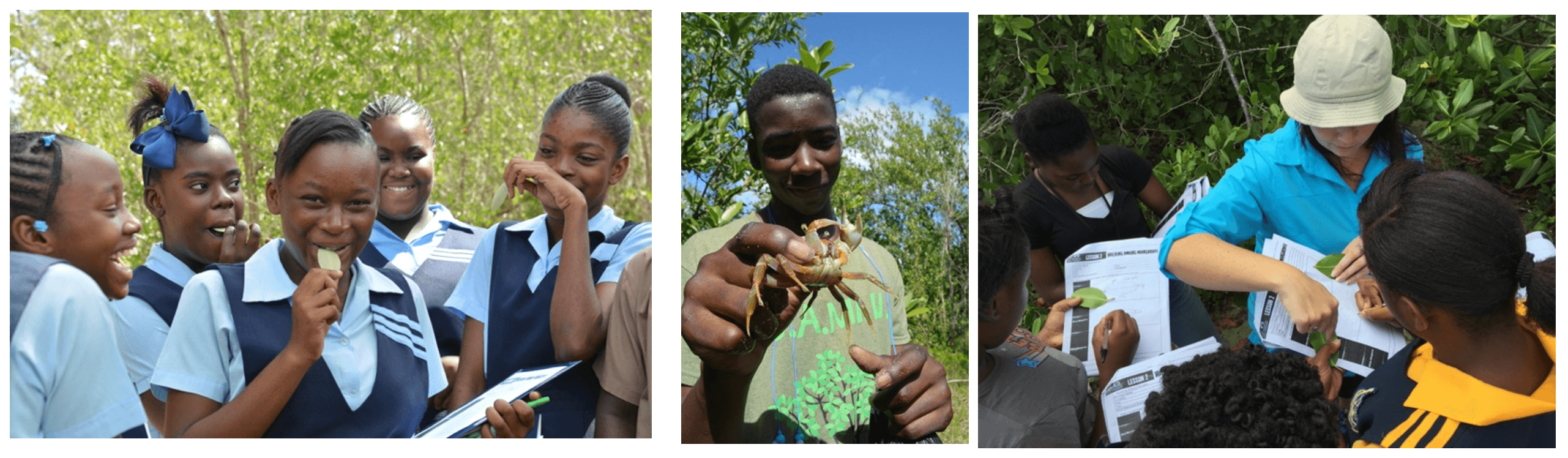
One of the most important aspects of the J.A.M.I.N. program is connecting students with nature. Throughout the two-year program, students will take a total of five field trips to their local mangrove forest. Starting off in the classroom, we teach them important concepts which they will then apply to the real world – in this case, the mangroves – where they will have a chance to observe and explore nature firsthand. On these field trips, I see wonderful reactions from the students. Some of them, perhaps a bit shy or easily distracted, seem to absolutely blossom with both curiosity and excitement when they are temporarily removed from the more rigid structure of the classroom. Some get so engaged in the field activities that, at the end of the day, they need to be persuaded back to the bus!
We not only take students into nature; we also bring nature to them. For 7-8 months, each student in the program cares for three mangrove seedlings and conducts a long-term growth experiment in their classroom. By the end of the experiment, students have a sense of ownership of their seedlings, some even having named them and finding the idea of relinquishing their care back to nature quite difficult. After a few reluctant “goodbyes” to the plants they’ve nurtured for so long, the students quickly embrace the task of planting them. Because they understand the importance of restoring their local mangrove ecosystem, and they are proud to be a part of the effort.
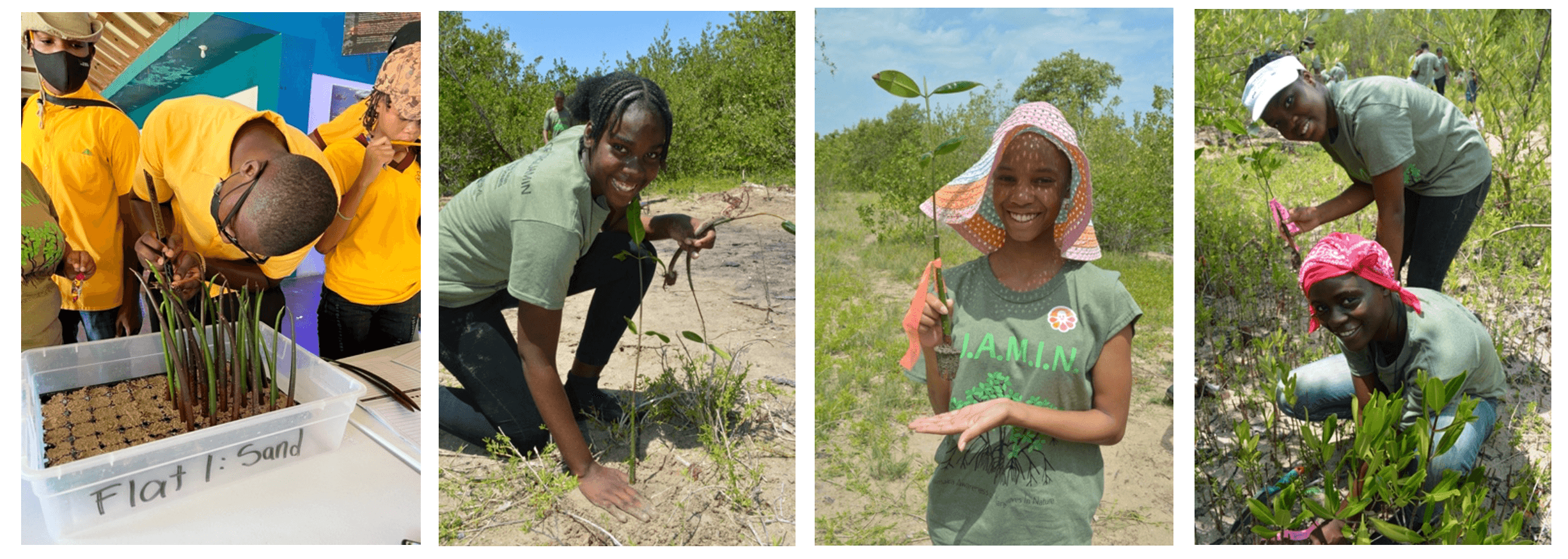
J.A.M.I.N.’s combination of hands-on nature activities, long-term scientific experiments, and outdoor field experiences connect students to the mangroves. We know from evaluations that students increase and retain knowledge better after they have been on field trips. In my opinion, it is impossible to get the same understanding of – and appreciation for – mangroves from a textbook that one gets from experiencing the mangroves firsthand.
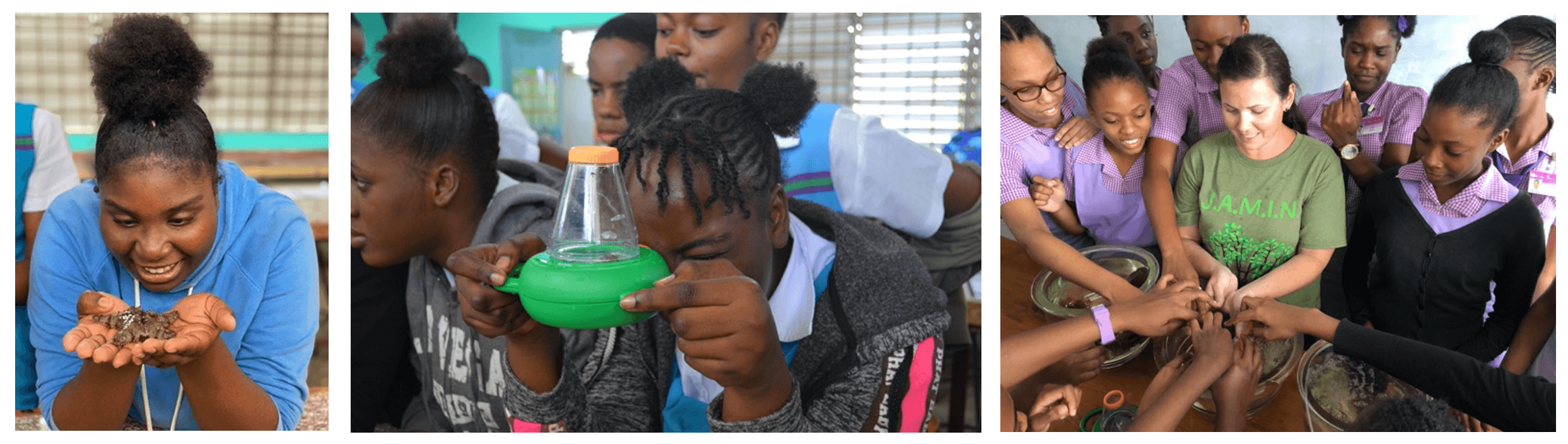
Over the course of the program, we see changes in attitude and behavior towards nature. The students come to understand not only the benefits of mangroves, but their own individual role and responsibility in the natural world. At the end, after the work is done, and their seedlings are becoming new additions to the forest, it is always so immensely gratifying to see that the students’ feelings have evolved from curiosity and get-out-of-the-classroom excitement into a very real sense of ownership and stewardship for this vitally important ecosystem.