The Kingdom of Tonga contains some of the most unique and extensive coral reef environments found in the central south Pacific, with over 1500 square kilometers of reef area. These Tonga coral reefs are located due east of the 35,000 foot deep Tonga Trench, along the boundary of the Pacific and Australian tectonic plates. The archipelago’s 174 islands are comprised of high volcanic islands, some which are still active that formed over the last 20-30 years, as well as older, uplifted limestone-capped islands and low-lying coral atolls. Many of the young volcanically-created islands are reported to have little reef development. In contrast, islands of the eastern arc contain diverse corals reefs that fringe the shoreline, form an offshore barrier, or consist of platform and submerged patch reefs located within deep-water lagoons.
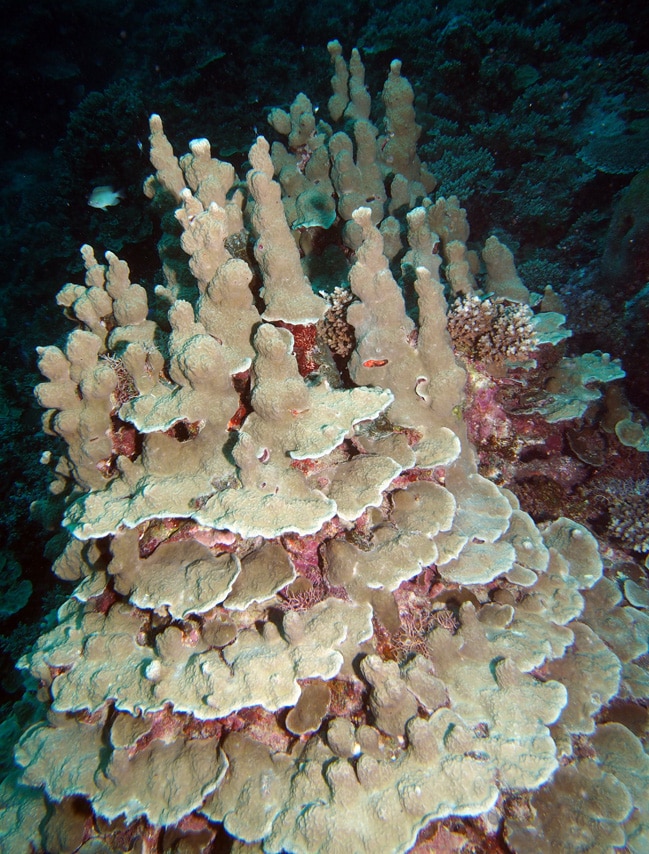
Porites rus coral found in Tonga coral reefs.
Even though Tonga coral reefs extend around the fringes of most islands, comprehensive studies on their structure, composition and status have only been completed near populated islands. Because Tonga is situated at the eastern end of a Pacific-wide biodiversity gradient, the number of different species found here is fairly low, as compared to reefs to the northwest. For example, surveys of Tonga coral reefs around Tongatapu recorded just over 190 different corals and 230 reef fishes.
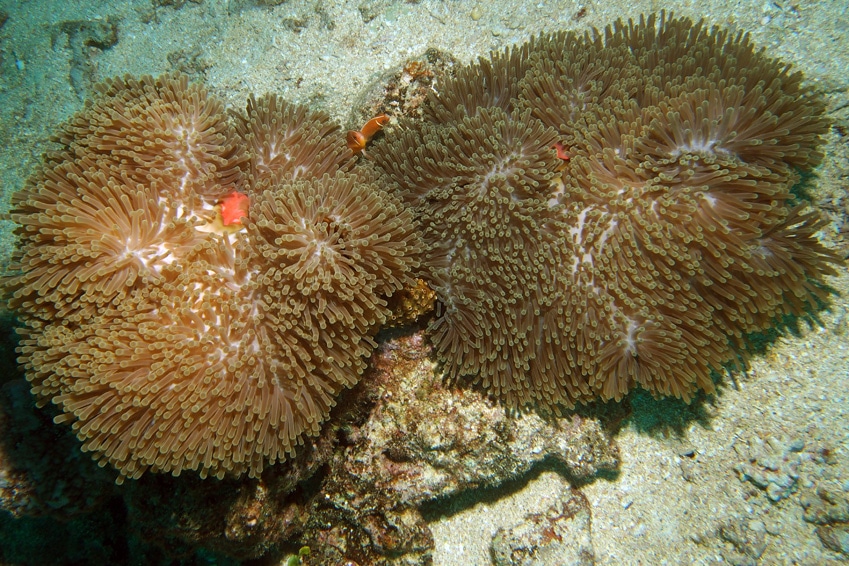
Stichodactyla gigantea anemones.
As many Tonga coral reefs are remote, and about 75% of the islands are uninhabited, they are likely to be minimally impacted by human activities. Nevertheless, overfishing and destructive fishing practices, siltation and runoff, and water pollution have severely damaged reefs near urban areas. Reefs have also suffered from large scale natural disturbances such as coral bleaching, crown of thorns starfish outbreaks (COTS), and cyclones. Major impacts from these natural threats have not occurred in over a decade, suggesting recovery should be well underway.
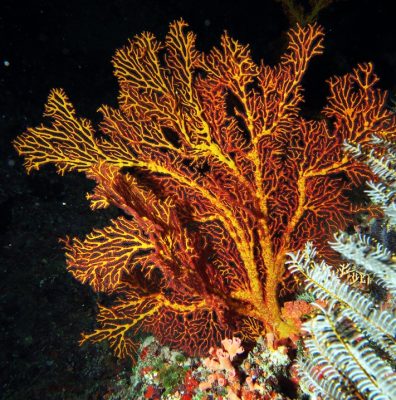
Melithaea species of octocoral.
Coral reef resources are very important to the Tongan people for income and food security. Because of this, information on their status is imperative for the development of effective management and conservation measures. Several advances in coral reef conservation have already been achieved, such as the establishment of marine reserves, yet it is not known if these protected areas are working. Over the next month, our surveys will fill large gaps in our knowledge of these Tonga coral reefs, including the status of reefs inside and outside of these marine reserves. We begin our surveys in the Ha’apai group. Stay tuned for updates.
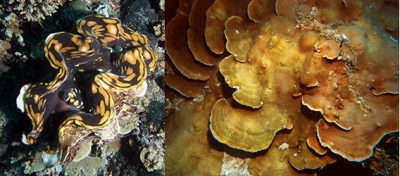
Giant clam Coscinaraea columna plate coral
Photos: 1-5 by Andrew Bruckner