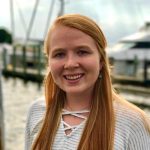
Maggie Dillon is a Science and Education Intern for the Khaled bin Living Oceans Foundation (KSLOF). She is a senior at St. John’s College in Annapolis Maryland. After graduating, Maggie is interested in pursuing a Master’s Degree in Marine Biology.
My Science Internship
Sometimes you never know how making a connection can open doors to your future. This is exactly what happened to me after attending the Khaled bin Sultan Living Oceans Foundation premier of their film Coral Reefs: Trouble in Paradise. On the big screen, I saw young women scuba diving to study the health of corals in the British Indian Ocean Territories (BIOT). My love of the ocean started at a young age and watching these women dive and work to protect the ocean made me think; Wow, I could really see myself in a job like this someday! Luckily for me two of the women that I saw on screen were sitting in the audience – Renée Carlton, Marine Ecologist and Alex Dempsey, Coral Reef Ecologist. Once I realized this, I wanted to meet and talk to them about their work.
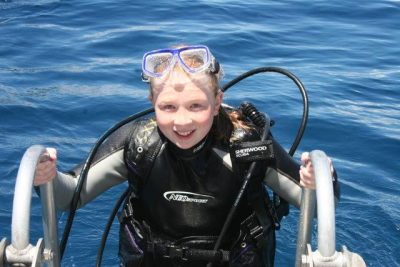
Maggie getting SCUBA certified at the age of 10
I waited until after the screening to approach Alex and Renée. My mind was going a mile a minute. I had so many questions that I wanted to ask. I approached them and started a conversation. Luckily, my nerves calmed as I talked to them. They were both kind and passionate about their work, and it put my nerves at ease. They took the time to talk to me, answer my questions, and give me advice on how to navigate the field of marine biology. I could tell that my time was running out with them, but I still wanted to ask them if the Foundation offered internships. To my surprise, Alex said that they do and that she could possibly offer me a trial internship with the Foundation. By the end of summer, I found myself interning at the Foundation.
On my first day, Alex sat down with me and explained my duties. I learned that I would be using a program called CPCe (Coral Point Count with Excel extensions). While I wasn’t exactly sure what that meant, I was excited to learn more about it. I discovered that CPCe is a software program that allows scientists (and now me!) to analyze photo transects, and specifically for my internship, photos with a set dimension (i.e. 1 meter by 1 meter) to collect vital data for their research. By taking a snapshot of a reef, scientists can later conduct a more detailed analysis using the photos and can use the data collected from CPCe to answer a number of questions.
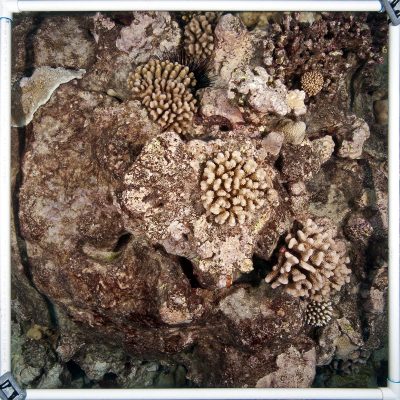
A 1 meter by 1 meter photo transect
KSLOF uses CPCe in a multitude of ways to collect data, such as using random point overlays to identify and determine what percentage of the ocean floor is covered by living organisms, counting small juvenile corals called coral recruits to understand how the reefs are recovering after a disturbance (think pollution, hurricane, Crown-of-Thorns Starfish outbreaks, or a coral bleaching event), and looking at percent cover of different coral species, which is what I would be doing in my internship. KSLOF then uses the data to gain a better understanding of the health of coral reefs, and inform the public of their findings.
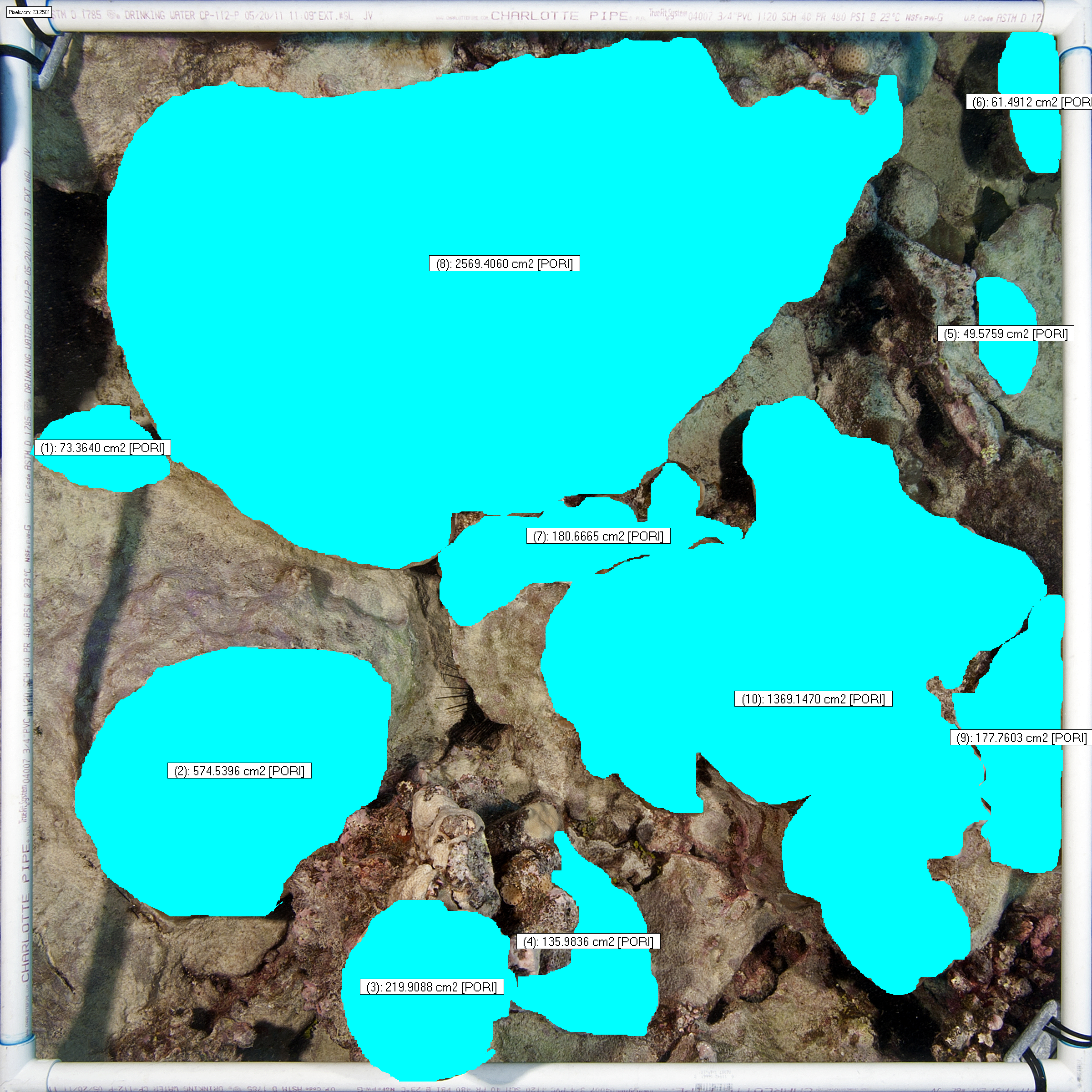
CPCe was used to determine the percent cover of Porites (highlighted in blue) in this photo transect
With this is mind, Alex walked me through the process of using CPCe. I watched as she opened a photo transect from a dive site in the Cook Islands. I was mesmerized by the photo. There were beautiful corals of all different shades and hues that I had never seen before. I even noticed a fish that managed to sneak into the photo.
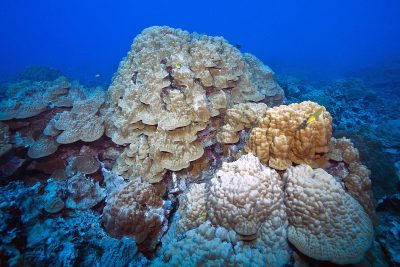
A coral reef in Rarotonga, Cook Islands
I was excited and ready to learn. I was excited to have a chance to prove myself in a field I care about. I was also excited to have a part in working to help conserve the world’s coral reefs. The data I was collecting was going to be compiled with other scientific data collected on the Global Reef Expedition and used in papers and reports by the Foundation’s scientists.
Through this internship, I have experienced firsthand how the Foundation’s research is helping to preserve and protect coral reefs around the world. I am proud to be part of this mission. I feel like I’m making a difference in conservation, even if only in a small way for now. I’ve gotten my feet wet and I’m enthusiastic to learn and do more.
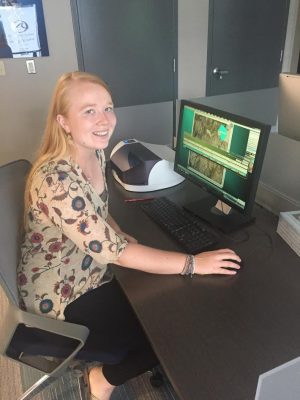
Maggie conducting CPCe