search-icon
Hiding in Plain Sight

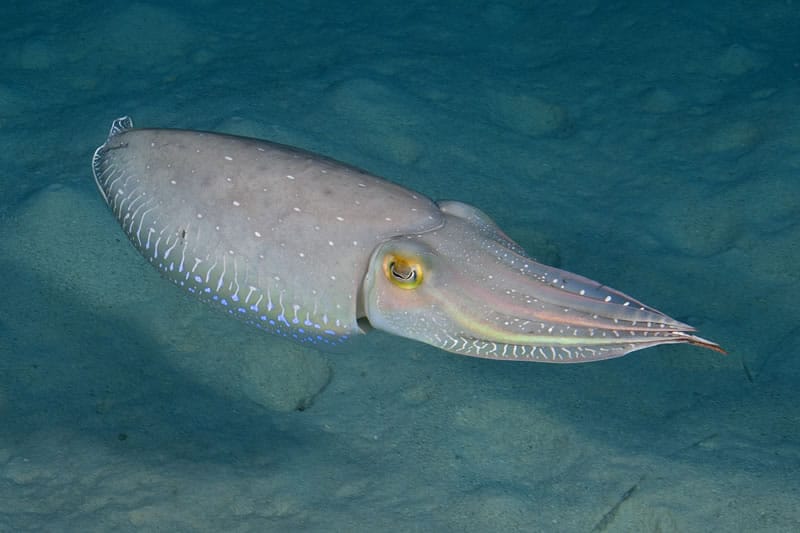
The Broadclub Cuttlefish (Sepia latimanus)—the second largest species of cuttlefish (to 50 cm)—is the most commonly seen species of cuttlefish on tropical reefs. Though it ranges from the Andaman Sea in the west to as far east as Fiji, this is the first time during the Global Reef Expedition that we’ve encountered them during our survey work. As this species is a master of camouflage it’s not surprising that they have remained elusive. When at rest they can assume mottled color patterns and even contract their skin to raise small tabs on their bodies to give it a rough texture.
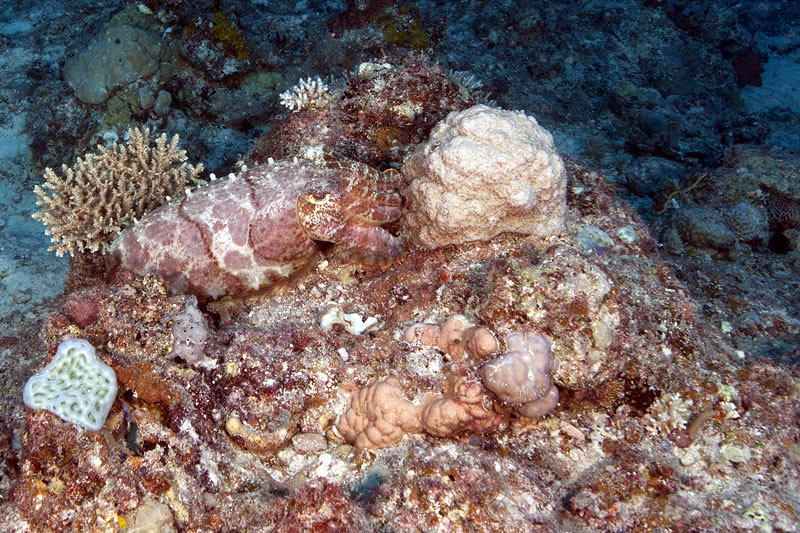
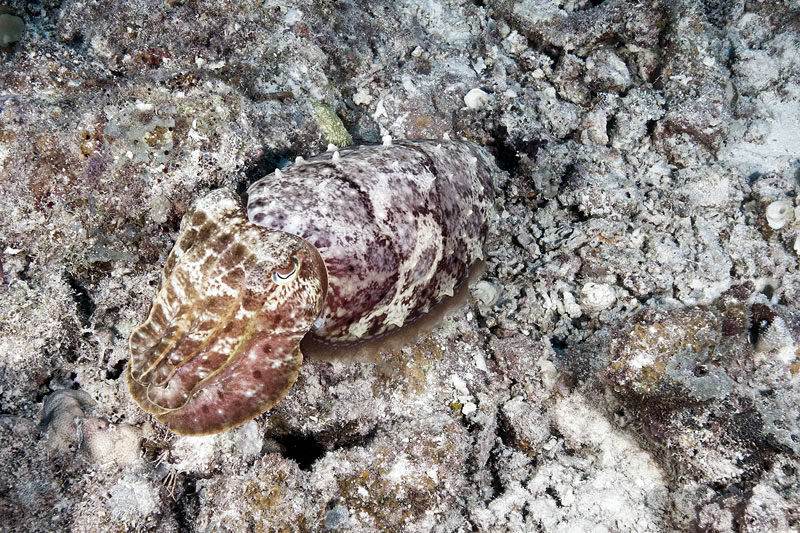
Broadclub Cuttlefish using camouflage to blend with its surroundings on a coral reef.Broadclub Cuttlefish using camouflage to blend with its surroundings on a coral reef.

The Broadclub Cuttlefish is a master of camouflage blending in with its surroundings.
(Click thru on images for greater detail.)

Cuttlefish and other cephalopods (octopus and squid) can consciously control their color and markings by contracting or relaxing special pigmented cells in their skin called chromatophores. In addition to using colors and patterns for camouflage, a cuttlefish can signal its mood when trying to attract a mate or defend one from a rival male during courtship. When hunting small crustaceans or fishes they can produce a rhythmic pulsation of darkened bars that travel the length of their bodies. This may serve to mesmerize their prey. The speed at which cuttlefish can change their coloration is remarkable and always makes encountering one on the reef a great treat.

Cuttlefish Abandoning Its CamouflageCuttlefish Abandoning Its Camouflage

Images of the same individual taken mere seconds apart as it abandons its camouflage and pales while heading out over a sandy area.
(Click thru on images for greater detail.)

Photos by Ken Marks.
Related Posts

Ten Years of B.A.M.: Rooted in Partnership, Growing in Purpose

Ten years ago, the Bahamas Awareness of Mangroves (B.A.M.) program began with a simple but meaningful commitment: to connect Bahamian students with the mangrove ecosystems that shape and protect their island home.

Since 2015, B.A.M. has been implemented in partnership with Friends of the Environment, whose dedication to environmental stewardship in Abaco has made this program possible year after year. Together, we have worked alongside Patrick J. Bethel High School and Forest Heights Academy to bring hands-on mangrove science into classrooms and out into the field.

What makes ten years remarkable is not just longevity — it is consistency…

Read More

From Mangrove Mud to Meaningful Work: Desta’s J.A.M.I.N. Journey

Some students I remember for their grades, their quick answers, or a moment that made the whole class laugh. Others I remember for the way they stepped into the mangroves.

Desta was the kind of student who thrived outdoors. While some students hesitated at the edge of the mud, he walked right in. And when he inevitably got stuck — because everyone does — he didn’t get frustrated. He laughed. Covered in mud, holding mangrove propagules in his hands, he embraced the experience fully.

Even then, it was clear that he was connecting with the environment in a way that went beyond the lesson plan…

Read More