search-icon
Fish Communities at the Acteon Group

During our surveys in the Acteon group we saw very few fish.  There were few sharks or other large predators and even large herbivorous fish such as surgeonfishes and parrotfishes were noticeably low in number. The Acteon fish communities were dominated by small-bodied species such as damselfishes, wrasses, and butterflyfishes.
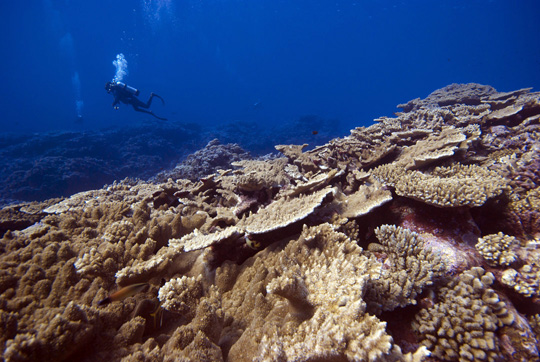
There were very few large fish on the otherwise beautiful reefs of the Acteon Islands

Factors Affecting Acteon Fish Communities

So why are the Acteon fish communities in such a pristine and isolated coral reef in such poor condition? Several factors may be at play. The Acteon group of islands is relatively isolated. The closest major land mass to the group is Mangareva, more than 220 km away. Due to its isolation the Acteon group is difficult to patrol and may be vulnerable to poaching. Both local and foreign fishing vessels may target tuna, jacks, groupers and snappers, and also sharks for the fin trade.
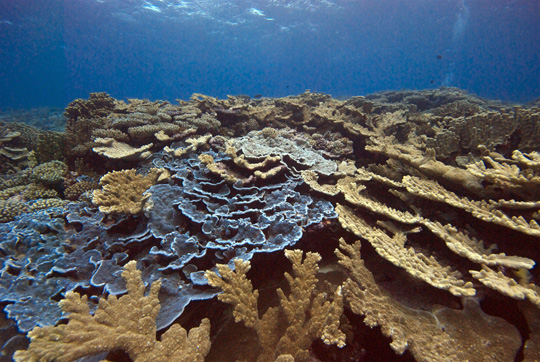
A few species of corals dominated the reefs.


Also due to the large distances between the Acteon islands the other major island groups, it is possible that recruitment of fish larvae and immigration of adult fish into the islands is limited. This means that if the fish stocks were depleted by fisheries, recovery would largely depend on Acteon’s own remaining stocks.
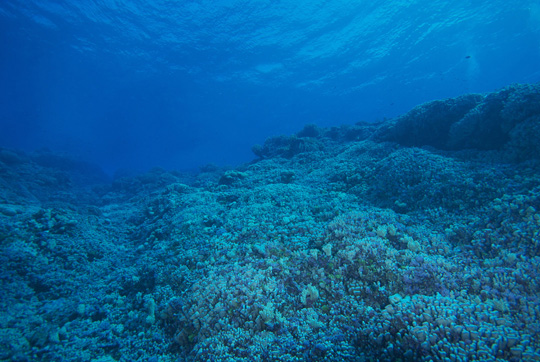
Acteon Fish Communities: Very few fish on this reef
Depleted Acteon Fish Communities: Very few fish on this reef


Despite the very high cover of live corals, the physical complexity of the reef was rather poor, with very little suitable habitat and shelter for large fish. The amount of large predatory reef fish has been associated with the availability of suitable shelter, and the physical complexity of the reef.
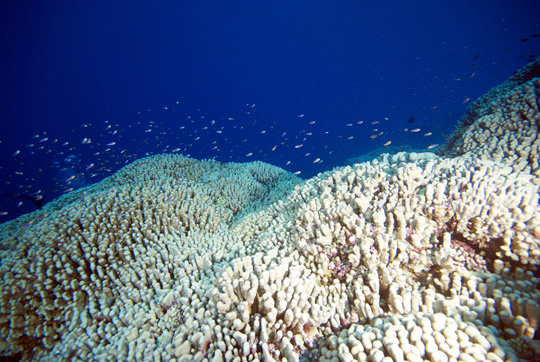
There is little available shelter for large fish in most of the reefs we surveyed at Acteon


But all is not lost. Improved efforts to patrol the area may help prevent possible poaching of fish. And together with the very good condition of the coral reef, which has been relatively buffered from stressors which cause tremendous damage to reefs elsewhere, the abundance and variety of the large predatory species of fish may increase at the Acteon in time.
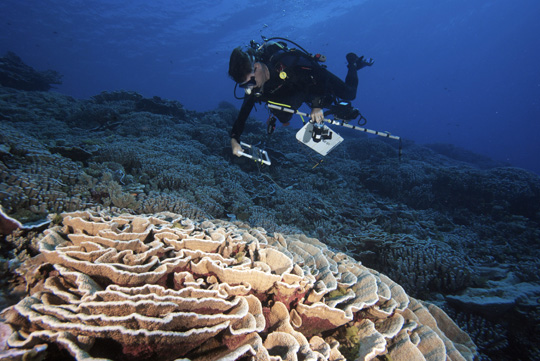
Live hard coral cover at the reefs of Acteon island group was 100% in many areas. Chief Scientis, Dr. Andrew Bruckner, laying a line to survey corals.
Live hard coral cover at the reefs of Acteon island group was 100% in many areas. Chief Scientist, Dr. Andrew Bruckner, laying a line to survey corals.

(Photos by Joao Monteiro)

Related Posts

2025-2026 B.A.M. Student Voices

Throughout the Bahamas Awareness of Mangroves (B.A.M.) and Jamaica Awareness of Mangroves in Nature (J.A.M.I.N.) programs, we evaluate each phase of the mangrove education and restoration process to better understand how students are learning, growing, and connecting with their coastal environments.

Before the programs begin, students share what they already know about mangroves and how they feel about them. As the program progresses, we continue to gather feedback to see how their knowledge evolves from identifying mangrove species and understanding food webs to recognizing the role mangroves play in coastal protection and climate change mitigation.

But the surveys go beyond science content.

We also ask students…

Read More

Ten Years of B.A.M.: Rooted in Partnership, Growing in Purpose

Ten years ago, the Bahamas Awareness of Mangroves (B.A.M.) program began with a simple but meaningful commitment: to connect Bahamian students with the mangrove ecosystems that shape and protect their island home.

Since 2015, B.A.M. has been implemented in partnership with Friends of the Environment, whose dedication to environmental stewardship in Abaco has made this program possible year after year. Together, we have worked alongside Patrick J. Bethel High School and Forest Heights Academy to bring hands-on mangrove science into classrooms and out into the field.

What makes ten years remarkable is not just longevity — it is consistency…

Read More