search-icon
Getting to the bottom of things

One of our survey methods that we do while diving at each site is photo transecting. Photo transects involve taking evenly measured photos of the reef bottom. This not only gives us a permanent record of the reef condition, but it also allows us to do a more detailed analysis after the dive. Executive Director Phil Renaud, Chief Scientist Andy Bruckner and Ken Marks have been taking photo transects on this trip to Rangiroa. Combined they take several photo transects every 5 meters from 30 to 5 meters depth.

Ken Marks taking photo transects.
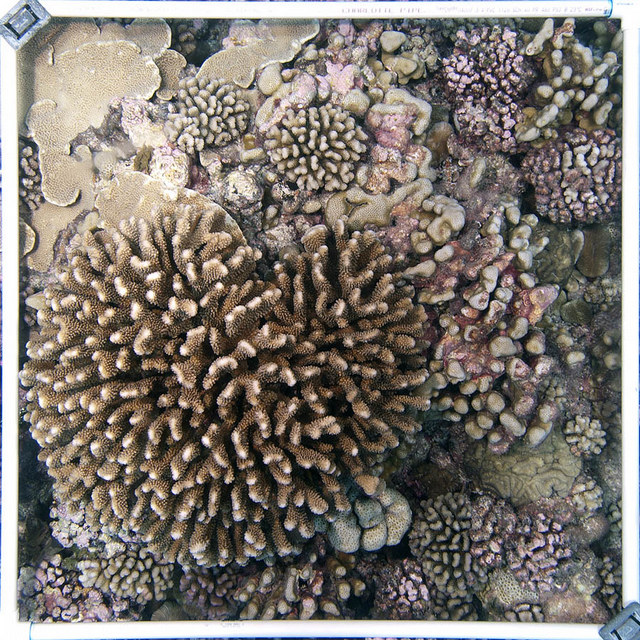
A coral filled quadrat.
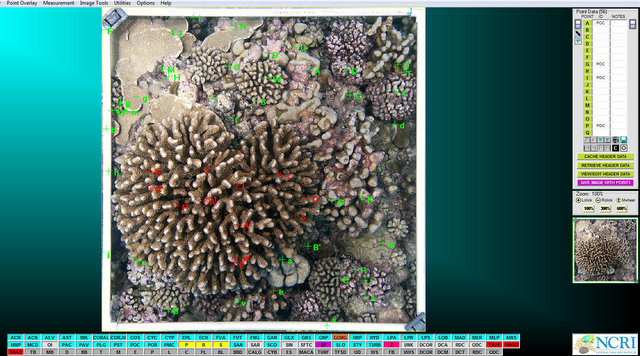
A screenshot of one of the programs used to analyze photo transects.


Each photo they take covers one square meter of reef. Using these photos, in combination with various computer programs, we can calculate the percentage of each organism on the bottom, the different sizes of corals or even the total area covered by coral. Photo transects are just another tool we have to help us describe and evaluate these reefs.

(Photos by 1-Brian Beck, 2-Ken Marks)

To follow along and see more photos, please visit us on Facebook!
Related Posts

2025-2026 B.A.M. Student Voices

Throughout the Bahamas Awareness of Mangroves (B.A.M.) and Jamaica Awareness of Mangroves in Nature (J.A.M.I.N.) programs, we evaluate each phase of the mangrove education and restoration process to better understand how students are learning, growing, and connecting with their coastal environments.

Before the programs begin, students share what they already know about mangroves and how they feel about them. As the program progresses, we continue to gather feedback to see how their knowledge evolves from identifying mangrove species and understanding food webs to recognizing the role mangroves play in coastal protection and climate change mitigation.

But the surveys go beyond science content.

We also ask students…

Read More

Ten Years of B.A.M.: Rooted in Partnership, Growing in Purpose

Ten years ago, the Bahamas Awareness of Mangroves (B.A.M.) program began with a simple but meaningful commitment: to connect Bahamian students with the mangrove ecosystems that shape and protect their island home.

Since 2015, B.A.M. has been implemented in partnership with Friends of the Environment, whose dedication to environmental stewardship in Abaco has made this program possible year after year. Together, we have worked alongside Patrick J. Bethel High School and Forest Heights Academy to bring hands-on mangrove science into classrooms and out into the field.

What makes ten years remarkable is not just longevity — it is consistency…

Read More