A new paper, Galápagos coral reef persistence after ENSO warming across an acidification gradient, gives a more detailed picture than ever of how ocean acidification and increased ocean temperatures combine to spell disaster for the worlds reefs, it also uncovers a hidden role for ocean nutrients.
How Climate Change Affects Coral Reefs
In June 2012 the Khaled bin Sultan Living Oceans Foundation set out on a fact finding mission around the Galápagos Islands to help understand how climate change affects coral reefs. Scientists predict that the oceans of tomorrow will be more acidic due to increasing carbon dioxide, and warmer, two natural conditions that exist around parts of the Galápagos Islands today. “Because the Galápagos Islands are so remote, they demonstrate how reefs live without the influence of damaging man-made factors “ said Philip Renaud, Executive director of the Khaled bin Sultan Living Oceans Foundation. Knowing how the Galápagos reefs fare during natural fluctuations of both temperature and acidity reveals how we can expect corals to respond to these man-made changes in the future.
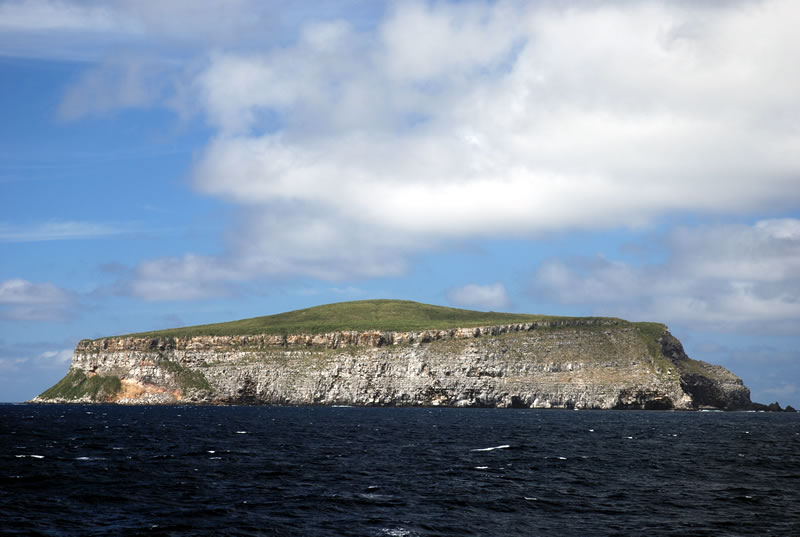
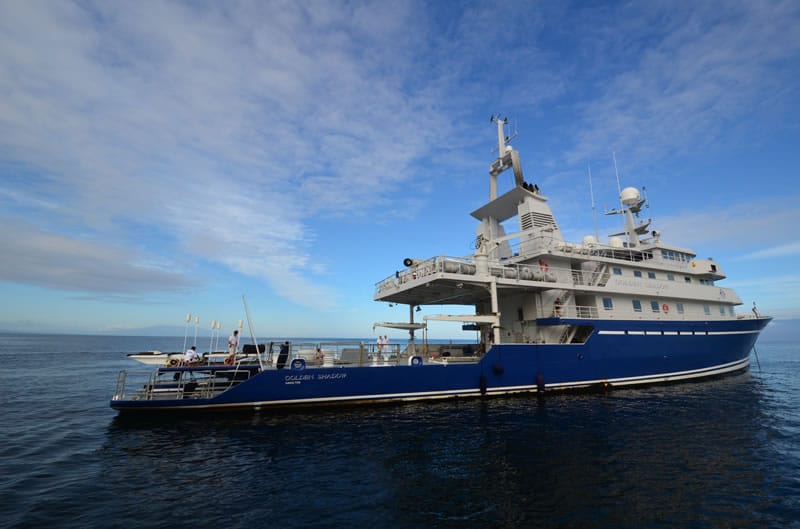
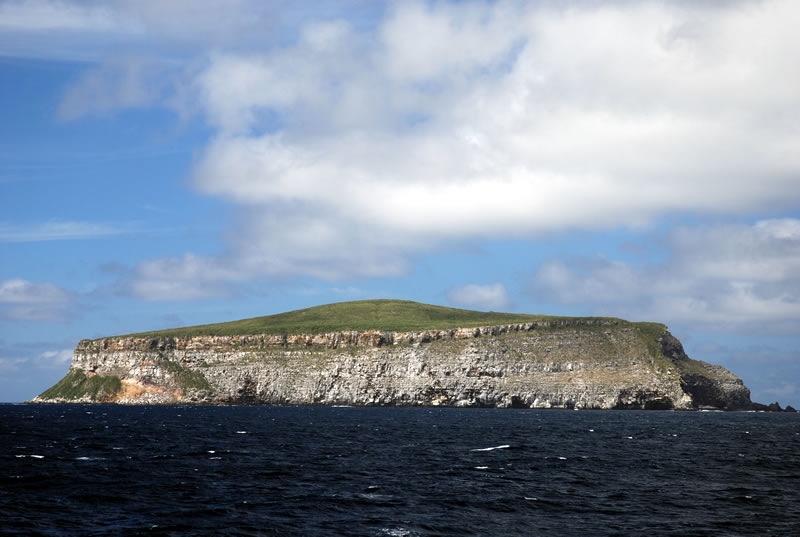
Darwin Island, Galapagos (left), photo by Alison Barrat. The M/Y Golden Shadow (right), research vessel of the Khaled bin Sultan Living Oceans Foundation. Photo by Josh Feingold
Past and Present
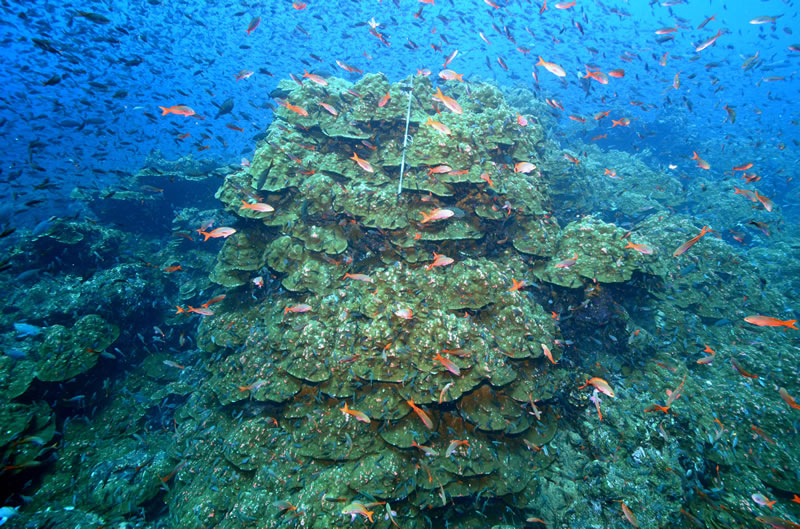
During the month-long research expedition scientists collected water and coral samples from many sites around the archipelago. The research was the next step in a roughly 40-year monitoring project of the Galápagos coral reefs that has been coordinated by the University of Miami. The long term study allows scientists to compare the reefs with those that existed in the 1970’s. When the study first started, coral reefs existed throughout the Galápagos but unusually high temperatures in 1982-83 and then again in 1997-98 killed many of the corals (learn more). Although the temperatures dropped back down most of the reefs died and ceased to exist. Only one true reef recovered, it lies on Darwin Island, the northern most Island in the Galápagos.
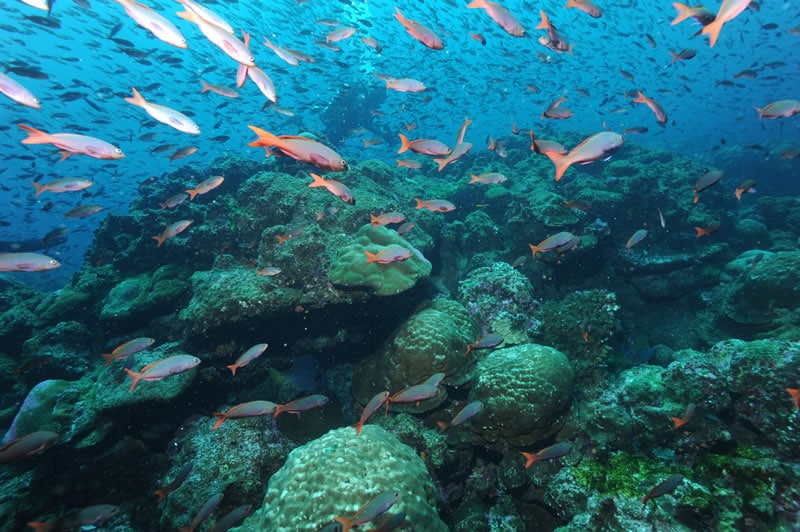
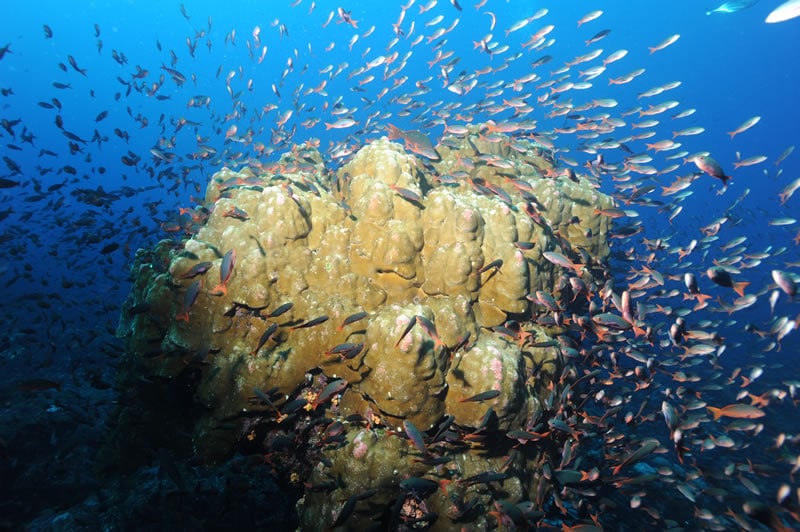
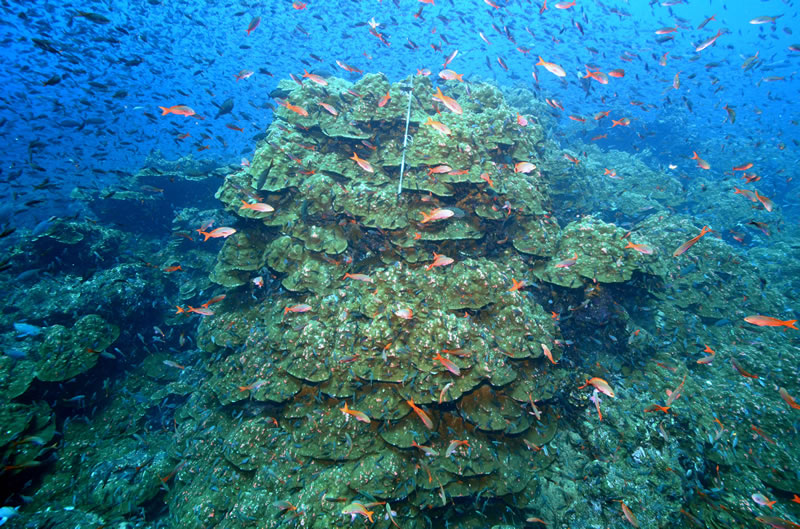
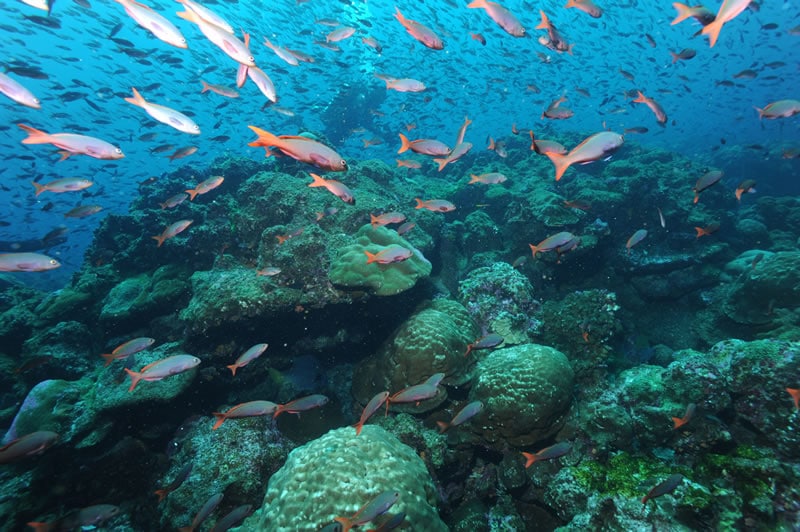
Last remaining true coral reef (left) and Porites (middle) in the Galapagos, Darwin Island, photos by Phil Renaud. Darwin corals (right), photo by Josh Feingold.
(Click-thru on images for greater detail.)
Can Corals survive in an Acidic Ocean?
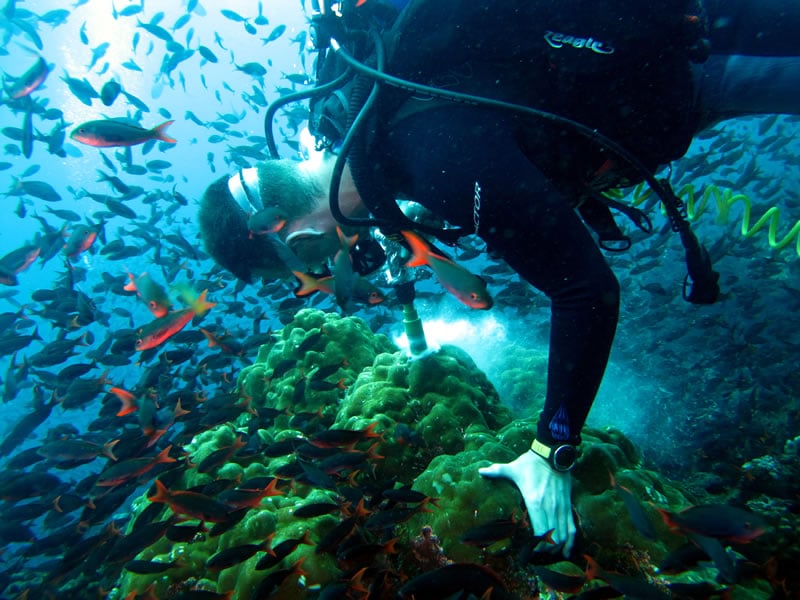
Ocean currents account for the Galápagos’ biological bounty (learn more). The cold Humbolt Current flows north from Antarctica, while a deep, nutrient rich current crosses from the west and the North Equatorial Counter Current bathes Darwin Island in warm water. Each of these currents brings a different level of acidity to the islands. Derek Manzello was in charge of collecting and analyzing the water samples. He said “ In this study we determined if differences in carbon dioxide across the Galápagos correlated with calcification of Porites coral and reef persistence after ENSO (El Niño Southern Ocillation) warming.” He found the water around Darwin Island, where the coral had recovered, to be the least acidic in the Galápagos. He said, “Our results provide field evidence that the ability of coral reefs to persist with warming declines with acidification.” So, future oceans are likely to deal a double blow to coral survival.
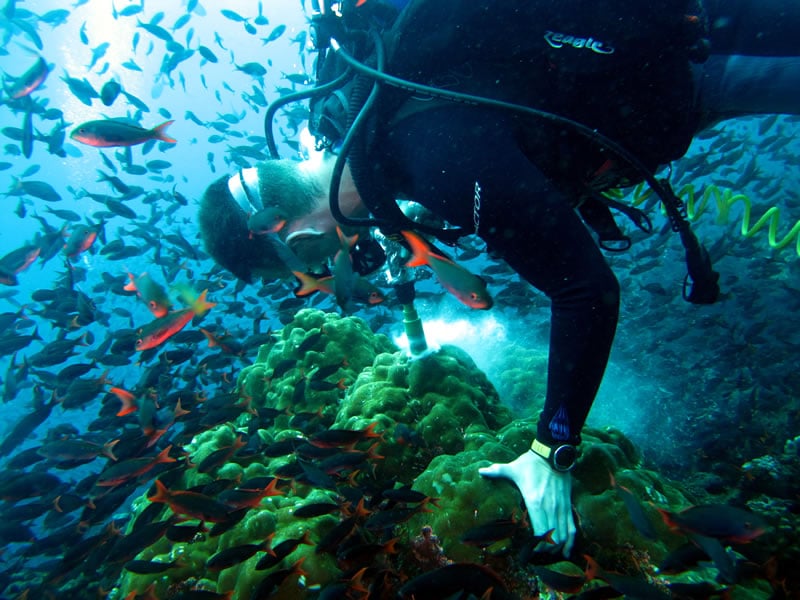
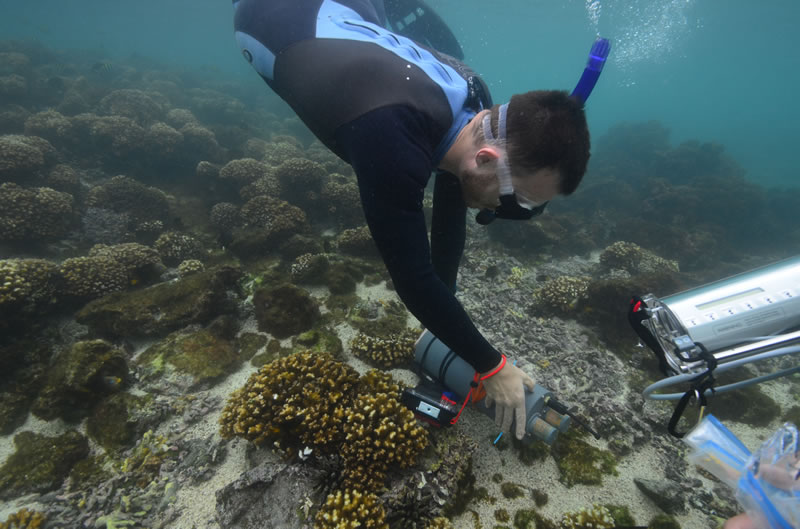
Derek Manzello collects a coral sample and measures the pH of the water near Darwin Island, Galapagos, photos by Josh Feingold.
Because there is a gradient of acidity around the Galápagos it was possible to determine an acidity tipping point, beyond which corals could not recover. Manzello said, “The Carbon dioxide tipping point, whereby reefs cease to exist in the Galápagos, is a pH of 8.0.”
Why did only some corals die?
In addition to water samples the team also took samples of the corals themselves. These were taken back to the lab so that the coral skeletons could be analyzed. By looking inside the skeletons the scientists were able to understand more about why the coral reefs on the Southern islands had failed to recover.
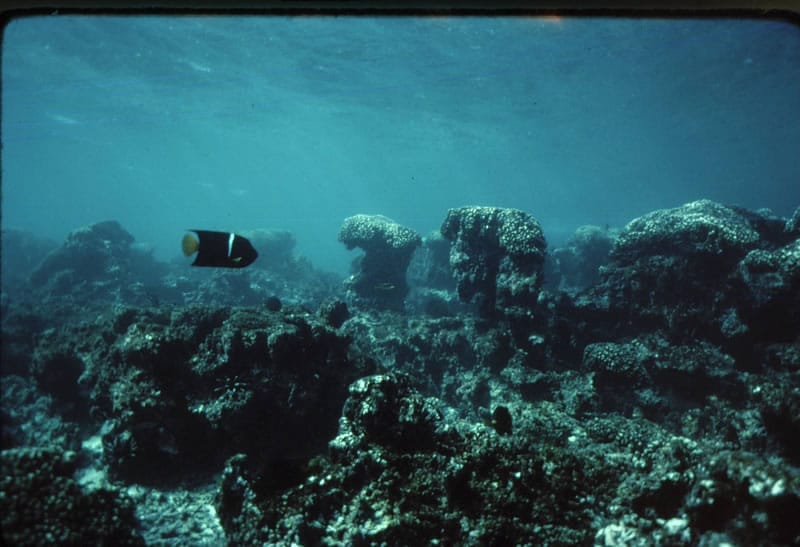
Examining the density of the coral skeletons the team found that in the southern islands the coral skeletons were weaker. This meant that they were easier to break or to bore into. Bioeroding organisms, mainly sea urchins, around the Galápagos had broken apart these weak coral skeletons and flattened the reefs to rubble. Looking at images taken when the study started and comparing them to those on the 2012 expedition showed that the shape of the seafloor had changed within a very short period of time. But one surprising thing was that the corals from the Southern islands had also been exposed to more phosphate. The phosphate had come from a nutrient rich upwelling that washed over the southern islands, but had not affected the northern islands.
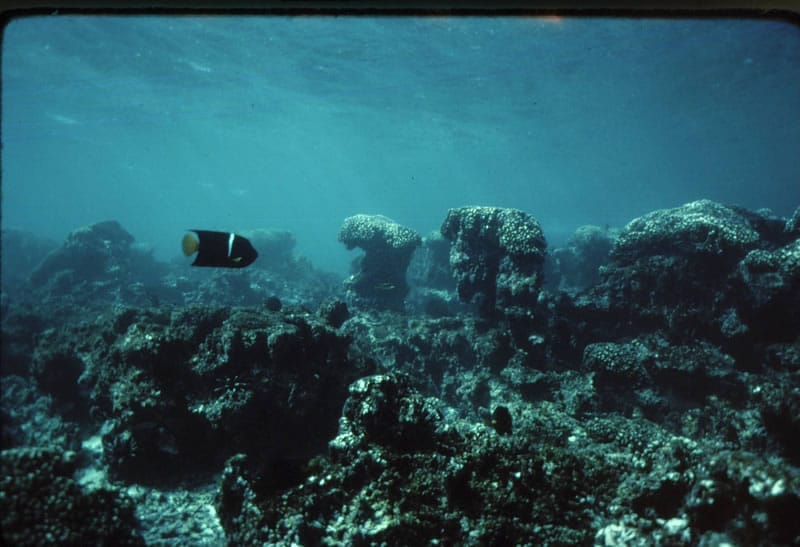
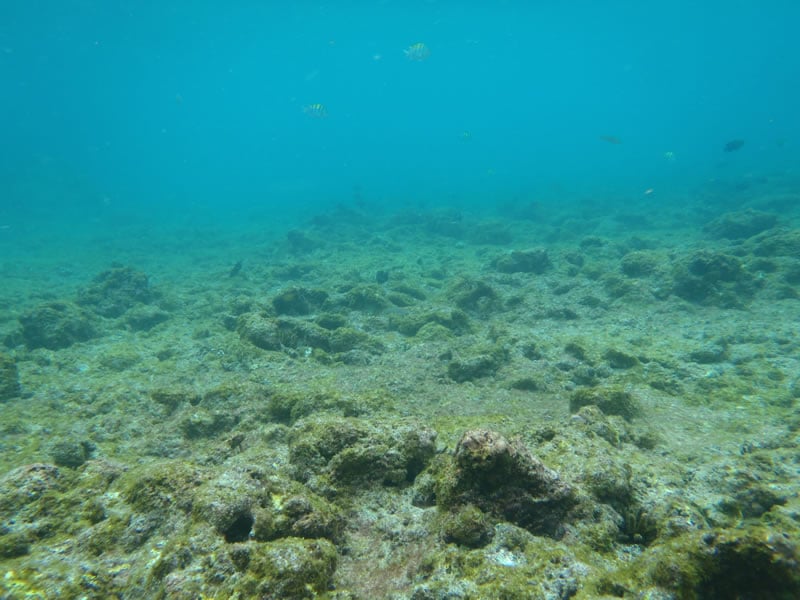
Devil’s Crown in 1976, photo by Peter Glynn (left) vs. Devil’s Crown in 2012, photo by Derek Manzello(right). The shape of the seafloor had changed within a very short period of time.
What it Means
By comparing the growth rate and skeleton density to known standard rates of coral growth the study showed that increased exposure to phosphate caused the corals to grow faster but to form weaker skeletons. Derek Manzello said “The recent history of Galápagos coral reefs shows that reefs exposed to elevated nutrients may be the most affected and least resilient to changes in climate and ocean chemistry.” That’s exceptionally bad news for reefs around the world and suggests that pollution from coastal runoff will exacerbate the problems caused by carbon dioxide and temperature increase. He continued, “In the absence of carbon dioxide emission reductions the warming and acidification that eliminated the coral reefs from the Galápagos Islands will occur for nearly all reefs by midcentury”.