search-icon
In Awe of J.A.M.I.N
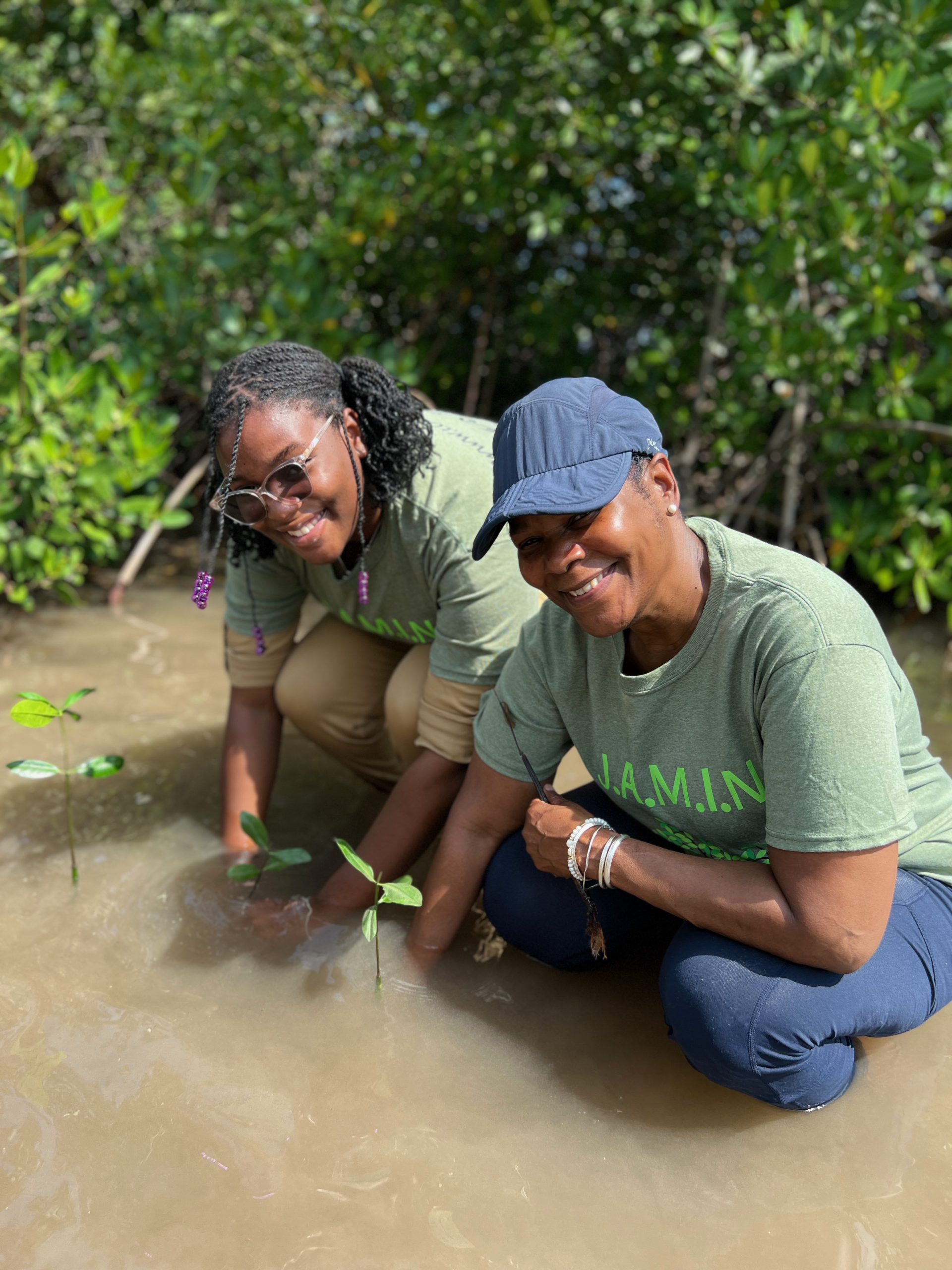
A picture of Sandra Turner helping a student plant their mangrove
Sandra Turner helps a J.A.M.I.N. student from William Knibb Memorial High School plant her mangrove seedling.


Today’s guest blog comes from Sandra Turner, who works to promote the equitable advancement of climate literacy and ocean conservation. The Geography of Awe is the name of her latest National Geographic Society grant project, where she integrates her fieldwork and expertise in cartography and multimedia storytelling to share her love for the Caribbean’s rich culture and biodiversity. See her 
bio to learn more. 


Every so often, we get the rare chance to experience genuine awe and inspiration. This was the case when Amy Heemsoth extended the invitation to join her this past April at William Knibb High School as she concluded her Jamaica Awareness of Mangroves in Nature (J.A.M.I.N.) program. I was in Jamaica conducting conservation research and fieldwork on another part of the island. Still, after months of phone calls, I could not resist the opportunity to meet Amy in person and learn more about the incredible work she does in the region, teaching students about marine ecosystems. 
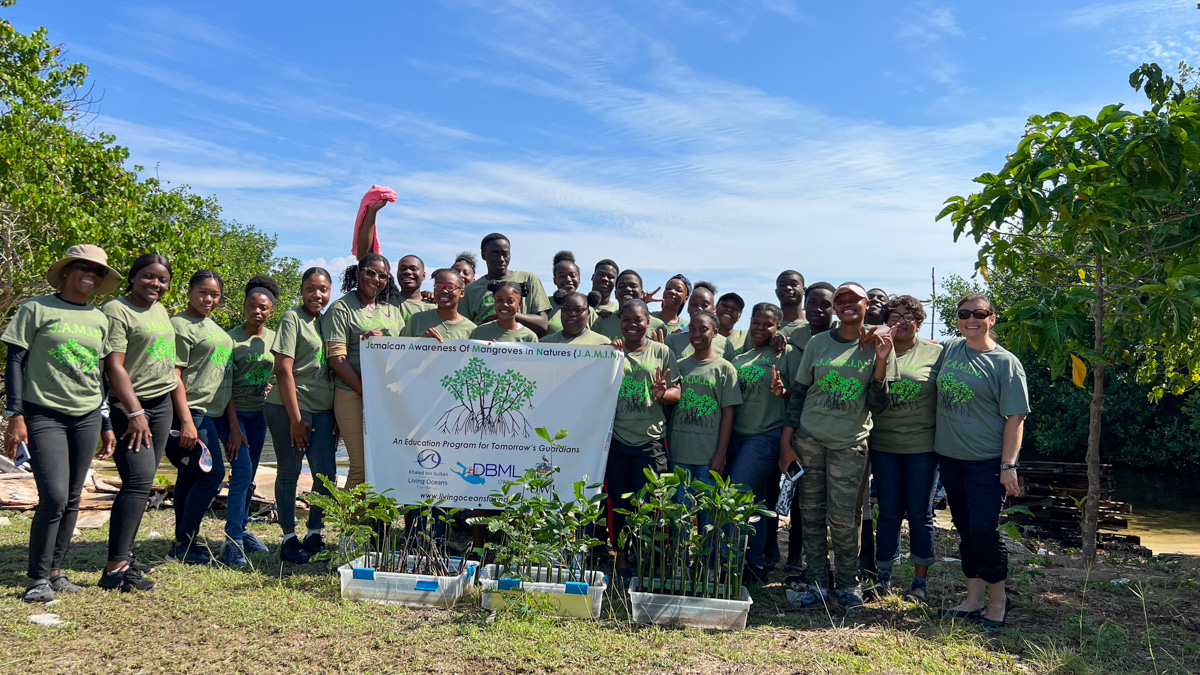
Photo: William Knibb Memorial High School students rejoice as they commemorate the successful culmination of their dedicated eight-month-long nurturing efforts by planting mangrove seedlings.
William Knibb Memorial High School students rejoice as they commemorate the successful culmination of their dedicated eight-month-long nurturing efforts by planting mangrove seedlings.

As a National Geographic Certified Educator and Explorer currently working to increase the equitable advancement of climate and ocean literacy to students in vulnerable global communities, Amy and I converged on the idea of deepening student citizen science and storytelling engagement. As I reflect on the impactful day spent with Amy, the students, and the staff, there are a few unforgettable moments worth sharing. 

First, I will always remember the warm greetings from Amy and members of the school, followed by seeing the students vividly excited about completing their mangrove research projects and the long-awaited moment to plant their mangrove seedlings in a nearby seabed.  I recall listening and watching Amy intently as she prepared students for what to expect. The students were so excited they could hardly contain themselves as they were given their J.A.M.I.N t-shirts before boarding the bus. I felt like family as Amy called me from across the room to ensure I received a t-shirt, too!  The energy of the moment was so infectious that I recall hugging Amy several times and thanking her for inviting me to experience the moment’s joy. 

We all had a ball planting the seedlings! I was astonished to see the student actively engaged and attentively placing the seedlings with such care and purpose. I appreciated how they partnered and supported each other throughout the planting process. They all cheered, danced, and hi-fived each other every step of the way. Even the adults joined in on some of the fun and dance action!
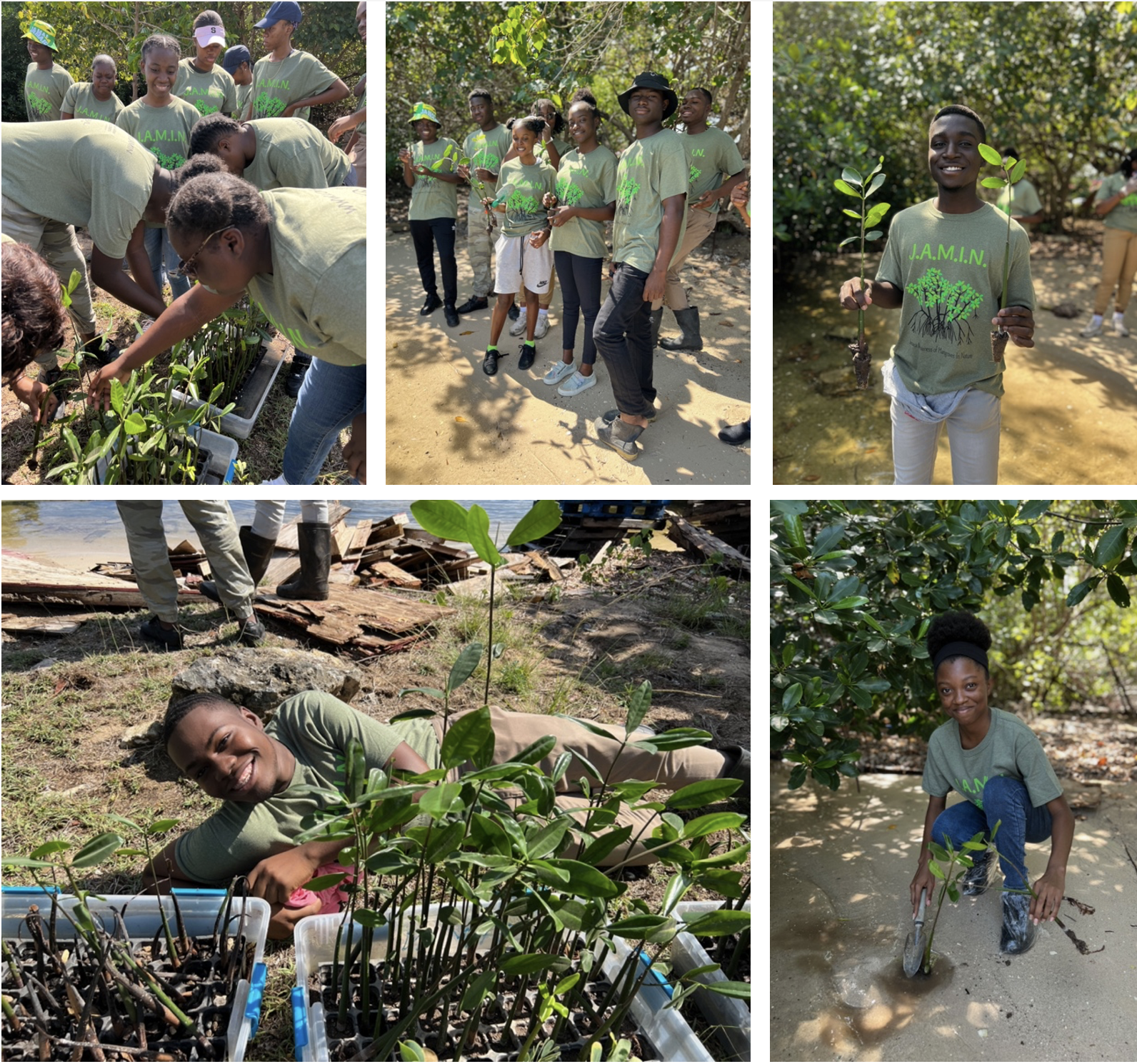
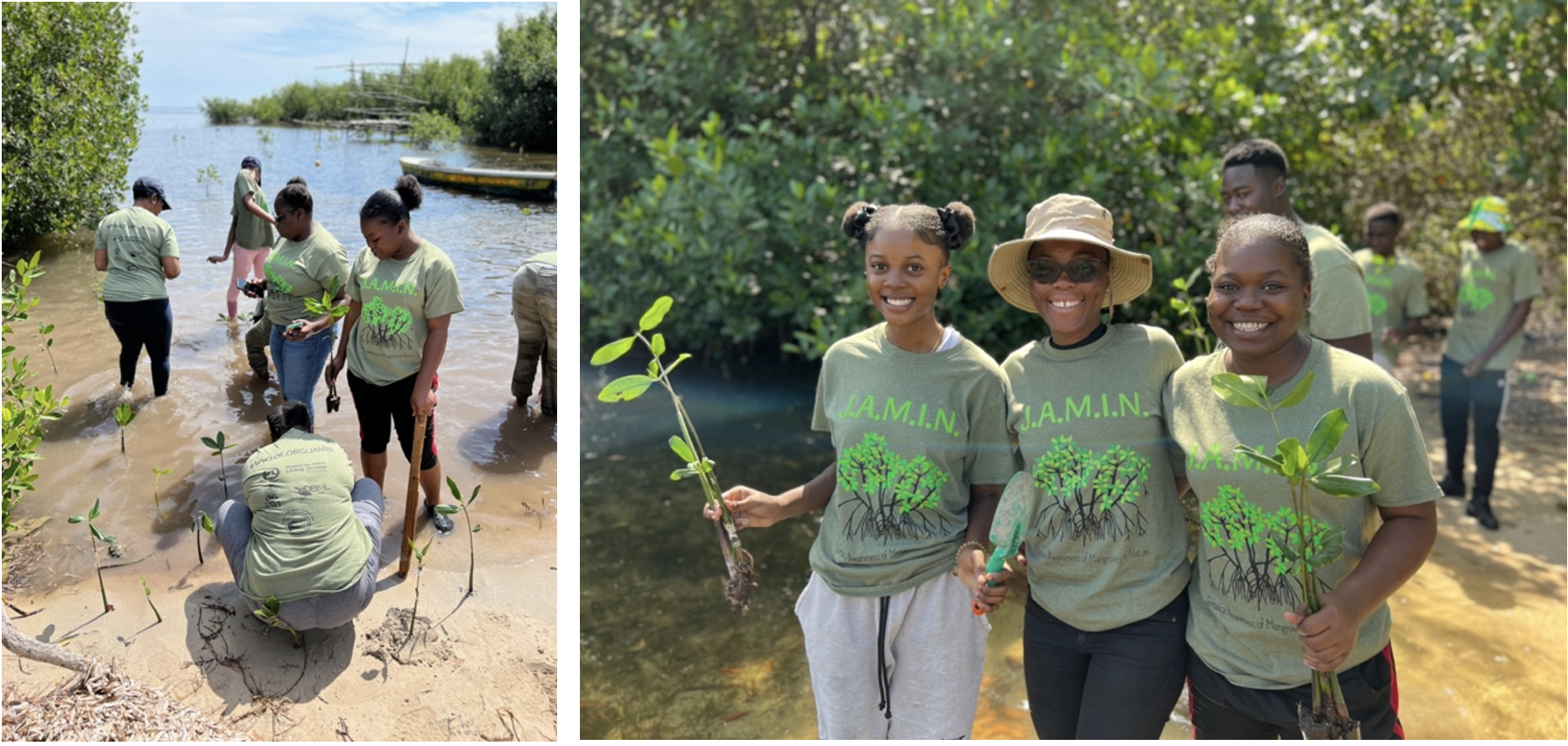
Photo: J.A.M.I.N. students exude boundless enthusiasm as they carefully plant their mangrove propagules within the thriving mangrove forest situated near William Knibb Memorable High School
Photo: J.A.M.I.N. students exude boundless enthusiasm as they carefully plant their mangrove propagules within the thriving mangrove forest situated near William Knibb Memorial High School.
J.A.M.I.N. students exude boundless enthusiasm as they carefully plant their mangrove propagules within the thriving mangrove forest situated near William Knibb Memorial High School.

Later back at the school, it was evident to see the respect, admiration, and appreciation the students felt for Amy and for being in the program. I watched as the students proudly received their certificates of completion and gave Amy smiles, handshakes, and hugs.  Most memorable, I saw Amy close to tears as one student shared thunderous words of gratitude on behalf of all the students.  
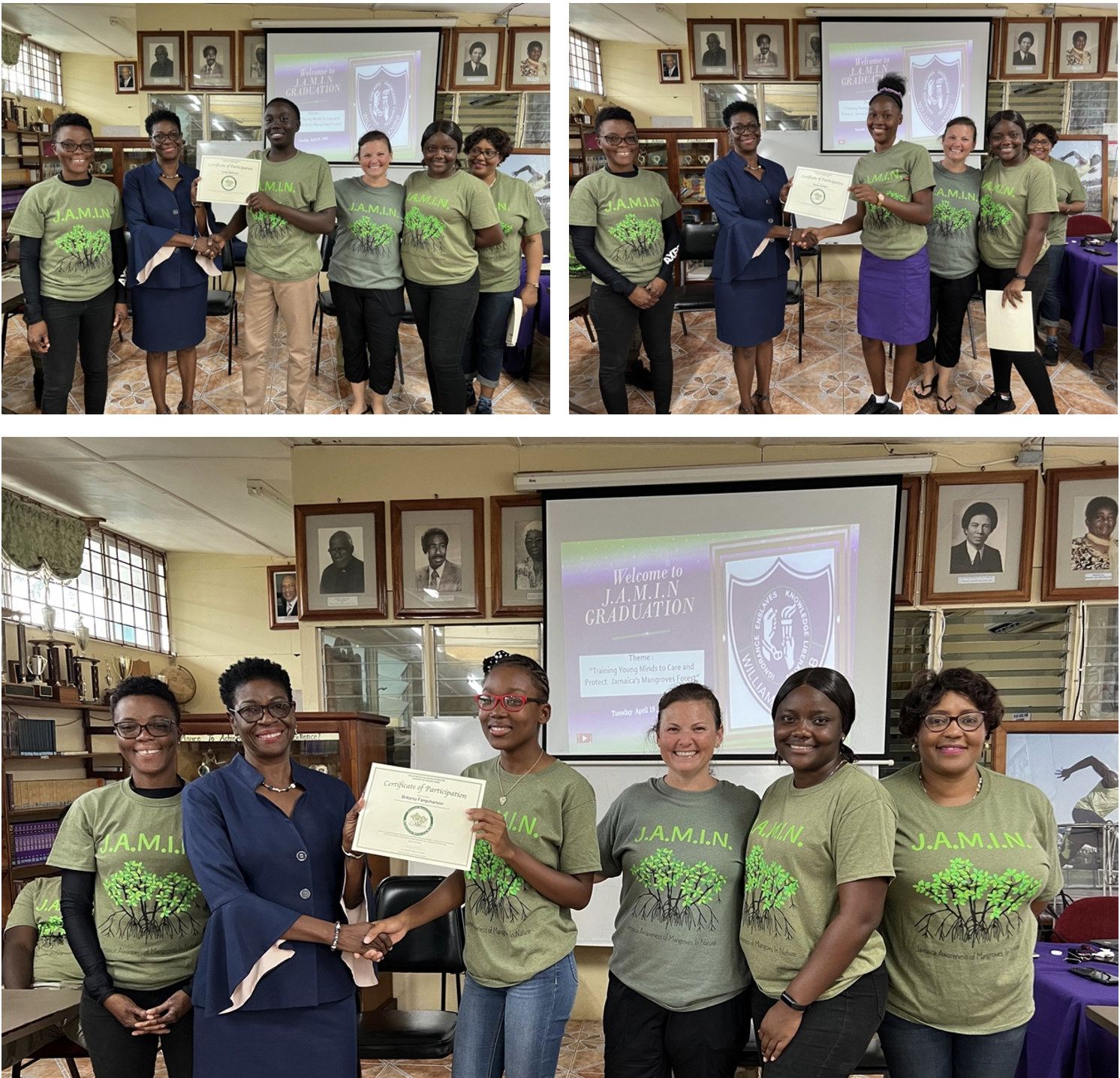
Students proudly receive their well-deserved J.A.M.I.N. certificates of completion, bestowed upon them by a distinguished panel including William Knibb Memorial High School Vice Principal and Science Teacher Andrea Dunn, UWI Discovery Bay Marine Lab staff Shanna Thomas and Trudy-Ann Campbell, and the Director of Education at Living Oceans Foundation, Amy Heemsoth.

After the ceremony, Amy and I were invited to visit students during their science lecture. I recall the students’ very detailed and well-developed responses when I asked what they knew about climate change. Impressed by how well they comported themselves around such a complicated phenomenon, the overall site visit at William Knibb Memorial High School proved to be the ideal school for implementing National Geographic educational programming to further expand student engagement and to also enrich the J.A.M.I.N. program. 

Just when you think it couldn’t get any better, Amy, her colleagues, and I were sent away with the highest of Jamaican honors – a delectable lunch prepared by the hands of a skillful chef to close the day. 

The Caribbean is home to more than 43 million tenacious people, of which 12.6 million are some of the most vulnerable children in the world. Scientists agree that the Caribbean will continue to face disproportionate impacts due to a changing climate. Partnering with organizations in the region to help implement effective public outreach and educational programs is a crucial part of my work as a National Geographic Explorer. I am grateful to Amy for the opportunity to collaborate with the Khaled bin Sultan Living Oceans Foundation in the months to come; to help ensure that all children have the chance to learn about the environmental complexities of our time and to become active participants in building more resilient landscapes. We agree that education plays a critical role in helping students of all communities to thrive and pursue their dreams. 
Related Posts

Introducing Our New Website: A Fresh Look for the Foundation’s Future

As we celebrate the Khaled bin Sultan Living Oceans Foundation’s 25th anniversary, we are proud to unveil our newly redesigned website—a modern home for our science, conservation work, and educational programs. This launch marks an important moment for the Foundation as we honor our long history and look toward the future of ocean conservation.

For more than two decades, the Foundation has worked tirelessly to improve the health of our living oceans. We have advanced ocean science, led one of the largest coral reef research missions in history, restored mangrove forests with local communities, created award-winning education programs, and shared the wonders of the ocean with people around the world. Our new website reflects the organization we are today—focused on conserving coral reefs, restoring mangrove forests, and improving ocean literacy—while still highlighting the legacy of work that brought us here.

The redesigned site…

Read More

Connecting People, Art, and Oceans: Championing Conservation at the 2025 IUCN Congress

The IUCN World Conservation Congress brings together thousands of leaders and decision-makers from governments, non-profit organizations, civil society, Indigenous groups, and the private sector to shape global conservation policy and action. This influential gathering serves as a platform to share knowledge, build partnerships, and advance initiatives that protect our planet’s biodiversity.

As a member of the International Union for Conservation of Nature (IUCN), the Khaled bin Sultan Living Oceans Foundation was honored to take part in the Congress, joining a global community of leaders, organizations, and changemakers committed to protecting nature and advancing sustainable futures.

Read More
Privacy Overview

This website uses cookies so that we can provide you with the best user experience possible. Cookie information is stored in your browser and performs functions such as recognising you when you return to our website and helping our team to understand which sections of the website you find most interesting and useful.  You can view our complete Privacy Policy here.

Strictly Necessary Cookies

Most of our cookies are used to improve website security and reduce spam. These cookies should be enabled at all times. They also enable us to save your preferences for cookie settings.

3rd Party Cookies

This website uses Google Analytics to collect anonymous information such as the number of visitors to the site, and the most popular pages. Keeping this cookie enabled helps us to improve our website.