The Living Oceans Foundation is pleased to present two live presentations from the Galápagos as part of World Oceans Day 2012!
On the June 8, 2012 at 3:30PM EST, join the Khaled bin Sultan Living Oceans Foundation and the Ocean Project, featuring “Her Deepness” Sylvia Earle, on a live call to the research vessel Golden Shadow in the Galápagos during our next Global Reef Expedition mission. This transcontinental conversation on coral reef research will include photos, videos and coral reef news direct from the sub-aquatic research site near Darwin Island. Dr. Earle and the science team will discuss current studies on rare coral reefs at the north of the Galápagos archipelago; how the Galápagos species respond to El Niño-driven temperature fluctuations; and why that may give us hope for corals’ ability to be resilient to future climate change.
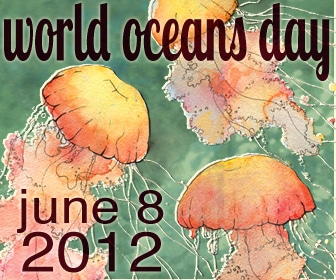
Visit www.livingoceansfoundation.org to view the live webinar. Anyone in Washington, D.C. that day can come downtown to the Smithsonian’s Baird Auditorium to watch it in person with Sylvia Earle.
In addition, at 10:00AM EST on June 8, LOF Chief Scientist, Dr. Andrew Bruckner, will be hosting an education webinar entitled, “The Galápagos: A unique field laboratory to assess the effects of climate change on marine environments.” This webinar is open to all high school students, teachers, and members of the public.
Both events will be streamed from the Living Oceans Foundation website. Visit www.livingoceansfoundation.org for more details.
More on the Galápagos and the Living Oceans Foundation
The Galápagos is a unique oceanic location that has a reputation as a living laboratory of evolution. The 19 islands and surrounding waters are characterized by fragmented, isolated landscapes, a high numbers of species found nowhere else in the world, and dramatically variable climatic conditions. The species and ecosystems undergo cyclical shifts that occur every 2-8 years in accordance with the strength of the El Nino Southern Oscillation.
In the Galápagos, the 1982-1983 event was associated with a mass mortality of corals, movement of sharks into deep water, breeding failure of marine birds, replacement of macroalgae by coralline algae, and population explosions of sea urchins. Most of the coral reefs died and the framework disintegrated to rubble and sand. Remarkably, the reef systems have shown unusually high resilience, rebounding from this catastrophe, with only minimal subsequent damage during the 1997-1998 event. As part of the Global Reef Expedition, the Living Oceans Foundation’s research in the Galápagos will help determine what makes these reefs so resilient, and whether they are likely to survive future climate change perturbations.
To view the streamed events, go to www.livingoceansfoundation.org a few minutes before each start time. To follow along the Global Reef Expedition’s mission to the Galápagos, please visit us on Facebook! You can also follow the mission on our Global Reef Expedition page, where there is more information about our research and team members.