search-icon
“Let’s name the zones, the zones, the zones of the reefs…of Raivavae and Tubuai”

Coral communities on the first two islands in the Australs were very unusual, compared to all other reefs we looked at in French Polynesia. Unlike other fore reef communities, a very wide shelf surrounded each island, extending from the reef crest, adjacent to the lagoon, hundreds of meters offshore before plunging steeply to the depths.
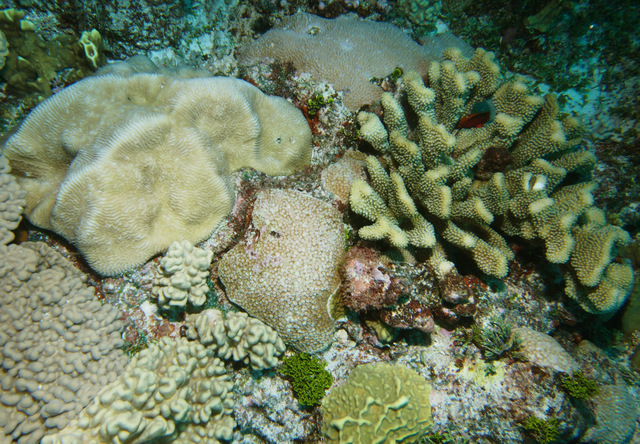
Austral Coral Communities of Raivavae and Tubuai: A typical mid depth assemblage of hard (Leptoria, Astreopora and Pocillopora) and soft corals

Austral Coral Communities: Raivavae and Tubuai

The shallow reef transitioned from a high energy reef crest dominated by branching corals, mostly stout finger corals and thick tables of Acropora and cauliflower corals (Pocillopora), to a spur and groove structure with narrow scoured hard-bottom channels and wide flattened spurs. The spurs in shallow water (to 10 m depth) were constructed mostly of low-lying massive star corals (Astreopora), with some larger outcrops containing other massive species such as Favia and a brain coral (Leptoria) seen previously only in Mangareva, along with short, stout branched and digitate Acroporids and Pocillopora.
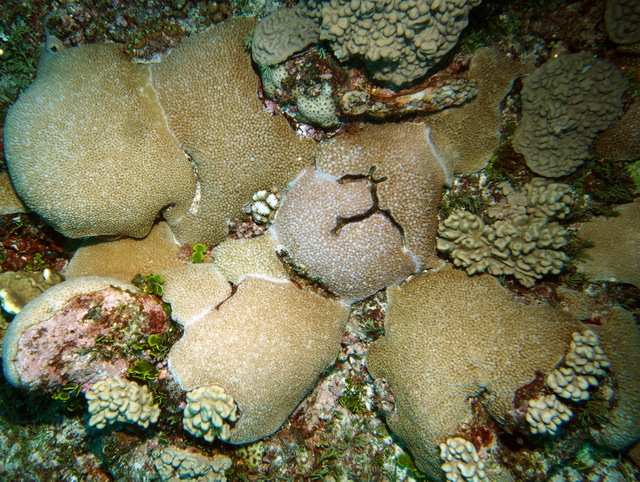
Astreopora becomes more dominant in about 8 meters of water


From 10-15 m deep, the grooves were colonized by small pore corals (Porites) and an unusual massive coral we had not seen before (Hydonophora), while other encrusting, plating and boulder corals were found on the tops of the spurs. We also found another unique coral which forms potato-chip shaped colonies and extends its yellow to lime green polyps in the day (Turbinaria) and several other sheeting corals on the sides of spurs.
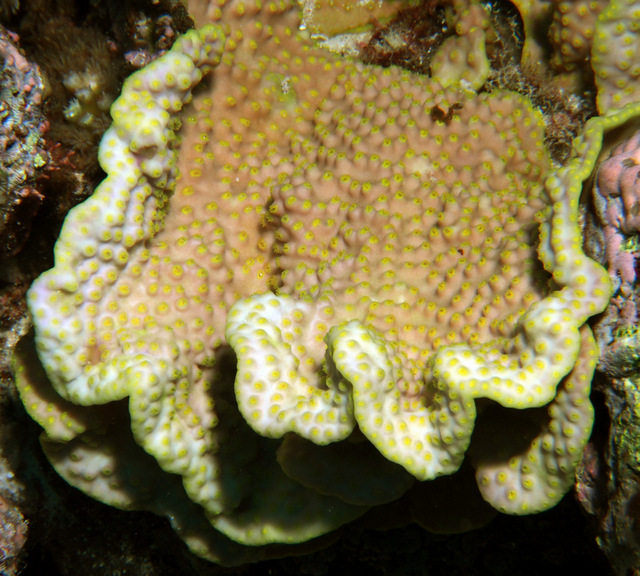
A colony of Turbinaria


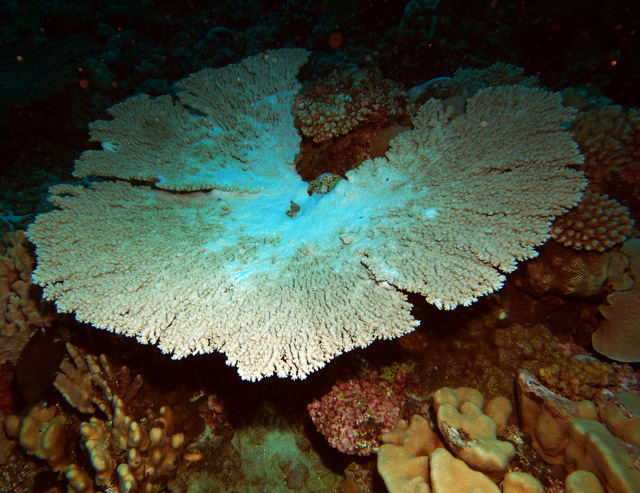
Many areas from 5-15 m depth had high numbers of soft corals, many of which were over 2 m in diameter. In deeper water, the reef gradually transitions from Astreopora to a community with very dense cover of large massive and lobate corals (Favia stelligera, Pavona clavus), flower corals (Lobophyllia) and dense thickets of stout-branched staghorn corals (Acropora). At 20-25 m deep another species that forms large tables (Acropora cytherea) becomes abundant; the only other place we observed this species was in Mangareva. Still deeper, these are progressively replaced by large flattened domes of pore coral (Porites), some that are over 5 m in diameter and centuries old.
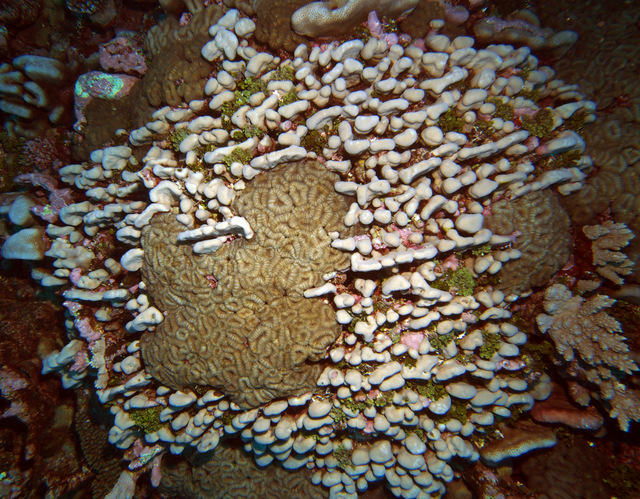
Pavona surrounding large colonies of Lobophyllia
A big table of Acropora cytherea

(Photos by Andrew Bruckner)

To follow along and see more photos, please visit us on Facebook!
Related Posts

From Students to Stewards: A Full-Circle Moment for J.A.M.I.N.

There are certain faces you never forget.

Over the years, hundreds of students have stepped into mangrove forests with us through the Jamaica Awareness of Mangroves in Nature (J.A.M.I.N.) program. I may not always remember every name, but I remember the expressions — the hesitation before stepping into thick mud, the laughter when someone loses a shoe, the look of surprise when they catch that unmistakable sulfur smell rising from the mangrove soil…

Read More

World Oceans Day: Protecting the Ecosystems That Protect Us

This World Oceans Day, the global community is being challenged to think differently about the ocean.

The 2026 World Oceans Day theme, “Reimagine: Beyond the World We Know, A New Relationship With Our Ocean,” invites us to recognize that the ocean is not something distant or separate from our lives. It regulates our climate, supports our economies, provides food for billions of people, and sustains the natural systems that make life on Earth possible.

Few places illustrate this connection more clearly than the coastal ecosystems that protect our shores and support marine life. While coral reefs, mangrove forests, and seagrass meadows are often…

Read More
Privacy Overview

This website uses cookies so that we can provide you with the best user experience possible. Cookie information is stored in your browser and performs functions such as recognising you when you return to our website and helping our team to understand which sections of the website you find most interesting and useful.  You can view our complete Privacy Policy here.

Strictly Necessary Cookies

Most of our cookies are used to improve website security and reduce spam. These cookies should be enabled at all times. They also enable us to save your preferences for cookie settings.

3rd Party Cookies

This website uses Google Analytics to collect anonymous information such as the number of visitors to the site, and the most popular pages. Keeping this cookie enabled helps us to improve our website.