search-icon
Mangroves of Tonga

Mangroves are unique trees that grow in intertidal areas of subtropical and tropical regions. They are highly specialized in adapting to distinctive environmental conditions they occupy. For instance, some mangroves are able to absorb seawater from the ocean and expel the excess salt through glands on the leaves, while others are able to exclude salt through their roots.

Mangrove Species

As latitude increases diversity of mangrove species decreases. Tonga has a total land area of 720 square kilometers (sq km), whereby only 3.36 sq km are mangroves. So far, only 10 major species of mangroves have been discovered in Tonga. Two of the most common species in Tonga are Rhizophora samoensis and Rhizophora stylosa.
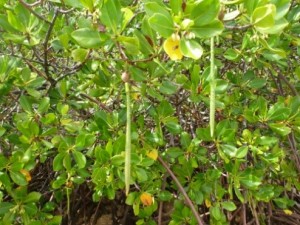
Mangrove Species: Rhizophora-stylosa

Mangrove Species: Rhizophora stylosa

Most of the information collected is based on studies completed on the main island of Tongatapu.   A more recent baseline study on ‘Eua Island near Tongatapu recorded only two main species of mangroves, the Pemphis acidula and Excoecaria agallocha.
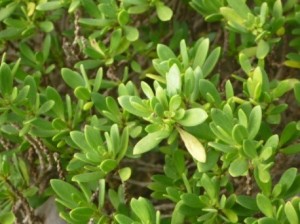
Mangrove Species: Pemphis-acidula

Mangrove Species: Pemphis acidula in ‘Eua.

Other islands require identification and distribution studies of mangrove species including Nomuka Island (Ha’apai Group), Vava’u Group, and Niuatoputapu.

Ecological Value of Mangrove Ecosystems

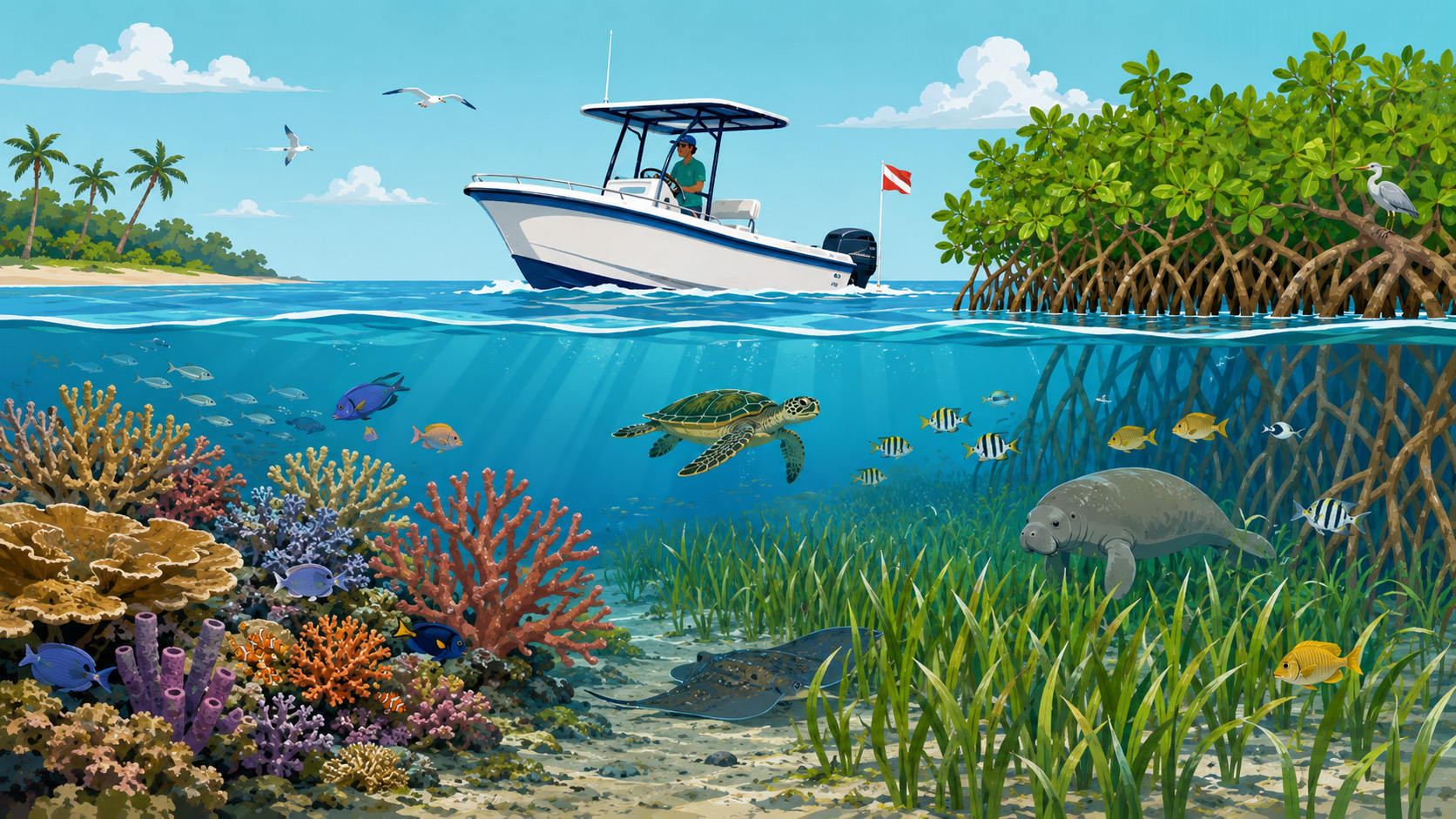
Mangrove ecosystems provide nursery ground for many fish and crustaceans. They also protect shorelines thus reducing erosion, especially in low lying areas with strong wind and storm surges. Additionally, mangroves trap sediment runoff while maintaining water quality and promoting a healthy environment for coral reefs. It is important to recognize that there are no boundaries between mangrove ecosystems, seagrass, and coral reef ecosystems. All of these aquatic ecosystems work together to keep everything in balance between these productive natural systems.

Threats to Mangrove Species

In Tonga, among the most destructive threats facing mangrove species is coastal development. Development is mainly increasing in Vava’u Group and Tongatapu along the periphery of Fanga’uta and Fangkakau Lagoons.

Unsustainable stripping of the mangrove for tannins (a pigment that is used to make dyes) for the tapa making and medicine, and cutting the mangrove for firewood and building materials pose additional threats to the remaining mangrove ecosystems in Tonga.
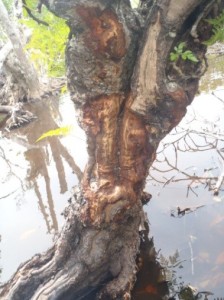
Threats to Mangroves: Bruguiera-gymnorrizha

Threats to Mangroves: Unsustainable stripping ofBruguiera gymnorrhiza.

To address these threats to mangroves, the Environment Division of the Ministry of Lands, Environment, Climate Change, & Natural Resources is conducting awareness programs and actively enforces existing laws promoting sustainable management of mangrove ecosystems in Tonga.

Photos by: 1-3 Hoifua ‘Aholahi
Related Posts

Introducing Our New Website: A Fresh Look for the Foundation’s Future

As we celebrate the Khaled bin Sultan Living Oceans Foundation’s 25th anniversary, we are proud to unveil our newly redesigned website—a modern home for our science, conservation work, and educational programs. This launch marks an important moment for the Foundation as we honor our long history and look toward the future of ocean conservation.

For more than two decades, the Foundation has worked tirelessly to improve the health of our living oceans. We have advanced ocean science, led one of the largest coral reef research missions in history, restored mangrove forests with local communities, created award-winning education programs, and shared the wonders of the ocean with people around the world. Our new website reflects the organization we are today—focused on conserving coral reefs, restoring mangrove forests, and improving ocean literacy—while still highlighting the legacy of work that brought us here.

The redesigned site…

Read More

Connecting People, Art, and Oceans: Championing Conservation at the 2025 IUCN Congress

The IUCN World Conservation Congress brings together thousands of leaders and decision-makers from governments, non-profit organizations, civil society, Indigenous groups, and the private sector to shape global conservation policy and action. This influential gathering serves as a platform to share knowledge, build partnerships, and advance initiatives that protect our planet’s biodiversity.

As a member of the International Union for Conservation of Nature (IUCN), the Khaled bin Sultan Living Oceans Foundation was honored to take part in the Congress, joining a global community of leaders, organizations, and changemakers committed to protecting nature and advancing sustainable futures.

Read More
Privacy Overview

This website uses cookies so that we can provide you with the best user experience possible. Cookie information is stored in your browser and performs functions such as recognising you when you return to our website and helping our team to understand which sections of the website you find most interesting and useful.  You can view our complete Privacy Policy here.

Strictly Necessary Cookies

Most of our cookies are used to improve website security and reduce spam. These cookies should be enabled at all times. They also enable us to save your preferences for cookie settings.

3rd Party Cookies

This website uses Google Analytics to collect anonymous information such as the number of visitors to the site, and the most popular pages. Keeping this cookie enabled helps us to improve our website.