
search-icon
Off the Deep End: Deep-Water Corals

Like jumping feet first into the rabbit hole made famous in “Alice in Wonderland” by Lewis Carroll, the deeper you dive on a reef, the more things change in interesting ways.  “Curiouser and curiouser,” mused Alice as she delved into her subterranean world.   A diver passing through deep-water corals might well think the same thing.  This morning, CAPT Phil Renaud, Executive Director of the Khaled bin Sultan’s Living Oceans Foundation and Dr. Bernhard Riegl of the National Coral Research Institute based out of Nova Southeastern University in Florida (supported by the Dive Safety Officer and Videographer), had a rare opportunity to experience the deep reef first-hand.  The purpose of their excursion into the depths was to compare a small portion of the deep reef around Great Inagua with the shallow reefs we have been surveying thus far on the expedition.
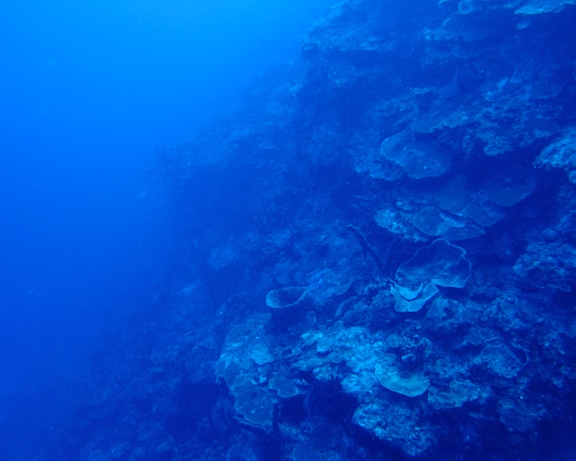
 

A sheer drop-off to deeper water on the reef around Great Inagua


The divers immediately noticed that the hemi-spherical shapes many coral species adopt in the shallows morphed into a flat, plate-like formation at depth.  This growth pattern is caused by lower amounts of sunlight penetrating the water as depth increases.  To maximize growth rates and, in turn, the amount of sunlight being received by their zooxanthellae algae [zoo-zan-thel-ee], deep-water corals adopt a flat morphology.  Individual coral animals, known as polyps, house a multitude of microscopic zooxanthellae in their tissues.  Thousands of specks of the minute algae photosynthesize, using carbon dioxide released by the coral as it metabolizes.  This process also provides the polyps with oxygen and organic nutrients.  The coral-zooxanthellae partnership is known as a symbiotic relationship.  In this case, because both parties benefit from their interactions, scientists refer to it as mutualism.
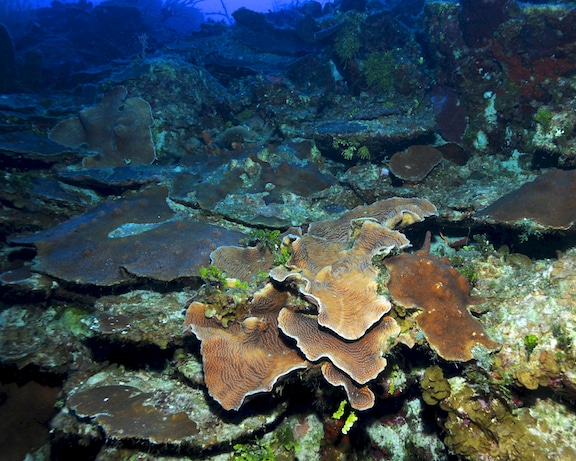
 

Deep-water corals exhibiting a flat plate-like morphology to maximize their ability to harvest available sunlight


The divers also noted that unlike shallow corals, the tentacles of deep-water polyps tend to be extended in daytime.  This is because deep-water corals have a diet that is more dependent on plankton and bacteria caught directly out of the water column, than on the products of photosynthesis.  Additionally, the color of coral species changed with depth as the symbiotic algae generate more photosynthetic pigments and in greater density to harvest light more effectively.  All of these modifications in morphology can make identifying deep-water corals tricky, as many of the usual indicators cannot be used.

The divers completed a rapid deep-water coral survey during their dive, which including taking many photographs.  They found that the species diversity making up the deeper reef off Great Inagua is similar to that of the shallow reef.  They also noted comparable patterns of coral disease, algal growth, and considerable coral mortality.  Although far more study is needed, these initial observations are one piece of information implying that corals in deeper waters are not exempt from factors impacting shallower corals.  Although the Global Reef Expedition is focusing on the study of shallow reefs, we value these occasional surveys of the deeper world of corals.
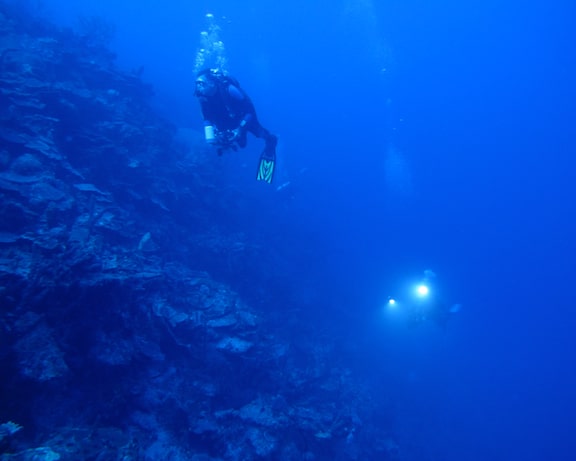
 

CAPT Philip Renaud and Doug Allan, Videographer, diving the deep reef off of Great Inagua


Written by Kit van Wagner

(Photo/Images by:  1 & 3 Nick Cautin, 2 CAPT Philip Renaud)

To follow along and see more photos, please visit us on Facebook! You can also follow the expedition on our Global Reef Expedition page, where there is more information about our research and our team members.

Related Posts

From Dialogue to Action: Ocean Foundations Gather in Stockholm

What can philanthropy accomplish when foundations working across ocean science, conservation, and sustainable development come together around a shared purpose?

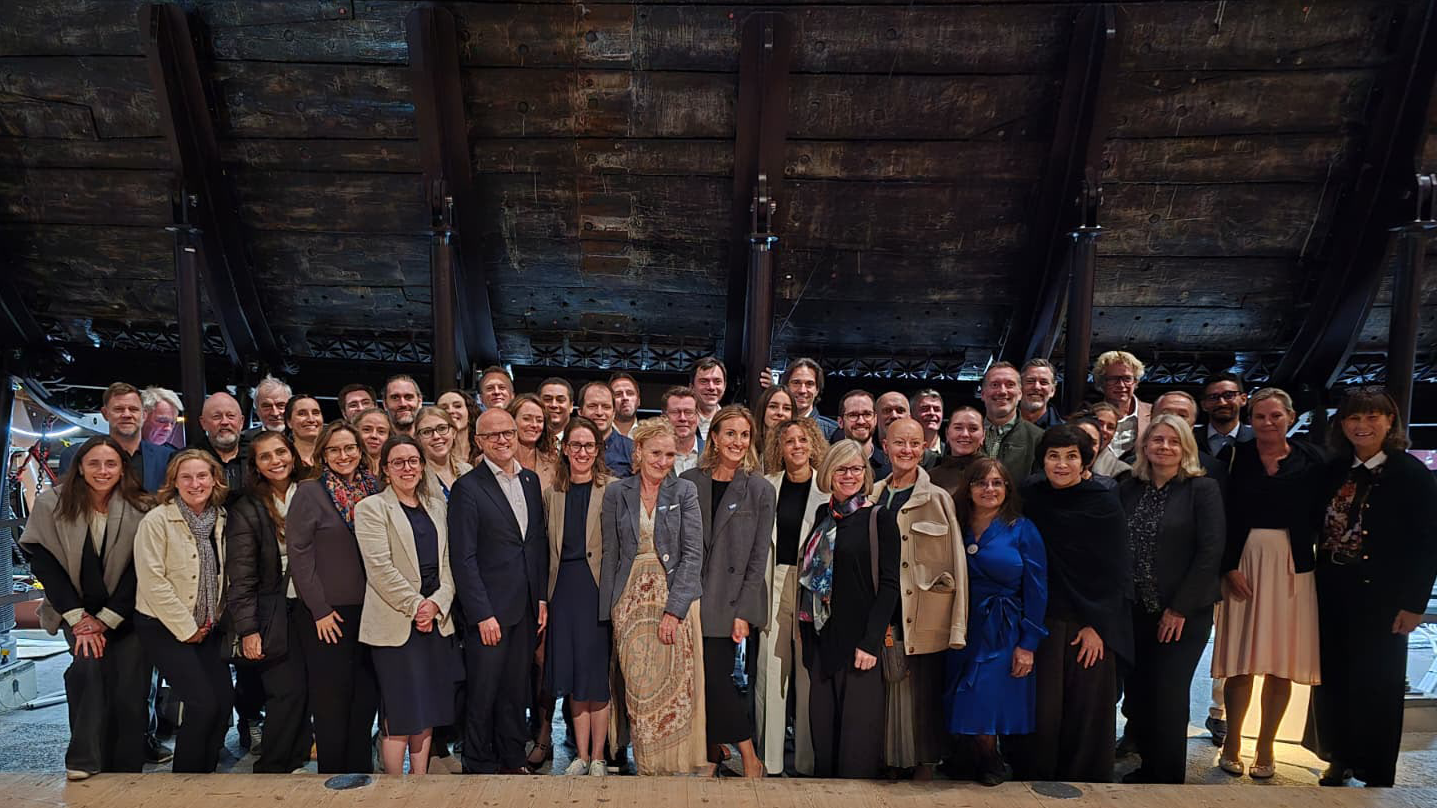
That question was at the heart of the 6th UN Ocean Decade Foundations Dialogue, held September 7–9 in Stockholm, Sweden. The Khaled bin Sultan Living Oceans Foundation joined philanthropic organizations from around the world for three days of discussion, collaboration, and planning focused on accelerating progress during the second half of the UN Decade of Ocean Science for Sustainable Development.

Facilitated by UNESCO’s Intergovernmental Oceanographic Commission (IOC), the UN Ocean Decade Foundations Dialogue is a growing network of more than 30 philanthropic organizations committed to advancing ocean science, collaboration, and action. Since its creation within the framework of the Ocean Decade, the Dialogue has provided foundations with a space to exchange ideas, develop partnerships, and explore how philanthropy can help advance a healthy and resilient ocean.

Hosted by the Voice of the Ocean Foundation (VOTO), this year’s gathering began with From Depth to Action, an Opening Forum that brought nearly 100 leaders from the Swedish and international ocean community together at…

Read More

Meet IFAN: Helping Bring Navigate with Care to the Next Generation

If you’ve ever seen a lighthouse flashing from the shore or a brightly colored buoy bobbing in the water, you’ve seen Aids to Navigation at work.

Aids to Navigation, often called AtoNs, help mariners navigate safely. They can mark channels, warn of hazards, help vessels determine their position, and provide other information people need to make safe decisions on the water. Around the world, these systems help guide everything from small recreational boats to large commercial or container ships. 

But safe navigation isn’t only about protecting vessels and the people aboard them. The choices mariners make can also affect the animals and ecosystems beneath and around them.

That connection between maritime safety and ocean conservation is at the heart of this year’s Science Without Borders® Challenge—and of our partnership with this year’s theme sponsor, the International Foundation for Aids to Navigation (IFAN).

Read More
Privacy Overview

This website uses cookies so that we can provide you with the best user experience possible. Cookie information is stored in your browser and performs functions such as recognising you when you return to our website and helping our team to understand which sections of the website you find most interesting and useful.  You can view our complete Privacy Policy here.

Strictly Necessary Cookies

Most of our cookies are used to improve website security and reduce spam. These cookies should be enabled at all times. They also enable us to save your preferences for cookie settings.

3rd Party Cookies

This website uses Google Analytics to collect anonymous information such as the number of visitors to the site, and the most popular pages. Keeping this cookie enabled helps us to improve our website.