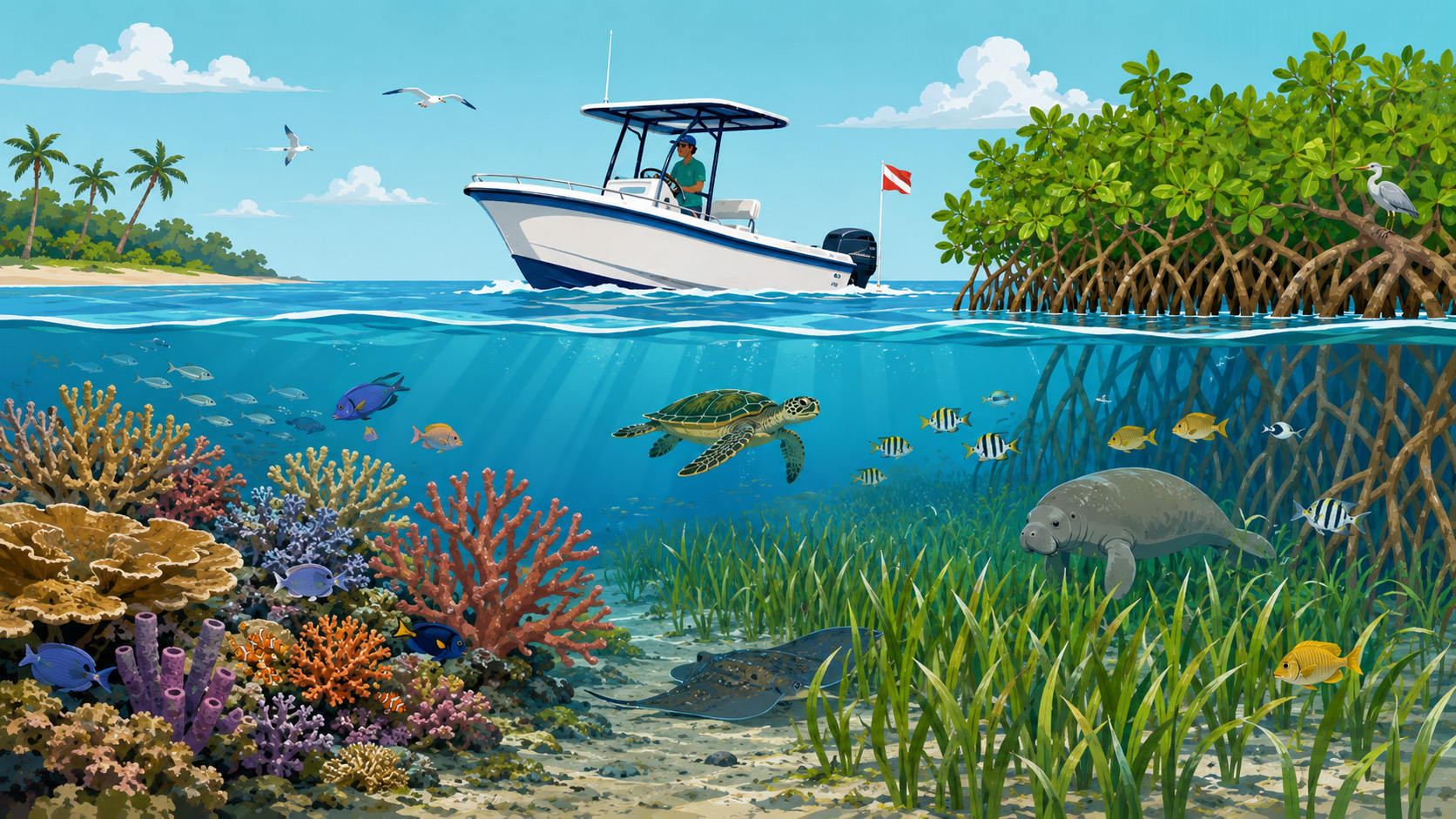
For thousands of years, Palauans have practiced “bul,” which is a traditional method of ecosystem conservation. In this practice, coastal communities will close areas to fishing and prohibit access for a designated amount of time, though not indefinitely. This traditional practice has become the basis for a large network of marine protected areas (MPAs) in Palau. Most marine conservation efforts in Palau are led by individual states, which established their first internationally recognized marine conservation area as far back as the 1950s. Since then, many states have established MPAs and the national government of Palau has implemented large scale MPAs offshore, protecting 80% of its Exclusive Economic Zone (EEZ) from commercial fishing.
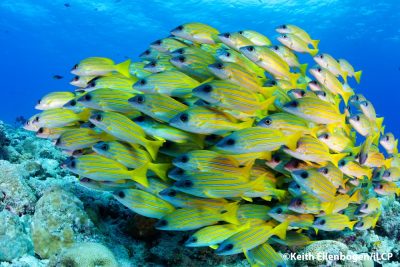
Palauans rely on the ecosystem services provided by coral reefs, including storm surge protection, sustenance, and income generation through tourism and fishing exports. Most of the local fishing occurs close to shore and within the lagoonal areas. In most cases, high coral cover, such as what was observed in Palau, is accompanied with a diverse fish community with a healthy spread of fish among all trophic levels.
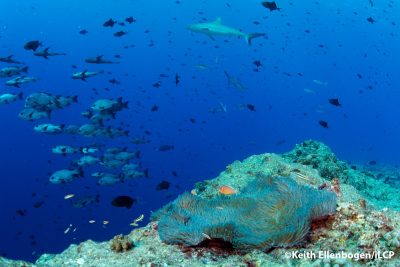
Trophic levels are important to assess when studying a fish community because if you have too many or too few fish in the different trophic levels, it is often indicative of an imbalance in the fish community. For example, higher trophic level fish include top predators such as sharks, large groupers, barracuda, and some species of snappers. These fish are important in controlling fish populations in the lower trophic levels, which prey on algae and other micro-invertebrates found on the reef. This delicate balance is important to maintain so that the reef has a healthy benthic community. I like to envision this as a feedback loop, where a healthy fish community helps maintain a healthy benthic community, and a healthy benthic community helps maintain a healthy fish community. These two groups are not mutually exclusive in that when one is disturbed, it can have lasting negative effects on the other.
Most fishers target big fish in higher trophic levels. When assessing the reef fish populations using trophic levels, an absence of these fish could indicate overfishing or overharvesting of the reef fish might be occurring. In Palau, we found the fish populations to be similar to other countries we surveyed in the western Pacific, which, while not extremely low when compared to some places visited on the Global Reef Expedition, caused us to question why reef fish biomass and density were not higher, particularly for higher trophic levels.
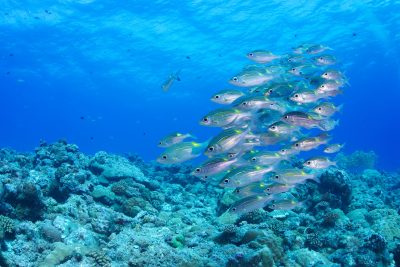 It is possible, and likely, that the nearshore fish populations, particularly those within the lagoon, are at risk of being overharvested. Generally, we found the fish in higher trophic levels were slightly more abundant outside of the lagoon than inside, supporting this theory. Currently, a number of local organizations, state, and national governments have been working together to expand current MPAs and fishing regulations to better manage these reef fish populations.
Palau has excelled in its conservation efforts and we expect them to continue. Palau’s commitment to conserving their natural resources should be uses as an example by many of their neighboring countries. With continued expansion of its fishing regulations, it is possible that the reef fish communities of Palau can become some of the best in the world.
All photos ©Keith Ellenbogen/iLCP.
 The Study
To learn more about our findings from the Global Reef Expedition mission to Palau, read our latest publication: “Global Reef Expedition: The Republic of Palau Final Report.”