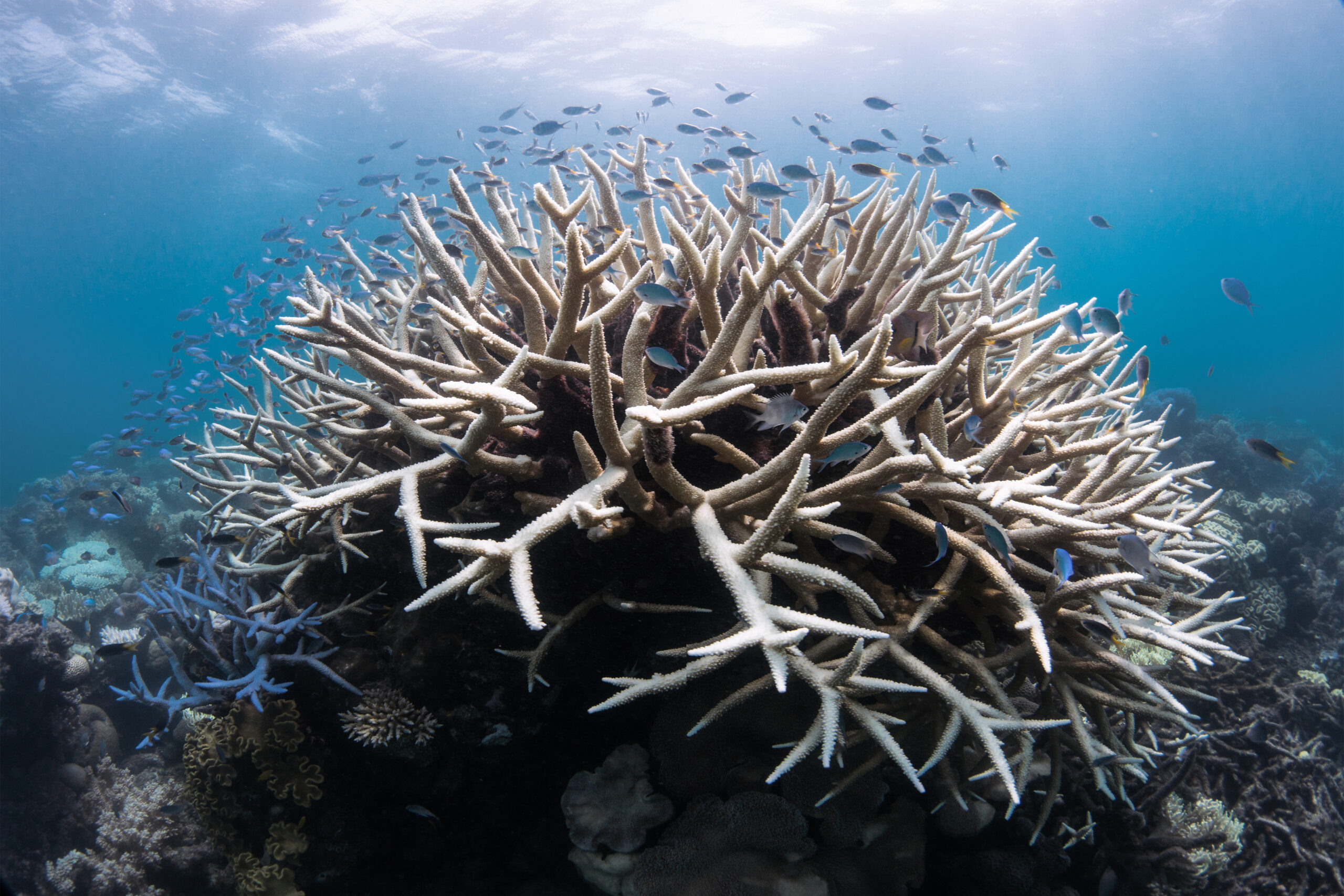
This new technique can aid in coral reef protection and restoration efforts.
Researchers used Earth-orbiting satellites to map coral reef biodiversity at a global scale to show that areas of high habitat diversity also have high species diversity. This new satellite mapping technique, developed by researchers at the University of Miami Rosenstiel School of Marine, Atmospheric, and Earth Science and the Khaled bin Sultan Living Oceans Foundation (KSLOF), can help guide future efforts to identify and protect highly biodiverse reefs.
“As remote sensing technology becomes more advanced, and we continue to use satellite imagery to map ecological habitats, we must understand the biological and ecological meaning of these products,” said Sam Purkis, Chief Scientist at KSLOF and Professor and Chair of the Department of Marine Geosciences at the Rosenstiel School and the senior author of the study. “We showed that these maps can be used as a proxy for biodiversity, and therefore they can be used to guide ecosystem protection and restoration.”
The conventional approach of conducting SCUBA-diver surveys to measure the biodiversity of coral reefs is both time consuming and expensive. Therefore, the research team set out to find a new method utilizing remote sensing to produce habitat maps at a global scale.
To conduct the study, they extracted the diver-measured diversity of reef fish and of coral species in the global dataset of SCUBA diver surveys from KSLOF’s Global Reef Expedition across the Pacific, Atlantic, and Indian Oceans. KSLOF maps cover approximately one quarter of Earth’s shallow-water tropical coral reefs.
The scientists then used these maps to audit the complexity of the patterning of seabed habitats, which, they showed, to be correlated with the species diversity of the organisms which inhabited them. This relationship held across the Atlantic, Pacific, and Indian Oceans, and, the scientists recommend can therefore be used as a proxy for reef biodiversity.
“We show how the biodiversity of these ecosystems can instead be retrieved from satellite maps of the seabed,” said Anna Bakker, a Ph.D. student in the Rosenstiel School’s Department of Marine Geosciences and lead author of the study. “This discovery offers the opportunity of assessing reef biodiversity, at global scale, from orbit.”
The results from this study can aid in marine spatial planning and the designation of marine protected areas to protect reefs with high biodiversity, according to the researchers.
“The breadth and importance of the data collected on the 10-year Global Reef Expedition allowed for this truly global-scale study on the biodiversity of fish and corals in three different ocean basins,” said Alexandra Dempsey, CEO of KLSOF and a contributing author to the study. “This study exemplifies the Khaled bin Sultan Living Oceans Foundation’s commitment to novel approaches towards coral reef conservation and its role in supplying critical data on our ocean’s reefs.”
The study, titled “Remotely sensed habitat diversity predicts species diversity on coral reefs,” was published in the journal Remote Sensing of Environment. The study’s authors also include: Arthur Gleason from the University of Miami’s Department of Physics, Alexandra Dempsey from the Khaled bin Sultan Living Oceans Foundation, and Helen Fox and Rebecca Green from the Coral Reef Alliance.