
search-icon
Galapagos Corals May Predict the Future of Reefs Worldwide

The Galapagos Islands have been famous for a century and a half, but even Charles Darwin thought the archipelago’s list of living wonders didn’t include coral reefs. It took until the 1970s before scientists realized the islands did in fact have coral, but in 1983, the year the first major report on Galapagos reef formation was published, they were almost obliterated by El Niño. This summer, a major coral survey found that some of the islands’ coral communities are showing promising signs of recovery. Their struggle to survive may tell us what is in store for the rest of the world, where almost three-quarters of corals are predicted to suffer long-term damage by 2030.

Galapagos Corals May Predict the Future of Reefs Worldwide

Mongabay
November 7, 2012
Julian Smith
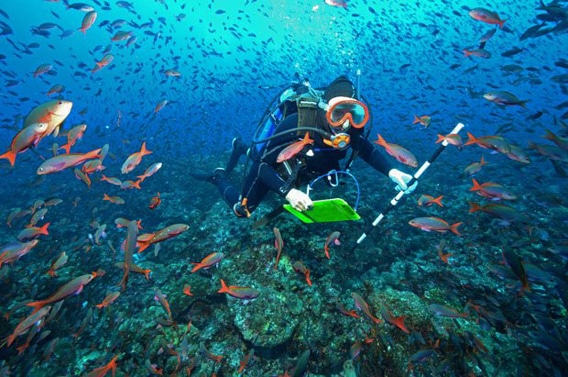
Threatened Galapagos coral may predict the future of reefs worldwide
Coral surveying in a cloud of fish. Photo by: Joshua Feingold.

The Galapagos are a tough place for coral to grow. Directly on the equator in the eastern Pacific, the islands sit at the intersection of five major ocean currents, both warm surface currents and cool, deep currents. The result is a marine climate that changes rapidly from island to island and season to season—not an ideal situation for organisms that are especially sensitive to changes in water temperature.
Related Posts

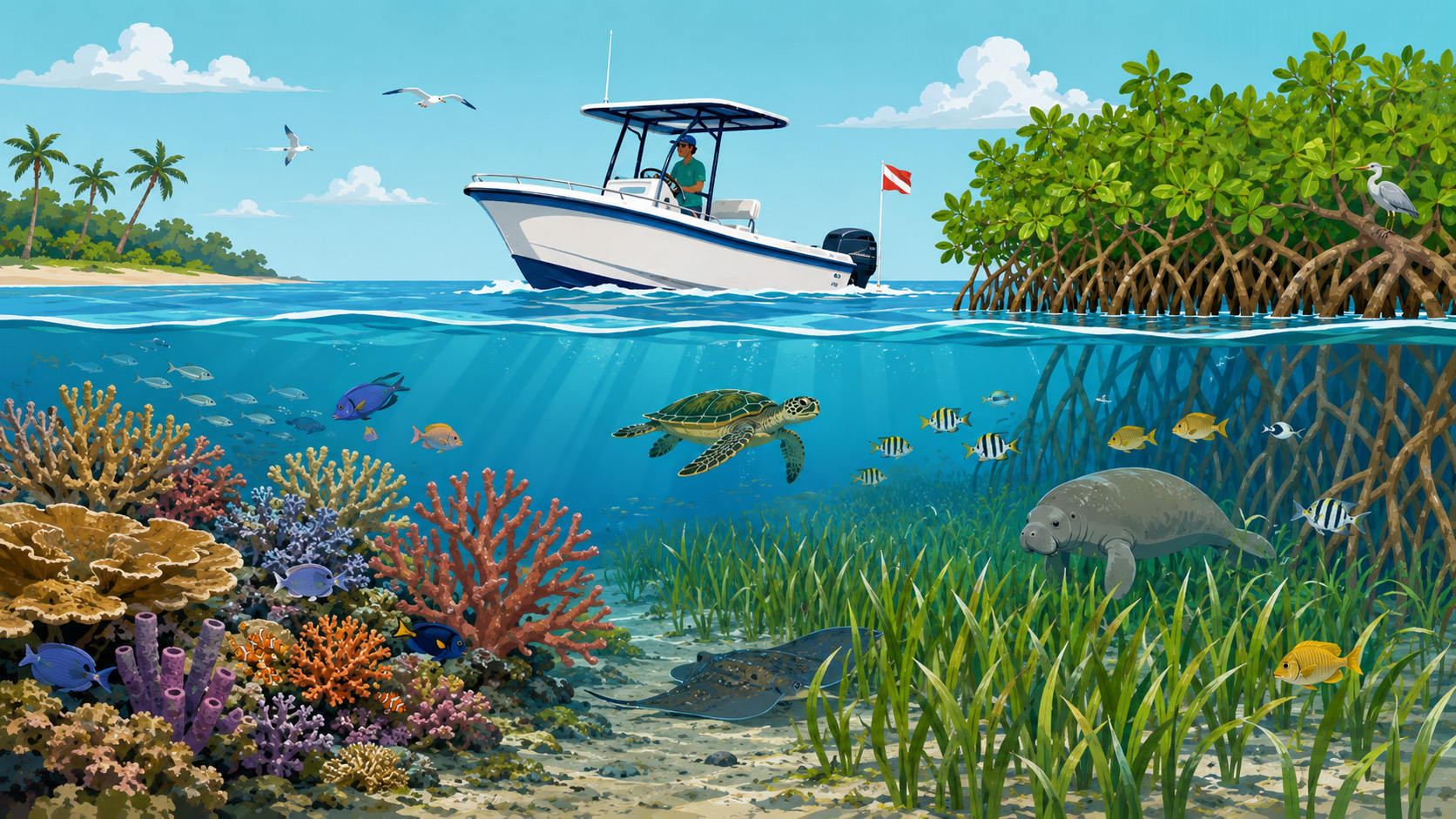
Friend or Foe? Part 1: Meet the Underwater Meadows

You’re swimming in the glistening, turquoise ocean, feeling totally at peace as the water cools you under the beaming sun. Hang on—what’s that? A slippery, slimy, twisty thing brushing your foot? Ew! Argh.

That’s seagrass! And believe it or not, we love it. You don’t need to be afraid. It’s actually one of the most important ecosystems in the ocean, and it definitely won’t hurt you. Let me tell you more…

Read More
Privacy Overview

This website uses cookies so that we can provide you with the best user experience possible. Cookie information is stored in your browser and performs functions such as recognising you when you return to our website and helping our team to understand which sections of the website you find most interesting and useful.  You can view our complete Privacy Policy here.

Strictly Necessary Cookies

Most of our cookies are used to improve website security and reduce spam. These cookies should be enabled at all times. They also enable us to save your preferences for cookie settings.

3rd Party Cookies

This website uses Google Analytics to collect anonymous information such as the number of visitors to the site, and the most popular pages. Keeping this cookie enabled helps us to improve our website.