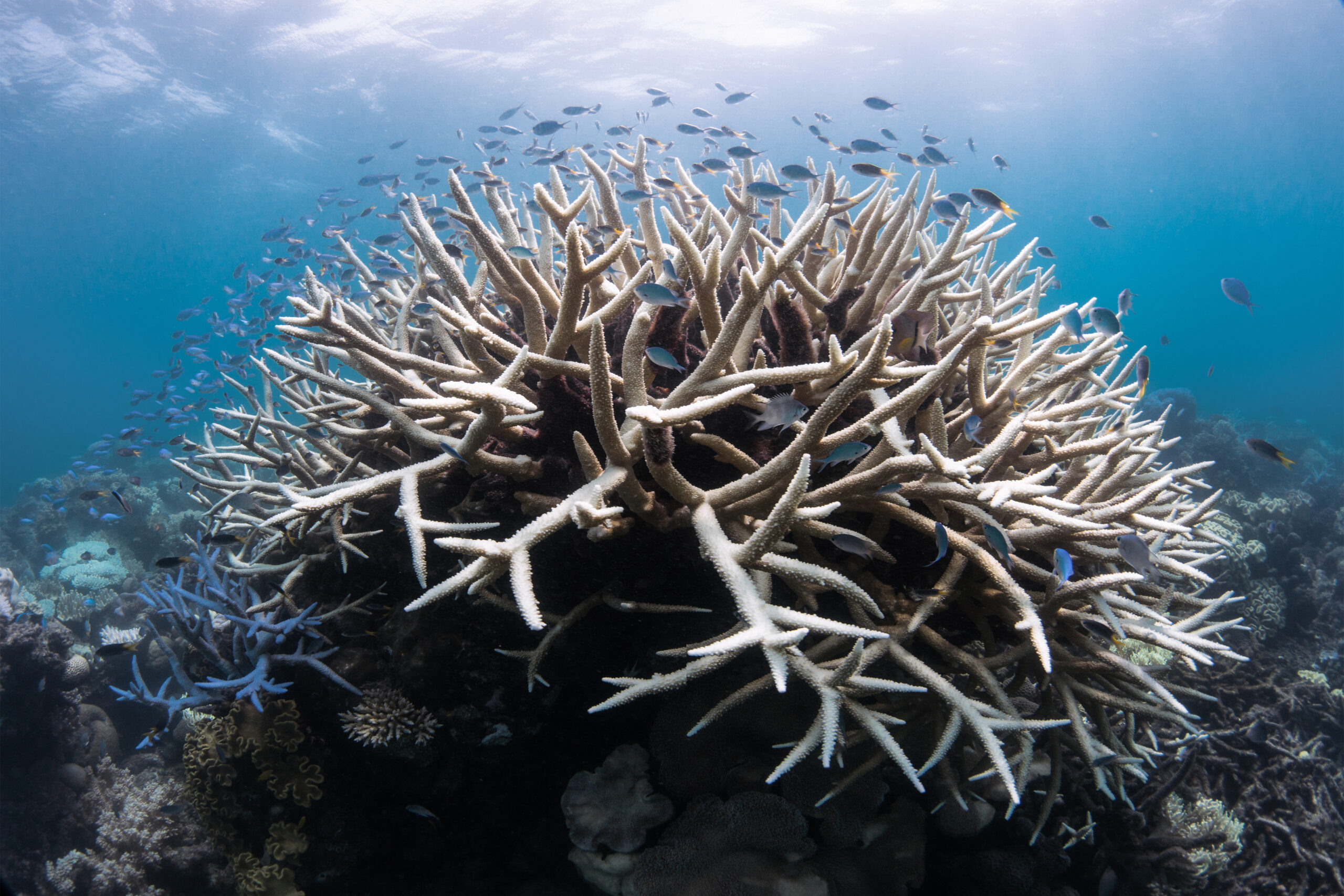
NEARLY 20% OF THE WORLD’S CORAL REEFS HAVE EFFECTIVELY BEEN LOST AND ANOTHER 15% ARE SERIOUSLY THREATENED AND MAY BE LOST WITHIN THE NEXT 10-20 YEARS.
 Coral reefs provide critical habitat for fish, crustaceans, mollusks and other marine creatures, and approximately 30 million of the world’s poorest people depend entirely on coral reefs for food and income. It is estimated that the annual value of products and services provided by coral reefs worldwide is US$375 billion – an impressive figure considering that coral reefs occupy only a fraction of one percent of the marine environment. Coral reefs are typically situated along coastal shelf edges and serve to buffer wave action, thus acting as natural coastline protectors. Beyond the tangible products and services that coral reefs provide, these beautiful ecosystems harbor an invaluable array of natural biodiversity, the loss of which will be tragic to our descendants and jeopardize the overall health of our planet.
Coral reefs worldwide are experiencing a rapid decline in health and vitality. The coral reef crisis has arisen from chronic stressors attributed to human practices and acute impacts from climate change, both of which are increasing in severity and frequency.
The coral reef crisis must be countered with strategic, direct, and rapid management interventions, underpinned by comprehensive scientific research. The biggest obstacle standing in the way of this conservation strategy is the significant gap in scientific knowledge. Many remote reefs have never been described or have very limited baseline scientific information, and the ecological roles and interactions of coral reef species are not fully understood.
The Khaled bin Sultan Living Oceans Foundation’s Global Reef Expedition (2011-2016) will close these critical gaps in scientific knowledge. This outcome-driven expedition will:
- identify and characterize remote, unique, high-value coral reefs that should be included in a global network of Marine Protected Areas (MPAs);
- complete the first global assessment of the health of coral reefs;
- recommend critical conservation targets for certain functional species that indicate and regulate reef health;
- produce decision-aids and tools designed to facilitate management and conservation actions aimed at improving the health and resilience of coral reefs;
- yield one of the largest, integrated shallow-water habitat mapping efforts to date; and
- conduct a unique and valuable educational and outreach program throughout the Expedition to raise awareness and understanding of reef ecosystems and to encourage informed conservation actions at all levels of decision-making, from individuals to international organizations.