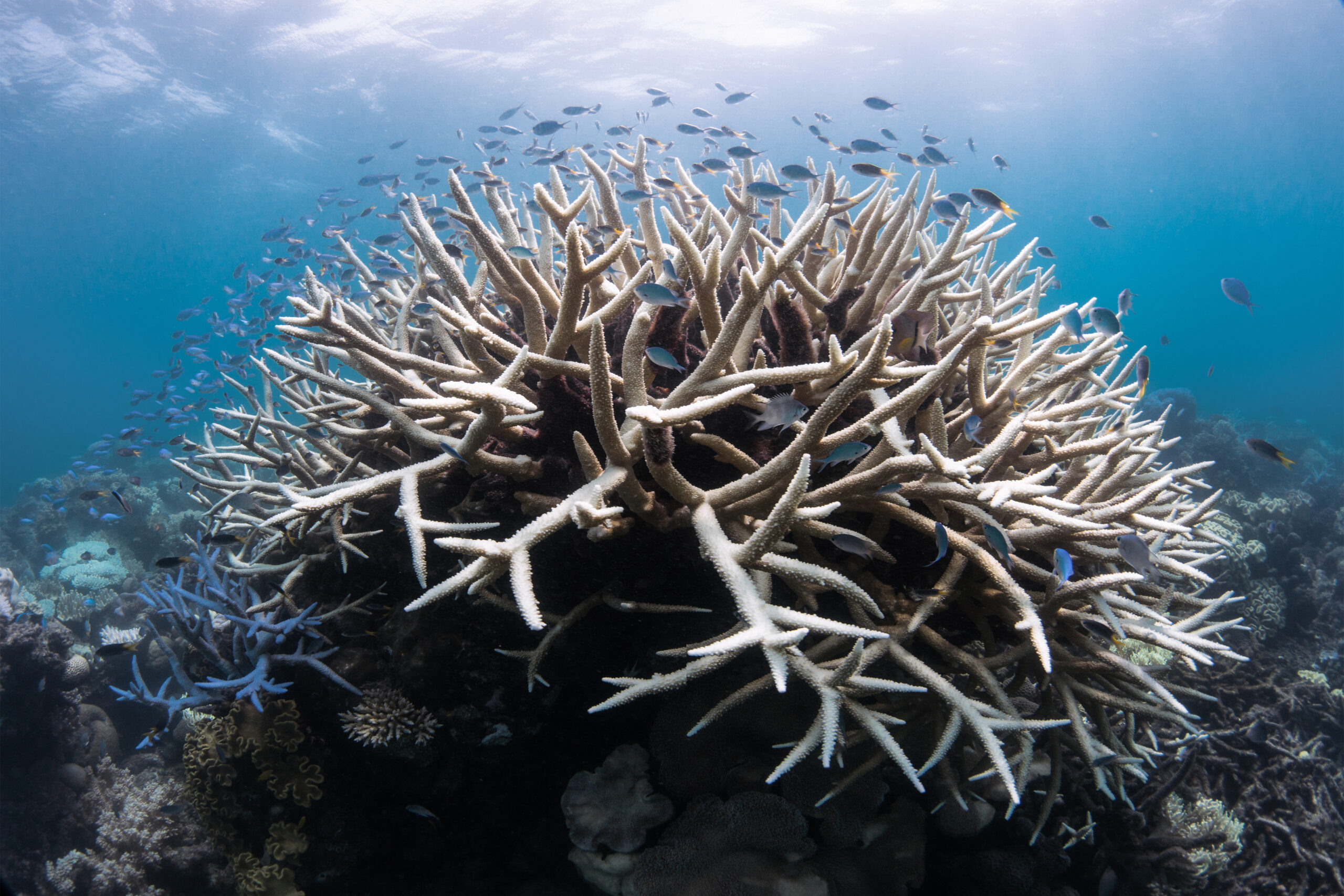
Identifying corals displaying aberrant behavior in Fiji’s Lau Archipelago
PLoS ONE 12(5):e0177267
May 24, 2017
By Anderson B. Mayfield, Chii-Shiarng Chen, Alexandra C. Dempsey
Abstract
Given the numerous threats against Earth’s coral reefs, there is an urgent need to develop means of assessing reef coral health on a proactive timescale. Molecular biomarkers may prove useful in this endeavor because their expression should theoretically undergo changes prior to visible signs of health decline, such as the breakdown of the coral-dinoflagellate (genus Symbiodinium) endosymbiosis. Herein 13 molecular- and physiologicalscale biomarkers spanning both eukaryotic compartments of the anthozoan-Symbiodinium mutualism were assessed across 70 pocilloporid coral colonies sampled from reefs of Fiji’s easternmost province, Lau. Eleven colonies were identified as outliers upon employment of a detection method based partially on the Mahalanobis distance; these corals were hypothesized to have been displaying aberrant sub-cellular behavior with respect to their gene expression signatures, as they were characterized not only by lower Symbiodinium densities, but also by higher levels of expression of several stress-targeted genes. Although these findings could suggest that the sampled colonies were physiologically compromised at the time of sampling, further studies are warranted to state conclusively whether these 11scleractinian coral colonies are more stress-prone than nearby conspecifics that demonstrated statistically normal phenotypes.