search-icon
The molecular ecophysiology of closely related pocilloporids of the South Pacific: a case study from the Austral and Cook Islands

The molecular ecophysiology of closely related pocilloporids of the South Pacific: a case study from the Austral and Cook Islands

Platax 13: 1-25, 2016
By Anderson B. Mayfield, Chii-Shiarng Chen, Alexandra C. Dempsey, Andrew W. Bruckner
January 25, 2016

Abstract

In April-May 2013, the Khaled bin Sultan Living Oceans Foundation’s research vessel, the M.Y. Golden Shadow, traversed a ~2,000-km, predominantly unexplored region of the South Pacific Ocean, a marine transect that incorporated reefs abutting the Austral Islands of French Polynesia and the Cook Islands. In addition to conducting traditional coral reef surveys on this four-week mission, molecular biological techniques were employed to attempt to assess the health of pocilloporid corals sampled at the majority of the 59 reefs visited. Ten molecular physiological response variables were measured in a 45-sample subset of the 122 colonies sampled, and, upon utilizing multivariate statistical approaches (MSA), it was found that Pocillopora verrucosa samples from Maria Atoll in the Austral Islands differed significantly from all other sampled colonies, particularly with respect to the hsp90 mRNA expression signatures of their endosymbiotic dinoflagellate (genus Symbiodinium) communities. Additionally, a novel outlier detection technique employing heat maps and a variety of MSA identified five outliers (11% of the dataset); curiously, though, there was no effect of environment on outlier frequency. These five colonies were hypothesized to be displaying aberrant behavior with respect to their cellular physiology at the time of sampling, and it is hoped that this MSA-based outlier discovery approach could be exploited to identify corals of compromised resilience in future coral reef monitoring endeavors. 
Related Posts

Everything You Need to Know About the 2027 Science Without Borders® Challenge

Are you ready to combine your creativity with ocean science?

The 15th Annual Science Without Borders® Challenge is now open! Whether you’re participating for the first time or returning for another year, this guide will help you get started.

This year’s theme, Navigate With Care, invites students to explore how responsible navigation helps protect both people and life in the ocean. Through your artwork, you can compete for scholarships and international recognition while inspiring others to protect both people and life in the ocean.

Read More

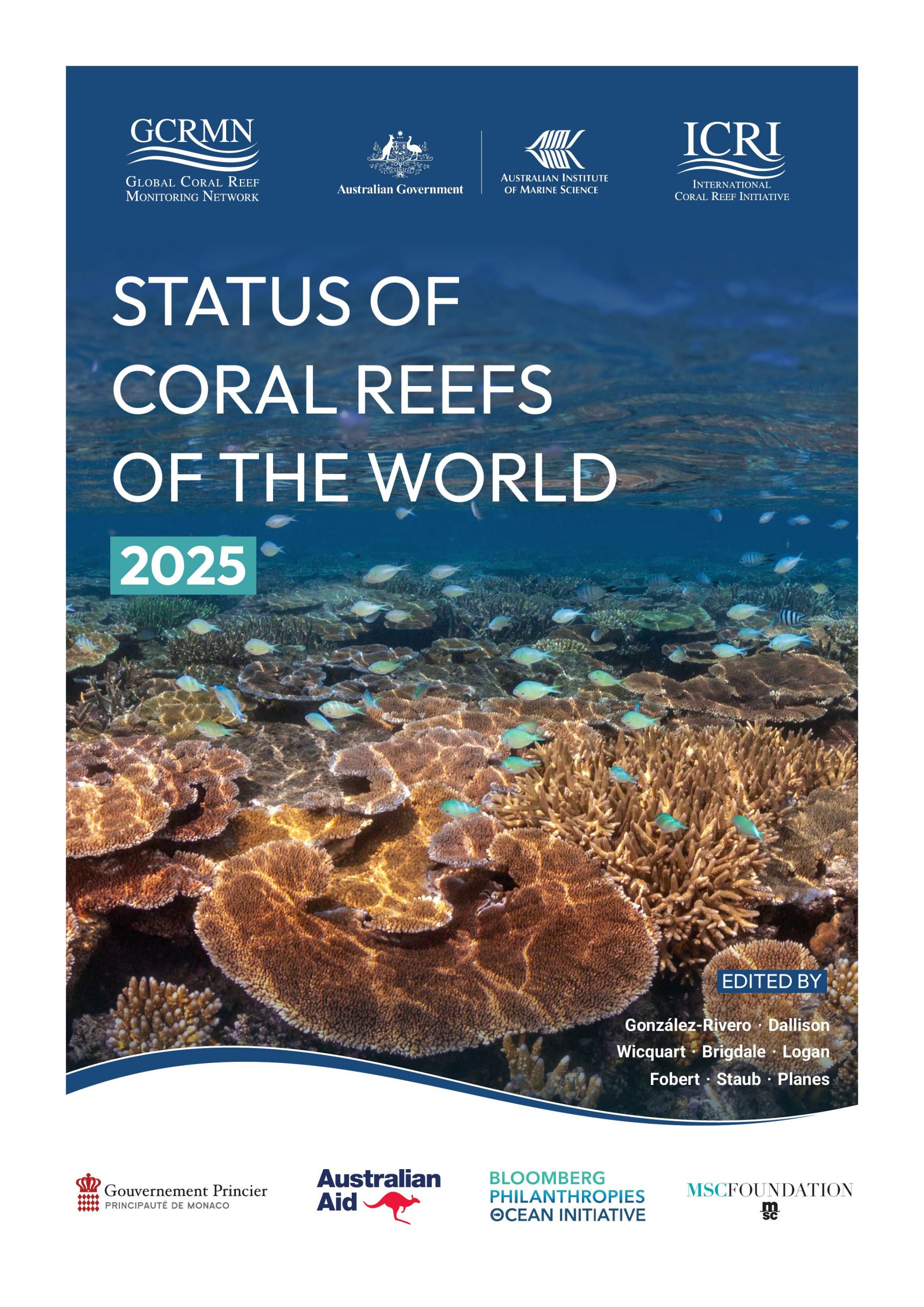
Global Reef Expedition Data Contributes to Landmark Report on the World’s Coral Reefs

More than a decade after scientists aboard the Global Reef Expedition surveyed coral reefs across the Pacific, the data they collected continues to contribute to our understanding of the world’s coral reefs.

Today, the Global Coral Reef Monitoring Network (GCRMN) released Status of Coral Reefs of the World: 2025, the most comprehensive assessment to date of the status and trends of coral reefs worldwide. The report brings together an extraordinary amount of information collected over more than four decades—and the Khaled bin Sultan Living Oceans Foundation is proud to have contributed data from the Global Reef Expedition to this global effort. 

Read More
Privacy Overview

This website uses cookies so that we can provide you with the best user experience possible. Cookie information is stored in your browser and performs functions such as recognising you when you return to our website and helping our team to understand which sections of the website you find most interesting and useful.  You can view our complete Privacy Policy here.

Strictly Necessary Cookies

Most of our cookies are used to improve website security and reduce spam. These cookies should be enabled at all times. They also enable us to save your preferences for cookie settings.

3rd Party Cookies

This website uses Google Analytics to collect anonymous information such as the number of visitors to the site, and the most popular pages. Keeping this cookie enabled helps us to improve our website.