
search-icon
Pacific-wide pH snapshots reveal that high coral cover correlates with low, but variable pH

Published in Bulletin of Marine Science

Abstract
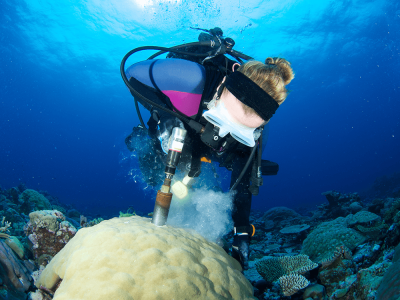
Renee Carlton takes a coral sample from a reef in the Solomon Islands.

Ocean acidification (OA) is impairing the construction of coral reefs while simultaneously accelerating their breakdown. The
metabolism of different reef organism assemblages alters seawater pH in different ways, possibly buffering or exacerbating OA impacts. In spite of this, field data relating benthic community structure and seawater pH are sparse. We collected pH time-series data snapshots at 10 m depth from 28 different reefs (n = 13 lagoon, n = 15 fore reef) across 22 Pacific islands, spanning 31° latitude and 90° longitude. Coincident with all deployments, we measured percent cover of the benthic community. On fore reefs, high coral cover (CC) negatively correlated with mean and minimum pH, but positively correlated with pH variability. Conversely, pH minima were positively correlated to coverage of coralline and turf algae. Benthic cover did not correlate with pH in lagoonal reefs. From 0% to 100% CC, mean pH and aragonite saturation state (Ωarag) declined –0.081 and –0.51, respectively, while declines in minimum values were greater (Δmin pH = –0.164, Δmin Ωarag = –0.96). Based upon previously published relationships, the mean pH decline from 0% to 100% CC would depress coral calcification 7.7%–18.0% and increase biologically-mediated dissolution 13.5%–27.9%, with pH minima depressing dark coral calcification 14.4%–35.2% and increasing biologically-mediated dissolution 31.0%–62.2%. This spatially expansive dataset provides evidence that coral reefs with the highest coral cover may experience the lowest and most extreme pH values with OA.
 

Related Posts

Everything You Need to Know About the 2027 Science Without Borders® Challenge

Are you ready to combine your creativity with ocean science?

The 15th Annual Science Without Borders® Challenge is now open! Whether you’re participating for the first time or returning for another year, this guide will help you get started.

This year’s theme, Navigate With Care, invites students to explore how responsible navigation helps protect both people and life in the ocean. Through your artwork, you can compete for scholarships and international recognition while inspiring others to protect both people and life in the ocean.

Read More

Global Reef Expedition Data Contributes to Landmark Report on the World’s Coral Reefs

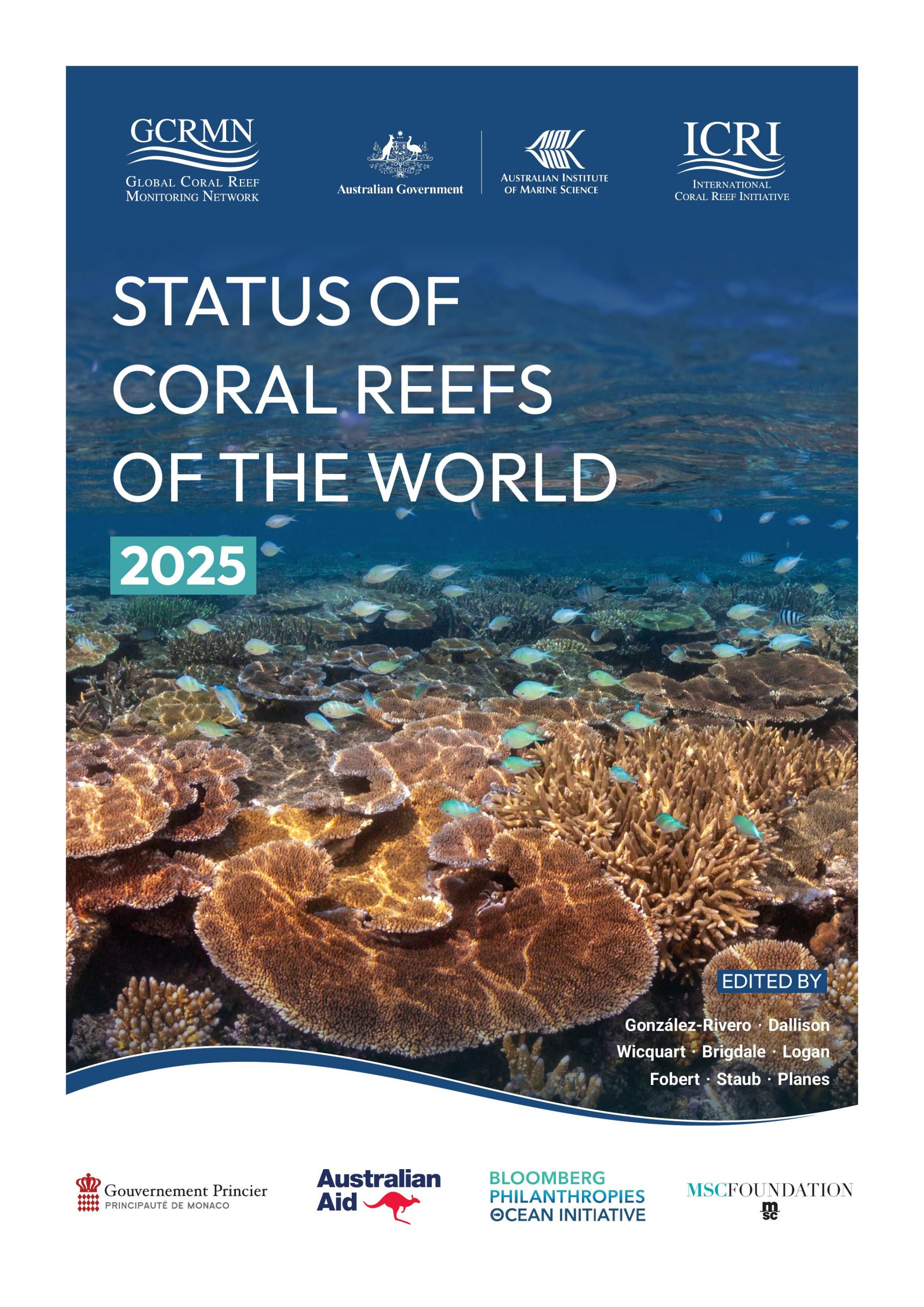
More than a decade after scientists aboard the Global Reef Expedition surveyed coral reefs across the Pacific, the data they collected continues to contribute to our understanding of the world’s coral reefs.

Today, the Global Coral Reef Monitoring Network (GCRMN) released Status of Coral Reefs of the World: 2025, the most comprehensive assessment to date of the status and trends of coral reefs worldwide. The report brings together an extraordinary amount of information collected over more than four decades—and the Khaled bin Sultan Living Oceans Foundation is proud to have contributed data from the Global Reef Expedition to this global effort. 

Read More
Privacy Overview

This website uses cookies so that we can provide you with the best user experience possible. Cookie information is stored in your browser and performs functions such as recognising you when you return to our website and helping our team to understand which sections of the website you find most interesting and useful.  You can view our complete Privacy Policy here.

Strictly Necessary Cookies

Most of our cookies are used to improve website security and reduce spam. These cookies should be enabled at all times. They also enable us to save your preferences for cookie settings.

3rd Party Cookies

This website uses Google Analytics to collect anonymous information such as the number of visitors to the site, and the most popular pages. Keeping this cookie enabled helps us to improve our website.