
search-icon
Revisiting the paradigm of shark‐driven trophic cascades in coral reef ecosystems

Published in Ecology


Abstract

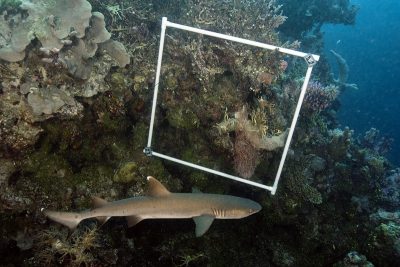
A whitetip reef shark (Triaenodon obesus) swims near a square frame used to survey corals. Photo taken by Ken Marks on the Global Reef Expedition.

Global overfishing of higher‐level predators has caused cascading effects to lower trophic levels in many marine ecosystems. On coral reefs, which support highly diverse food‐webs, the degree to which top‐down trophic cascades can occur remains equivocal. Using extensive survey data from coral reefs across the relatively unfished northern Great Barrier Reef (nGBR), we quantified the role of reef sharks in structuring coral reef fish assemblages. Using a structural equation modelling (SEM) approach, we explored the interactions between the shark abundance and teleost mesopredator and prey functional group density and biomass, whilst explicitly accounting for the potentially confounding influence of environmental variation across sites. While a fourfold difference in reef shark density was observed across our survey sites, this had no impact on either the density or biomass of teleost mesopredators or prey, providing evidence for a lack of trophic cascading across nGBR systems. Instead, many functional groups, including sharks, responded positively to environmental drivers. We found reef sharks to be positively associated with habitat complexity. In turn, physical processes such as wave exposure and current velocity were both correlated well with multiple functional groups, reflecting how changes to energetic conditions and food availability, or modification of habitat affect fish distribution. The diversity of species within coral reef food webs and their associations with bottom‐up drivers likely buffers against trophic cascading across GBR functional guilds when reef shark assemblages are depleted, as has been demonstrated in other complex ecosystems.
Related Posts

Everything You Need to Know About the 2027 Science Without Borders® Challenge

Are you ready to combine your creativity with ocean science?

The 15th Annual Science Without Borders® Challenge is now open! Whether you’re participating for the first time or returning for another year, this guide will help you get started.

This year’s theme, Navigate With Care, invites students to explore how responsible navigation helps protect both people and life in the ocean. Through your artwork, you can compete for scholarships and international recognition while inspiring others to protect both people and life in the ocean.

Read More

Global Reef Expedition Data Contributes to Landmark Report on the World’s Coral Reefs

More than a decade after scientists aboard the Global Reef Expedition surveyed coral reefs across the Pacific, the data they collected continues to contribute to our understanding of the world’s coral reefs.

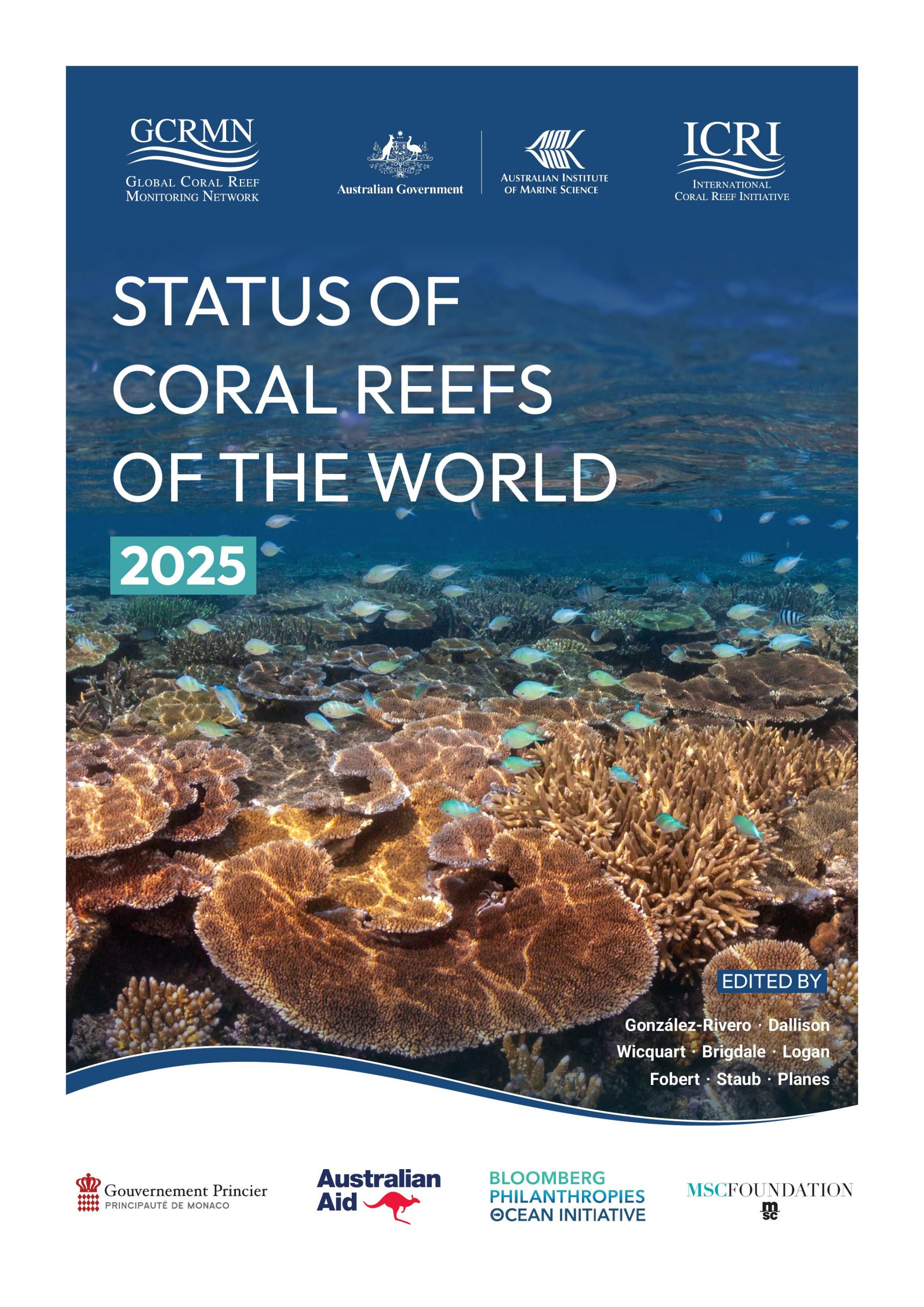
Today, the Global Coral Reef Monitoring Network (GCRMN) released Status of Coral Reefs of the World: 2025, the most comprehensive assessment to date of the status and trends of coral reefs worldwide. The report brings together an extraordinary amount of information collected over more than four decades—and the Khaled bin Sultan Living Oceans Foundation is proud to have contributed data from the Global Reef Expedition to this global effort. 

Read More
Privacy Overview

This website uses cookies so that we can provide you with the best user experience possible. Cookie information is stored in your browser and performs functions such as recognising you when you return to our website and helping our team to understand which sections of the website you find most interesting and useful.  You can view our complete Privacy Policy here.

Strictly Necessary Cookies

Most of our cookies are used to improve website security and reduce spam. These cookies should be enabled at all times. They also enable us to save your preferences for cookie settings.

3rd Party Cookies

This website uses Google Analytics to collect anonymous information such as the number of visitors to the site, and the most popular pages. Keeping this cookie enabled helps us to improve our website.