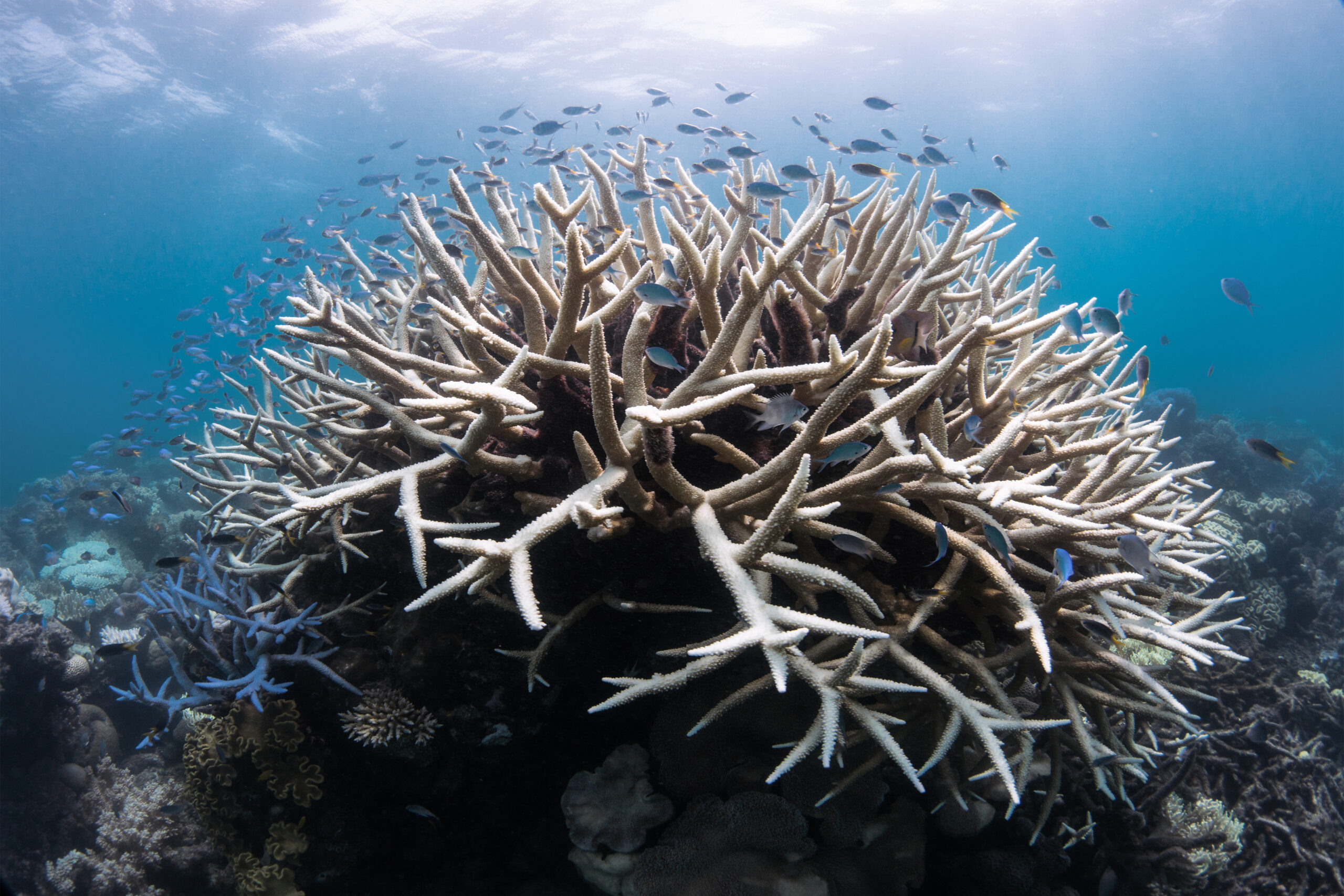
This article, published by two Living Oceans Foundation Research Fellows, Gwilym Rowlands and Jeremy Kerr, and long-time Science Team member, Sam Purkis, seeks to unravel the influence of water depth and wave energy on the facies diversity of shelf carbonates.
Unravelling the influence of water depth and wave energy on the facies diversity of shelf carbonates
Sedimentology
March 21, 2014
By Sam J. Purkis, Gwilym P. Rowlands and Jeremy M. Kerr
 Carbonate sequence stratigraphy is founded on the principle that changes in relative sea-level are recorded in the rock record by the accumulation of sediment with relative water depth-dependent attributes. While at the scale of a shelf to basin transect, facies clearly arrange by water depth, the relation blurs for depths <40 m, the most vigorous zone of carbonate production. The reason for this change in behavior is two-fold. Firstly, in shallow water, the intrinsic processes of storm and wave reworking influence the seabed through submarine erosion and sediment redistribution. Secondly, facies diversity tends to be greater in shallow water than deep water because of a greater diversity in grain producers. Remote sensing imagery, field observations and hydrodynamic models for two reef-rimmed shore-attached carbonate platforms in the Red Sea show neither water depth nor energy regime to be reliable indicators of facies type when considered in isolation. Considered together, however, the predictive power of the two variables rises significantly. The results demonstrate it to be an oversimplification to assume a direct link between palaeo-water depth and depositional diversity of subtidal lithofacies, while highlighting the importance of hydrodynamics in directing the accumulation of carbonate sediments in the shallow photic zone. While the size distributions of facies extents in the two focus areas follow power laws, no direct relation between the lateral continuity of the facies belts and water depth or wave height is reported. The work is relevant for the interpretation of metre-scale subtidal carbonate cycles throughout the geological record by demonstrating how caution must be applied when inferring palaeo-water depths from depositional facies.