
search-icon
Using Tourist Diver Images to Estimate Coral Cover and Bleaching Prevalence in a Remote Indian Ocean Coral Reef System

Abstract

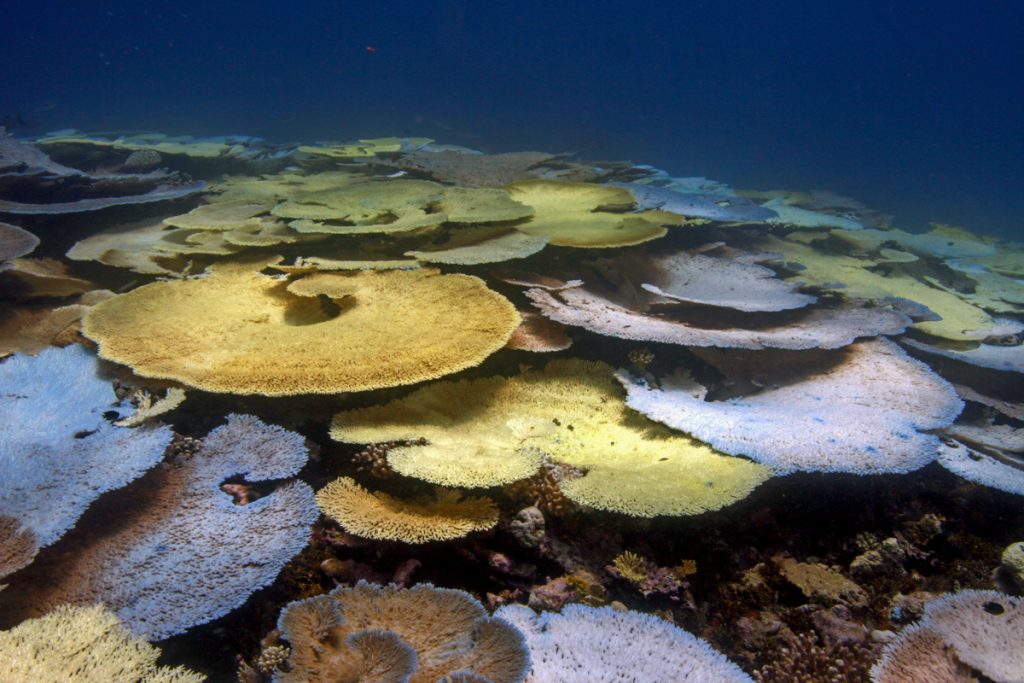
Citizen science approaches for monitoring, and even restoring, coral reefs have grown in popularity though tend to be restricted to those who have taken courses that expose them to the relevant methodologies. Now that cheap (~10 USD), waterproof pouches for smart phones are widely available, there is the potential for mass acquisition of coral reef images by non-scientists. Furthermore, with the emergence of better machine-learning-based image classification approaches, high-quality data can be extracted from low-resolution images (provided that key benthic organisms, namely corals, other invertebrates, & algae, can be distinguished). To determine whether informally captured images could yield comparable ecological data to point-intercept + photo-quadrat surveys conducted by highly proficient research divers, we trained an artificial intelligence (AI), CoralNet, with images taken before and during a bleaching event in 2015 in Chagos (Indian Ocean). The overall percent coral covers of the formal, “gold standard” method and the informal, “tourist diver” approach of 38.7 and 35.1%, respectively, were within ~10% of one another; coral bleaching percentages of 30.5 and 31.8%, respectively, were statistically comparable. Although the AI was prone to classifying bleached corals as healthy in ~one-third of cases, the fact that these data could be collected by someone with no knowledge of coral reef ecology might justify this approach in areas where divers or snorkelers have access to waterproof cameras and are keen to document coral reef condition.
Related Posts

2025-2026 B.A.M. Student Voices

Throughout the Bahamas Awareness of Mangroves (B.A.M.) and Jamaica Awareness of Mangroves in Nature (J.A.M.I.N.) programs, we evaluate each phase of the mangrove education and restoration process to better understand how students are learning, growing, and connecting with their coastal environments.

Before the programs begin, students share what they already know about mangroves and how they feel about them. As the program progresses, we continue to gather feedback to see how their knowledge evolves from identifying mangrove species and understanding food webs to recognizing the role mangroves play in coastal protection and climate change mitigation.

But the surveys go beyond science content.

We also ask students…

Read More

Ten Years of B.A.M.: Rooted in Partnership, Growing in Purpose

Ten years ago, the Bahamas Awareness of Mangroves (B.A.M.) program began with a simple but meaningful commitment: to connect Bahamian students with the mangrove ecosystems that shape and protect their island home.

Since 2015, B.A.M. has been implemented in partnership with Friends of the Environment, whose dedication to environmental stewardship in Abaco has made this program possible year after year. Together, we have worked alongside Patrick J. Bethel High School and Forest Heights Academy to bring hands-on mangrove science into classrooms and out into the field.

What makes ten years remarkable is not just longevity — it is consistency…

Read More