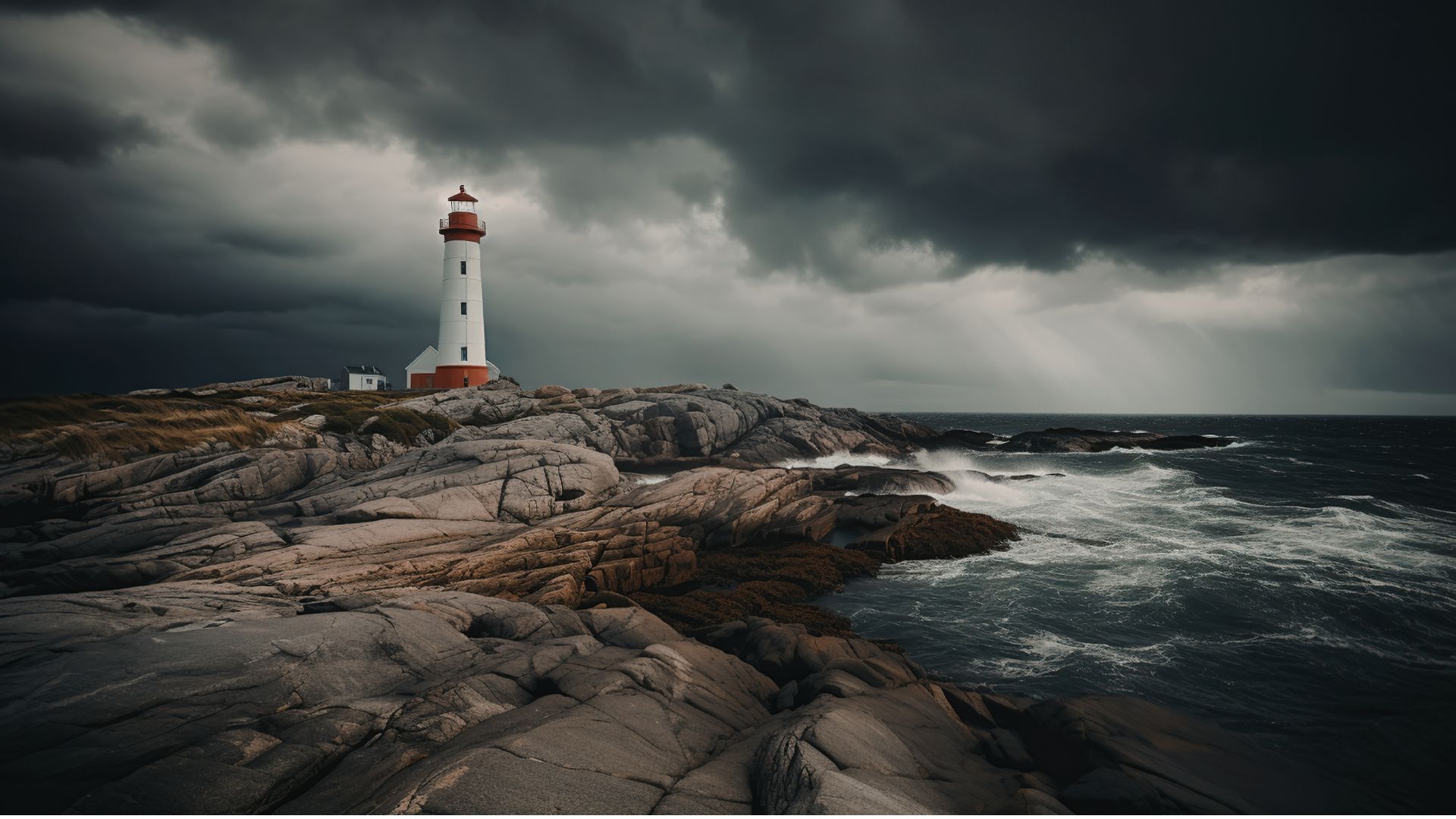
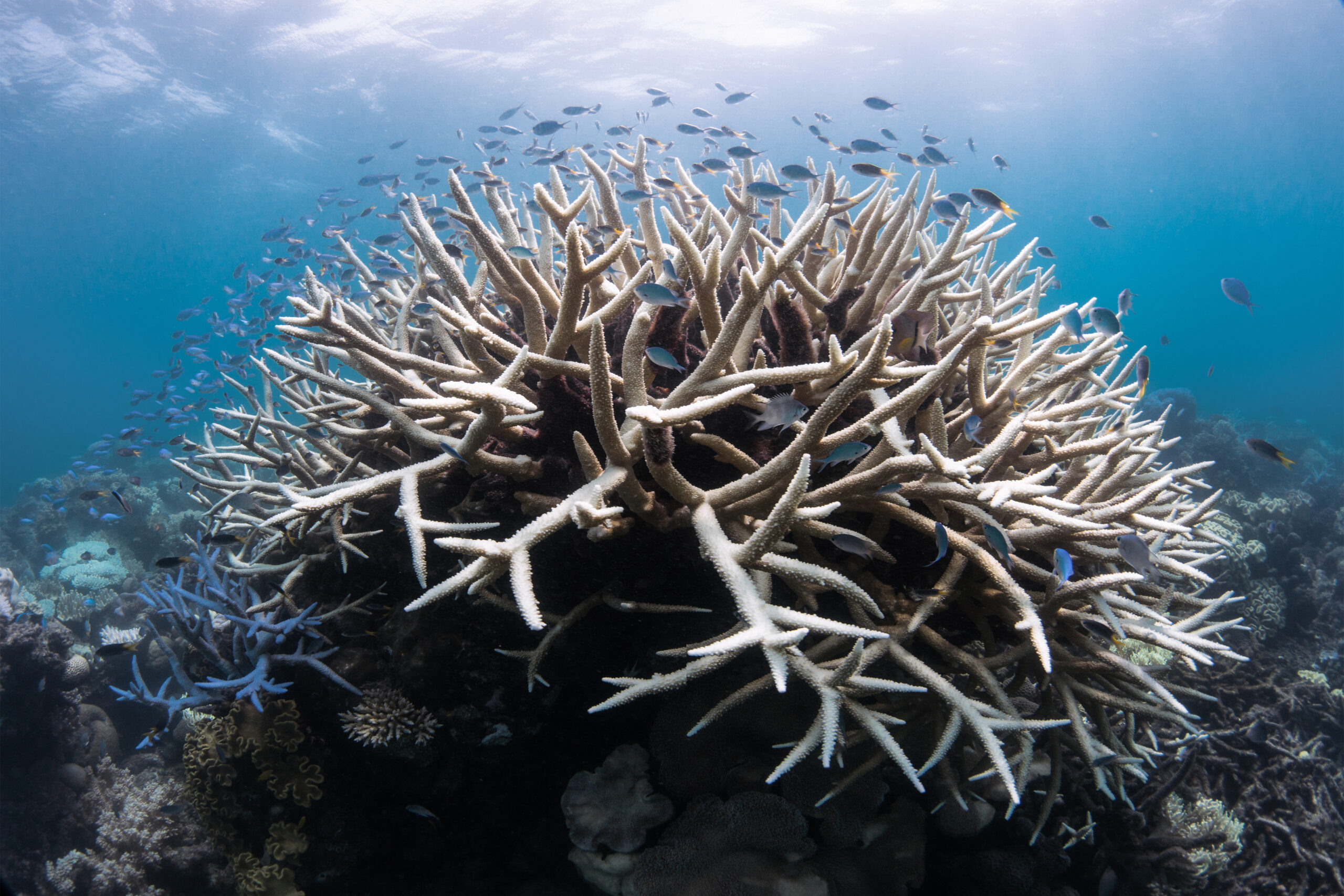
While our daily dives may sound calm and cheery all of the time, foul weather and scientific diving in strong currents with heavy equipment can make it challenging to even get off the Golden Shadow onto the dive boat and then into the water.
The morning of June 5th, we had to take extra precautions at the surface and use the anchor line to descend. The current was so strong that, when taking a giant-stride off the front of the dive boat, a few of the divers were nearly swept underneath the boat. A few divers even lost their data sheets and transect lines. If the diver has not panicked by this situation at the surface and has control of their equipment and has maintained buddy contact, the best action is to descend immediately in order to avoid surface currents. This dive, however, had strong currents all the way to the bottom. Upon descent, a few divers were unable to catch their breath and, at times, it can feel like your heart is pounding out of your chest when you’re at depth and out of breath. In these cases, we always reinforce with divers to use their best judgment and abort the dive, if necessary. One third of the survey team was unable to conduct the scientific diving in strong currents necessary to complete the research at this site.
We also experienced strong currents on June 6th, and divers took better precautions when entering the water, giving each other plenty of space on the descent line. There was no chop at the surface, but the current was ripping throughout the entire dive. The survey team had a difficult time spreading out through the dive to complete their surveys, but many were able to find sheltered spots to survey in order to catch their breath. On these kinds of dives, there are usually less data collected due to a decreased bottom time from heavy breathing and excess exertion during the dive.
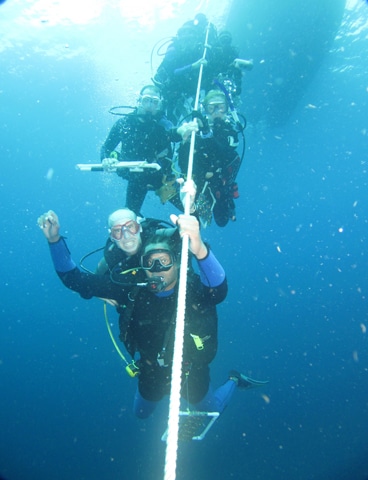
Conducting scientific diving in strong currents, as described by our divers, causes a bit of anxiety and is unsettling. Surface conditions can also affect how much of a role currents can play in a diver’s decision to abort the dive. If there is a lot of chop, divers can easily feel overwhelmed by waves splashing over their heads, especially when trying to manage all of their gear. “Currents add a degree of complication when carrying research equipment, as well as trying to descend/ascend on the anchor line, equalize your ears and keep track of your buddy”, says Clare Morrall of St. George’s University, Grenada. Additionally, scientific divers cannot just enjoy the ride and make it a drift dive. They must constantly kick to maintain their position in order to record benthic data and risk hitting their bodies on corals or grabbing sharp substrate to maintain control at times. Fish surveyors, on the other hand, must kick into the current in order to maintain control throughout their survey transects, so it is easy for them to breathe through a scuba tank quickly. It is essential for divers for monitor their air consumption and to save enough in their tank to do a safe ascent and perform a 3 minute safety stop 15 feet from the surface.
For a safety stop, a diver must be spent at a constant depth in shallow water at the end of a dive in order to safely eliminate absorbed inert gases from the diver’s body to avoid decompression sickness. The anchor line is also essential to hold onto during descents/ascents in currents or else divers can be easily carried away, as was experienced in Cay Sal Bank when divers were unable to reach the anchor line for their ascent. With the assistance of the Golden Shadow in St. Kitts and Nevis, we are able to have a spare boat to pick up divers if this were to happen, but divers must always err on the side of caution and use their best judgment when scientific diving in strong currents and unstable conditions. James Byrne of The Nature Conservancy says he’s, “jealous of the fish because of how easily they can swim through the currents, with no problem.”
Safety is the number one priority when it comes to diving with the Living Oceans Foundation and M/Y Golden Shadow. The research is very important, but always second to safety. In addition to having a diver recall system on-board, the M/Y Golden Shadow is equipped with a recompression chamber in case divers experience decompression sickness. The Golden Shadow and Living Oceans Foundation maintain strict, but reasonable, diving standards to ensure the safety of the divers, which means divers must always dive with a buddy for no longer than 65 minutes and no deeper than 30 meters. There is also fully-licensed, highly experienced Oxford medical staff on-board, both a doctor and a nurse, and 6 officers and crew are licensed to operate the recompression chamber.
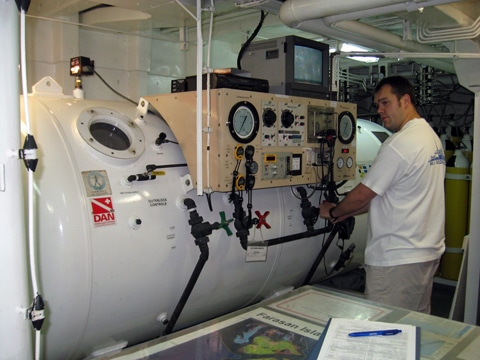
The medical personnel monitor divers before and after each dive to be sure there are no signs of decompression sickness or excessive fatigue that may impair a diver’s ability to safely conduct research. It is also imperative for divers to be well-rested and well-hydrated prior to diving. While you may not always hear about the stress and fatigue diving can cause to the body, it is certainly apparent at meals as the research trips wear on because there is less chatter and more sleepy eyes at the table. It’s a tough job, but someone’s gotta’ do it.
(Images/Photos: 1 Graeme Browne, 2 Andy Bruckner, 3 Amanda Williams)
To follow along and see more photos, please visit us on Facebook! You can also follow the expedition on our Global Reef Expedition page, where there is more information about our research and our team members.