search-icon
Seven Basketballs!

It seems as if every urban cleanup these days involves dragging a shopping cart out of the muck and ours was certainly no different.

Dr. Andy Bruckner filling one of many garbage bags during our wetland urban cleanup


The Living Oceans Foundation headquarters sits right beside a small wetland a stone’s throw from the Washington DC beltway, one of the busiest roads in America.   And, like many other urban waterways, it is full of trash or, at least it was until last week when the Foundation cleaned it up.

The streams and rivers in this corner of the US drain into the Chesapeake Bay and then flow into the ocean beyond. So cleaning up local pollution is a great first step towards cleaner seas and a healthy ocean environment. For our urban cleanup we partnered with the Alice Ferguson Foundation and between them, our own staff, and some volunteers from our local printer we formed a small but dedicated band of trash collectors.
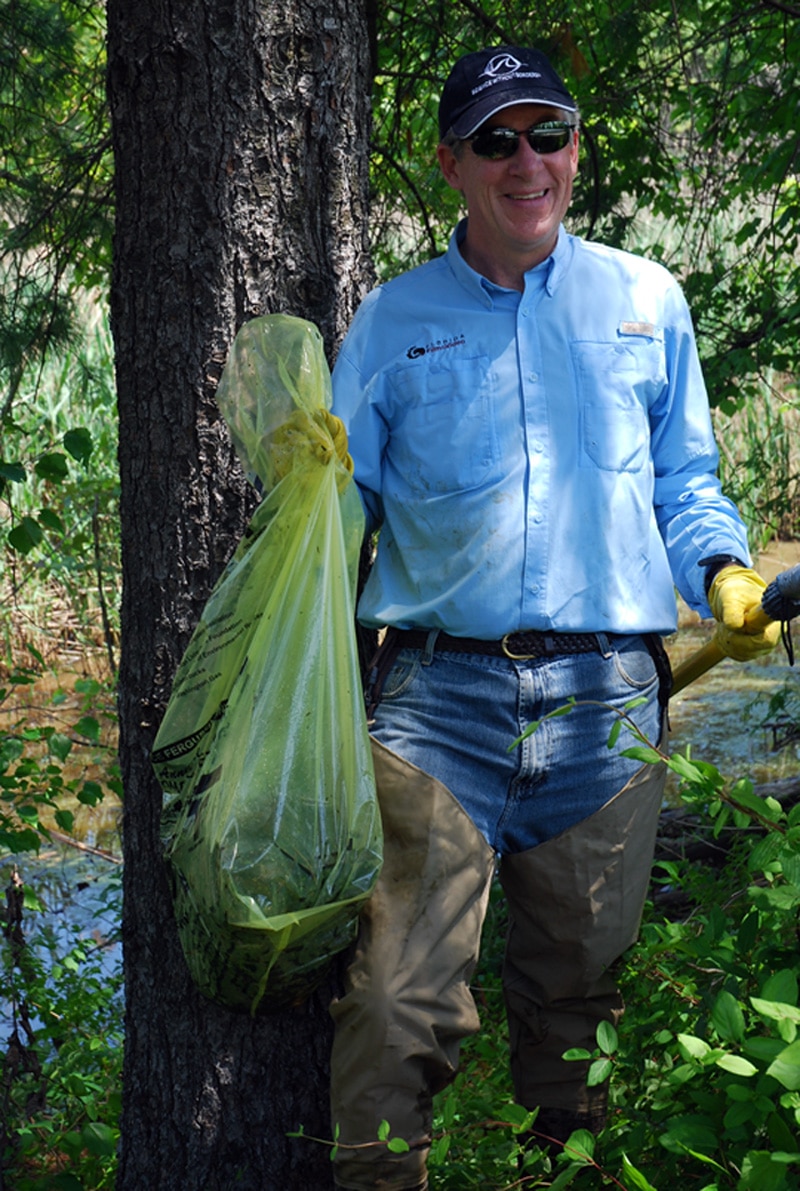
Executive Director, Philip Renaud, emerges from the water while cleaning up our local wetland


In just a few short hours we managed to amass an amazing amount of garbage. We collected bags upon bags of discarded plastic bottles and cans, glass bottles, plastic bags, and all kinds of other trash that gets carelessly littered. We also cleaned up one carpet, two towels, five tires, two TV’s, seven basketballs and, of course, one three-wheeled shopping cart.
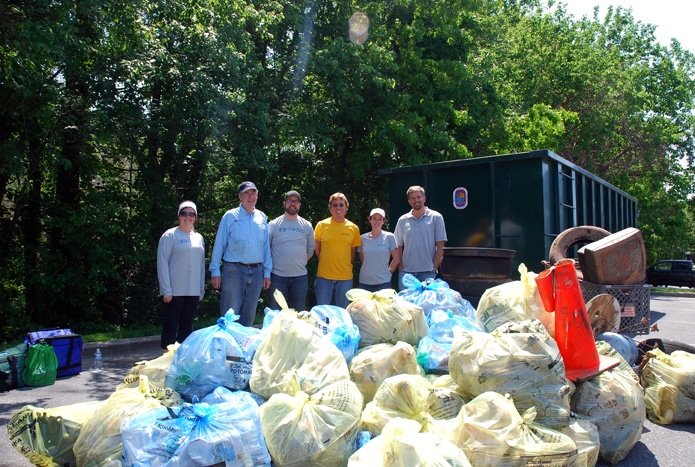
Foundation staff and our haul of garbage from our urban cleanup. From Left to right- Amy Heemsoth, Phil Renaud, Matthew Wallis, Andy Bruckner, Alison Barrat, and Brian Beck


Letter from the Executive Director

“To My Great Staff:  With all that you do to conserve the coral reefs, I’m surprised at the pride and admiration I feel for the urban cleanup of our tiny wetland.  After being disgusted with the trash around here for 9 years, you demonstrated the guts to get out there and do something about it.  Thanks so much for making the effort and doing such an amazing clean-up job.  You defeated the shifting baseline phenomena by raising the bar back to where it should be.  Nicely Done!!!    Phil”

Photos 1, 2 by Alison Barrat, 3, Katie Thatcher
Related Posts

From Dialogue to Action: Ocean Foundations Gather in Stockholm

What can philanthropy accomplish when foundations working across ocean science, conservation, and sustainable development come together around a shared purpose?

That question was at the heart of the 6th UN Ocean Decade Foundations Dialogue, held September 7–9 in Stockholm, Sweden. The Khaled bin Sultan Living Oceans Foundation joined philanthropic organizations from around the world for three days of discussion, collaboration, and planning focused on accelerating progress during the second half of the UN Decade of Ocean Science for Sustainable Development.

Facilitated by UNESCO’s Intergovernmental Oceanographic Commission (IOC), the UN Ocean Decade Foundations Dialogue is a growing network of more than 30 philanthropic organizations committed to advancing ocean science, collaboration, and action. Since its creation within the framework of the Ocean Decade, the Dialogue has provided foundations with a space to exchange ideas, develop partnerships, and explore how philanthropy can help advance a healthy and resilient ocean.

Hosted by the Voice of the Ocean Foundation (VOTO), this year’s gathering began with From Depth to Action, an Opening Forum that brought nearly 100 leaders from the Swedish and international ocean community together at…

Read More

Meet IFAN: Helping Bring Navigate with Care to the Next Generation

If you’ve ever seen a lighthouse flashing from the shore or a brightly colored buoy bobbing in the water, you’ve seen Aids to Navigation at work.

Aids to Navigation, often called AtoNs, help mariners navigate safely. They can mark channels, warn of hazards, help vessels determine their position, and provide other information people need to make safe decisions on the water. Around the world, these systems help guide everything from small recreational boats to large commercial or container ships. 

But safe navigation isn’t only about protecting vessels and the people aboard them. The choices mariners make can also affect the animals and ecosystems beneath and around them.

That connection between maritime safety and ocean conservation is at the heart of this year’s Science Without Borders® Challenge—and of our partnership with this year’s theme sponsor, the International Foundation for Aids to Navigation (IFAN).

Read More
Privacy Overview

This website uses cookies so that we can provide you with the best user experience possible. Cookie information is stored in your browser and performs functions such as recognising you when you return to our website and helping our team to understand which sections of the website you find most interesting and useful.  You can view our complete Privacy Policy here.

Strictly Necessary Cookies

Most of our cookies are used to improve website security and reduce spam. These cookies should be enabled at all times. They also enable us to save your preferences for cookie settings.

3rd Party Cookies

This website uses Google Analytics to collect anonymous information such as the number of visitors to the site, and the most popular pages. Keeping this cookie enabled helps us to improve our website.