Winners of the 2020 Science Without Borders® Challenge
The 2020 Science Without Borders® Challenge invited students from around the world to “Take Action: Conserve Coral Reefs,” inspiring them to create artwork that highlights how we can protect these vital ecosystems. With over 650 submissions from 43 countries, this year’s contest showcased an incredible range of talent and creativity. Students illustrated diverse conservation efforts, from reducing pollution and educating communities to restoring coral reefs through active stewardship.
High school first-place winner Stacey Lei from the United States captured the power of education in her piece, “The Reef We Read,” emphasizing how awareness can drive positive change for coral reefs. Middle school first-place winner Anish Aradhey’s “Coral Reef Superhero” highlighted the impact of small, everyday actions, portraying a young girl cleaning up beach litter to protect marine life. Their artwork, along with other winning pieces, demonstrated not just artistic skill but a deep understanding of coral reef conservation.
By participating in the challenge, students learned how human activities affect coral reefs and discovered ways individuals can make a difference. The contest encouraged them to explore environmental issues creatively, fostering both artistic expression and a passion for marine conservation. Through their art, these young ocean advocates are inspiring a global audience to take action for coral reefs.
Winners & Finalists Ages 11-14:
First Place: "Coral Reef Superhero" by Anish Aradhey, Age 14, United States
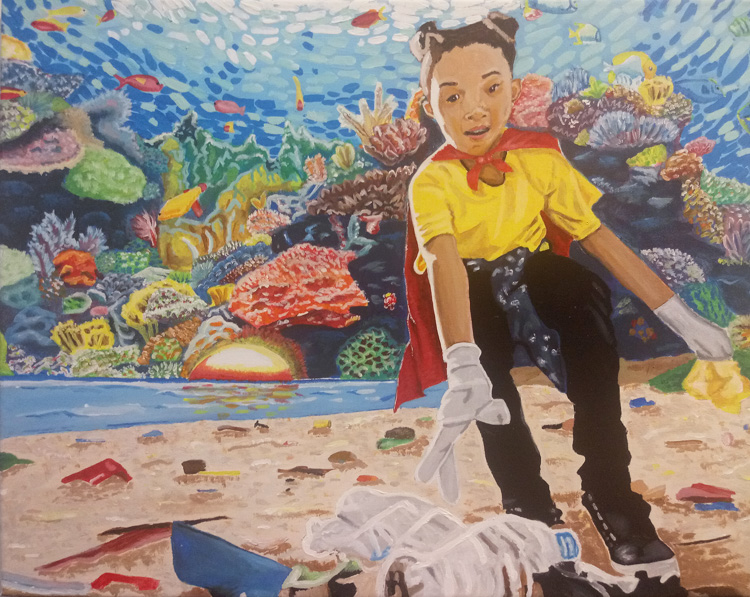
My artwork illustrates one example of action that can help conserve coral reefs: cleaning up beaches. I portrayed a young girl picking up beach trash to show the importance of youth regarding coral reef conservation. The girl wears a cape, representing how those who take care our coral reefs are real-life superheroes. The girl is alone, representing how action can start with just one person. The sunset in the background represents hope for the future, which is further visualized by the vibrant coral reef behind the girl. To summarize, the littered beach in my painting shows a current challenge for coral reefs, the girl demonstrates a small yet heroic action to solve this issue, and the colorful colorful reef background represents a positive goal that we all must work toward. All in all, my painting aims to thank coral reef “superheroes” and inspire a new generation of young, active leaders.
Winners & Finalists Ages 15-19:
“A Bowl of Earth” by Young Suh Choi, Age 18, United States
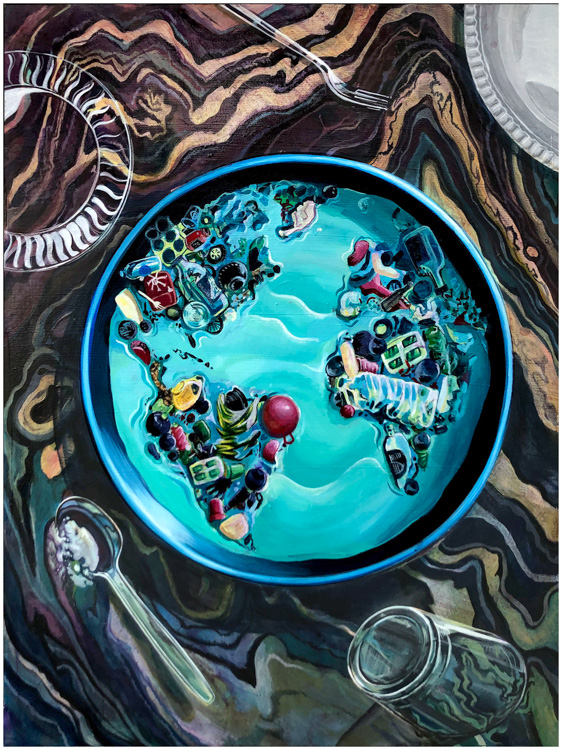
Many coral reefs on Earth die from sea pollution. Disposable items we use casually, oil spills from carelessness, food we throw away without sparing, all of which kill the coral reefs that make our beloved Earth beautiful. It looks like a delicious Asai Bowl from afar, but it's actually garbage, not fruit. So is our Earth. On the surface, it looks like it's just a blue sea, but the coral in the sea is losing its color. When you use a white plastic dish and try to throw it away, when you use a paper cup instead of a mug, when you want to choose a momentary convenience, not our future.If you think of coral that is dying white every time you do that, and reduce it one by one from a small routine, wouldn't you be able to see coral with beautiful colors again?