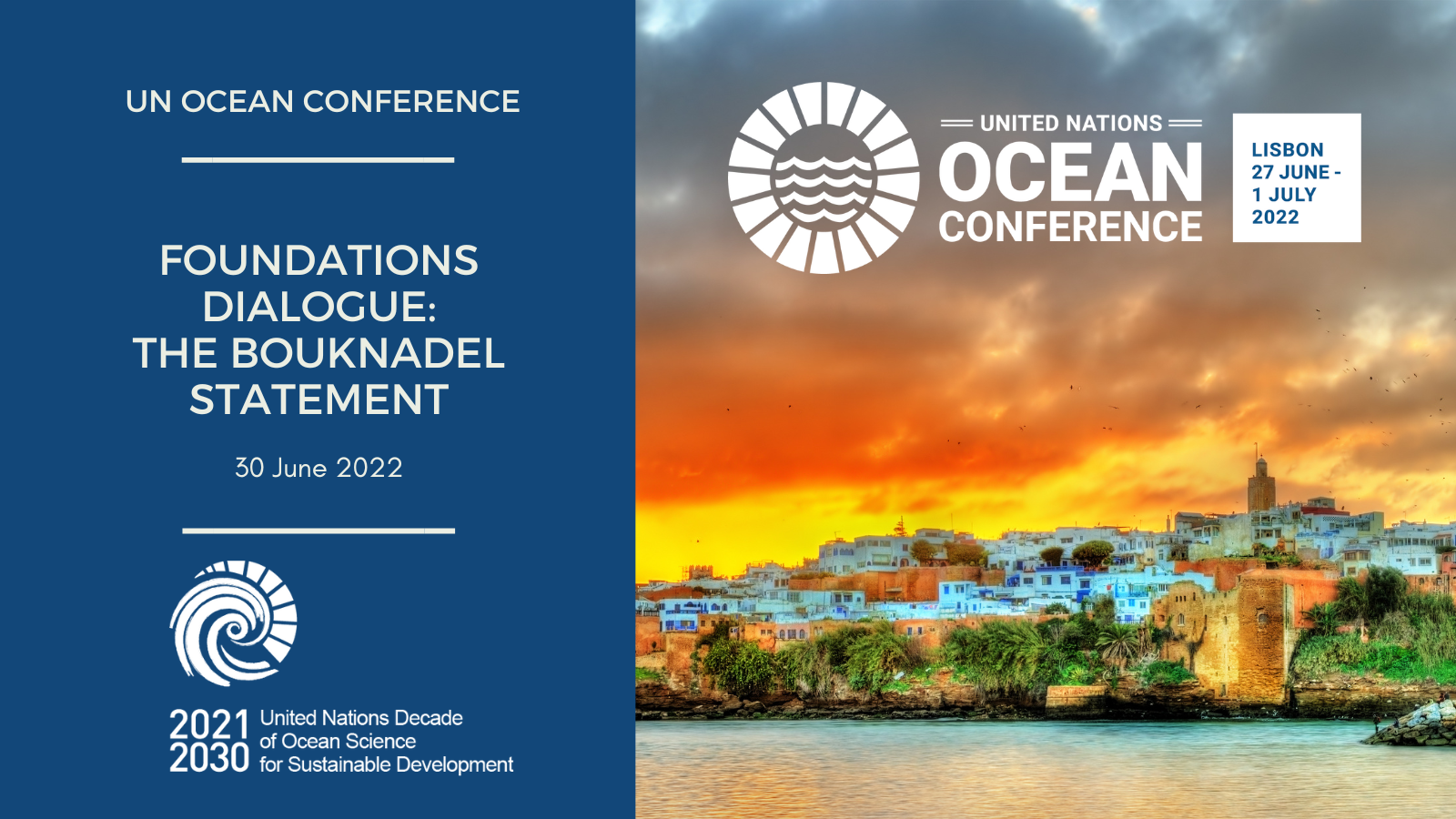
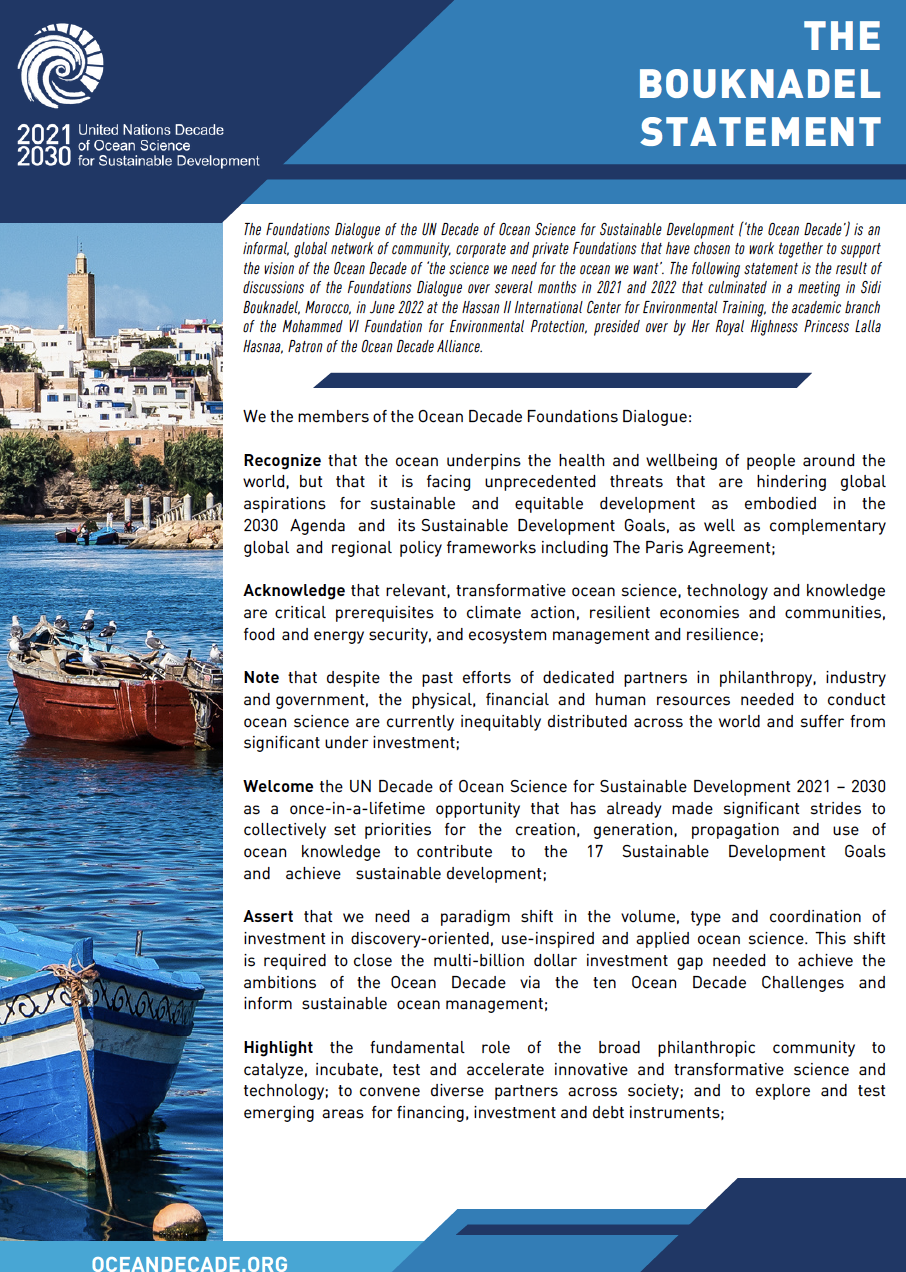
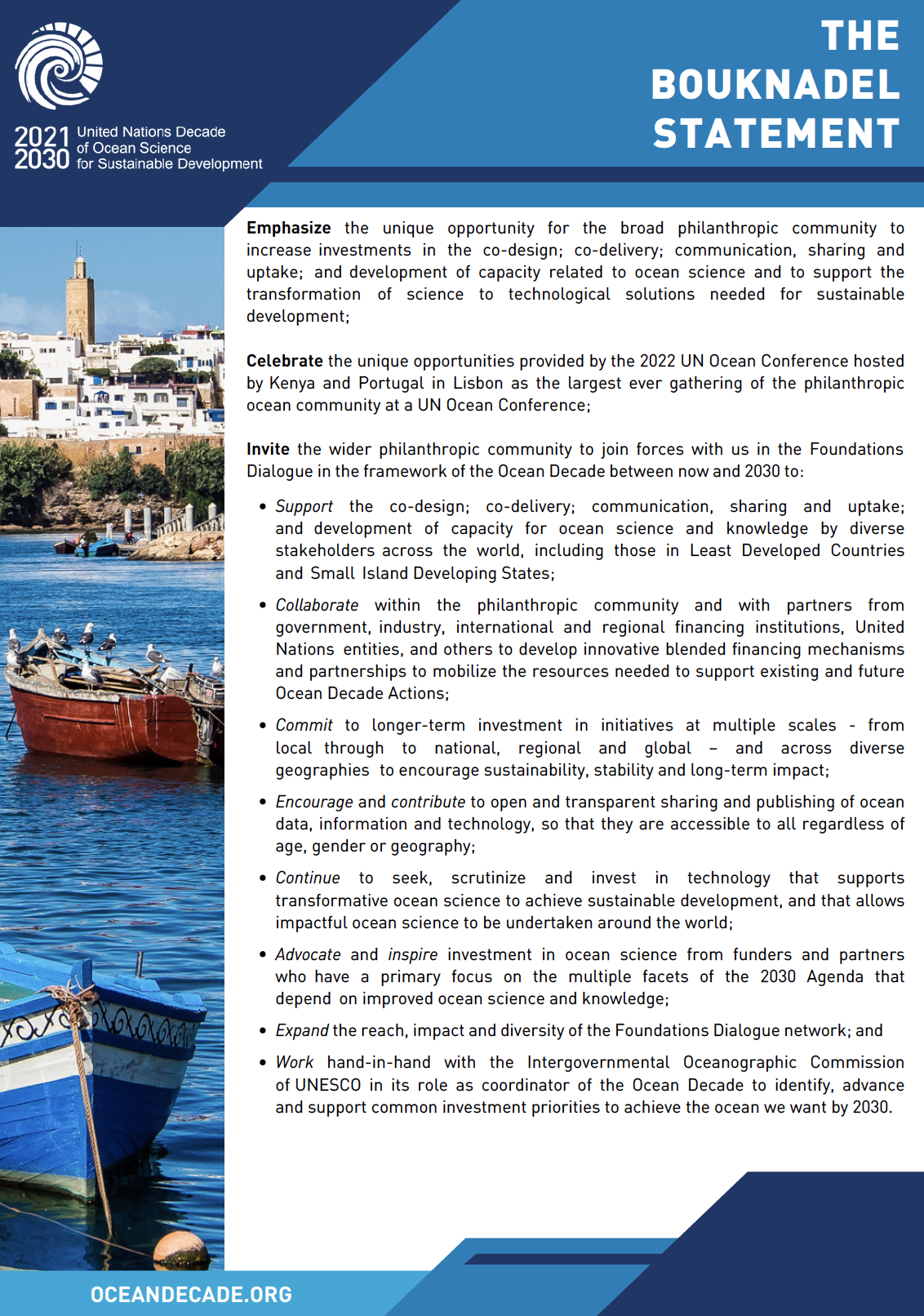
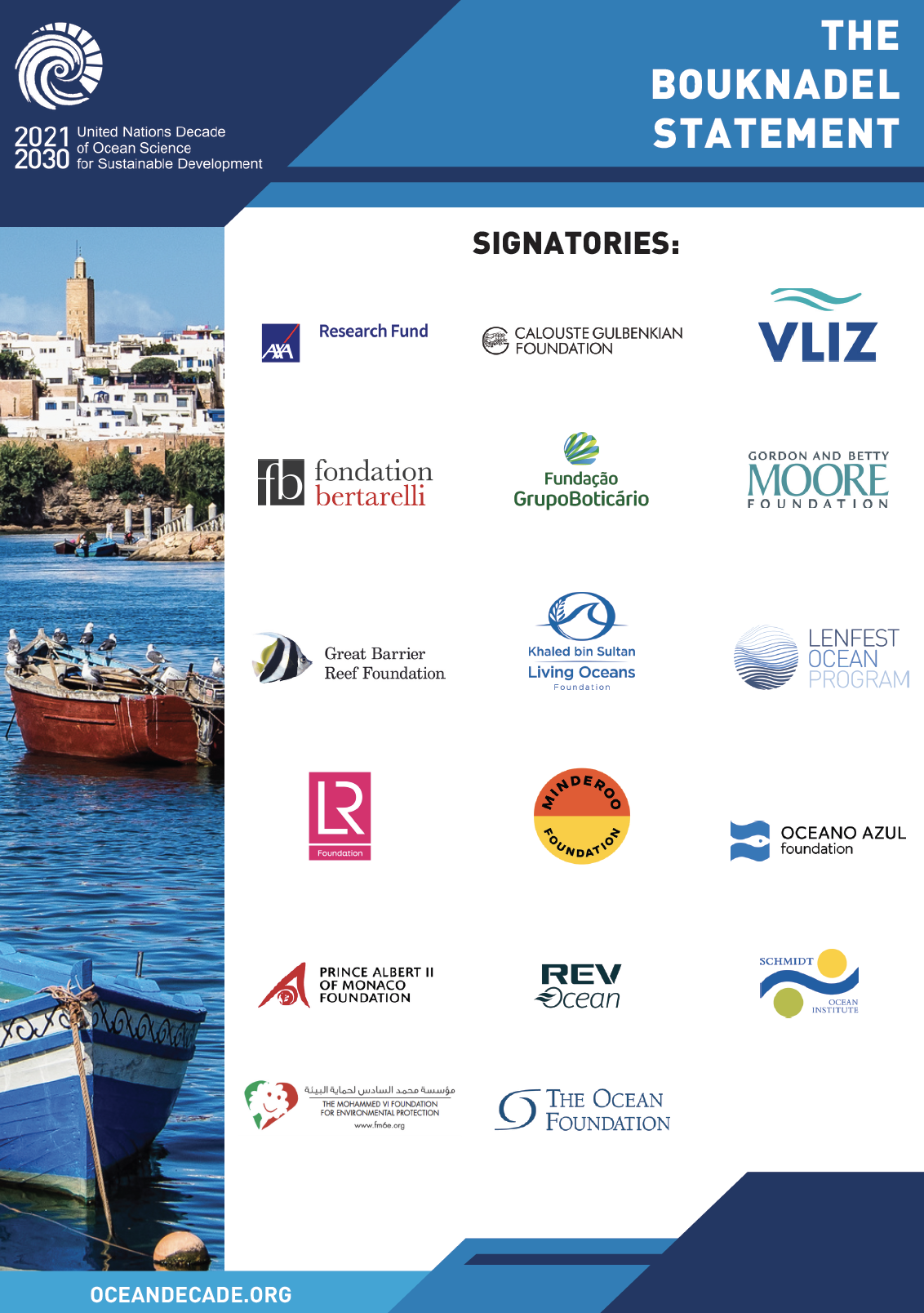
The Khaled bin Sultan Living Oceans Foundation was one of 17 philanthropic foundations that have signed on to The Bouknadel Statement. This joint statement was launched on the occasion of the 2022 United Nations Ocean Conference in Lisbon, Portugal, to raise awareness for the need to increase investment in ocean science to support sustainable development.
The Foundations Dialogue of the UN Decade of Ocean Science for Sustainable Development — an informal, global network of community, corporate, and private foundations that have chosen to work together to support the vision of the Ocean Decade — today launched The Bouknadel Statement affirming their commitment to investing in transformative ocean science. The Statement was launched during an event celebrating the Ocean Decade during the 2022 UN Ocean Conference in Lisbon.
The Statement recognizes the central role of the ocean in human health, safety, and wellbeing, and encourages the philanthropic community to increase their support of marine science and conservation. Via the statement, the group of foundations that make up the Foundations Dialogue recognize their unique role in supporting the co-design and communication of ocean science. The foundations also highlight the need for the philanthropic community to develop new and innovative partnerships and tools to meet the ambitious goals of the Ocean Decade.
The Bouknadel Statement was the result of discussions of the Foundations Dialogue over several months in 2021 and 2022 that culminated in a meeting in Sidi Bouknadel, Morocco, in June 2022 at the Hassan II International Center for Environmental Training, the academic branch of the Mohammed VI Foundation for Environmental Protection, presided over by Her Royal Highness Princess Lalla Hasnaa, Patron of the Ocean Decade Alliance. The Khaled bin Sultan Living Oceans Foundation participated in these meetings and is proud to be a signatory of The Bouknadel Statement.
About the Khaled bin Sultan Living Oceans Foundation:
The Khaled bin Sultan Living Oceans Foundation is a nonprofit environmental organization that works to protect and restore the world’s oceans through scientific research, outreach, and education. As part of its commitment to Science Without Borders®, the foundation provides data and information to organizations, governments, scientists, and local communities so that they can use the latest science to work toward sustainable ocean protection.
About the Ocean Decade:
Proclaimed in 2017 by the United Nations General Assembly, the UN Decade of Ocean Science for Sustainable Development (2021-2030) (‘the Ocean Decade’) seeks to stimulate ocean science and knowledge generation to reverse the decline of the state of the ocean system and catalyze new opportunities for sustainable development of this massive marine ecosystem. The vision of the Ocean Decade is ‘the science we need for the ocean we want’. The Ocean Decade provides a convening framework for scientists and stakeholders from diverse sectors to develop the scientific knowledge and the partnerships needed to accelerate and harness advances in ocean science to achieve a better understanding of the ocean system and deliver science-based solutions to achieve the 2030 Agenda. The UN General Assembly mandated UNESCO’s Intergovernmental Oceanographic Commission (IOC) to coordinate the preparations and implementation of the Decade.
About UNESCO-IOC:
The Intergovernmental Oceanographic Commission of UNESCO (UNESCO-IOC) promotes international cooperation in marine sciences to improve management of the ocean, coasts and marine resources. The IOC enables its 150 Member States to work together by coordinating programmes in capacity development, ocean observations and services, ocean science and tsunami warning. The work of the IOC contributes to the mission of UNESCO to promote the advancement of science and its applications to develop knowledge and capacity, key to economic and social progress, the basis of peace and sustainable development.