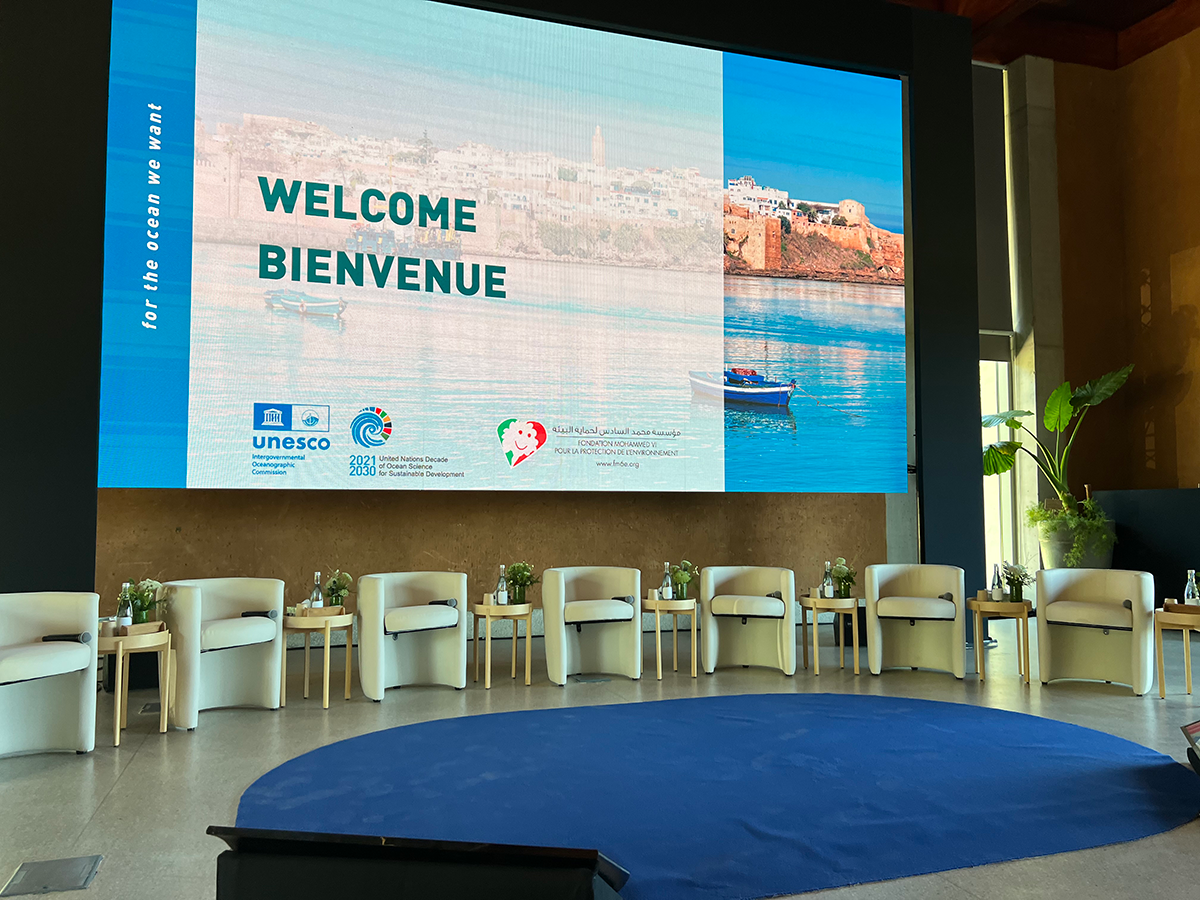
Last week, the Khaled bin Sultan Living Oceans Foundation (KSLOF) participated in the Second Foundations Dialogue Meeting, coming together with other ocean-focused foundations from around the world to address the major challenges facing our oceans.
Organized by the Intergovernmental Oceanographic Commission of UNESCO, the Foundations Dialogue Group provides a platform for the philanthropic community to collaborate and work together to move the needle towards ocean conservation. Specifically, the group seeks to address how the foundations could align their efforts to achieve the bold ambitions of the United Nations Ocean Decade for Sustainable Development (‘Ocean Decade’).
The Second Foundations Dialogue Meeting was hosted by the Mohamed VI Foundation for Environmental Protection and held at the Hassan II International Center for Environmental Training in Sidi Bouknadel, Morocco, from June 1-3, 2022. It presented a unique opportunity to discuss how to enhance the role of the philanthropic community in co-designing the science we need and then making it available to key stakeholders to drive the actions necessary to support the 2030 Agenda for Sustainable Development.
Alexandra Dempsey, KSLOF’s Director of Science Management, attended this high-profile meeting to share our knowledge of coral reef science and conservation. She participated in a plenary session, “Uptake of Ocean Science,” and spoke about how we can ensure that issues of usability and uptake are built into initiatives from the outset when we are working with local communities and managers on ocean conservation. This approach to scientific research and conservation is deeply embedded in the Living Ocean Foundation’s work through our philosophy of Science Without Borders®. Every research mission we conduct is co-designed with local scientists, community members, and marine managers. This ensures we conduct the right research in the right places so we can provide communities with the tools and information they need to protect their reefs.
Alexandra also chaired a session on Oceania and the Indian Ocean, two regions where KSLOF has extensive experience working with small island nations on coral reef science and conservation initiatives. This session brought together philanthropic organizations to create a shared understanding of the major ocean issues facing this region. It also provided an opportunity for foundations to discuss their current and future work in this region, share information, and spark ideas for new initiatives and collaborations.
The Khaled bin Sultan Living Oceans Foundation is a proud member of the Foundations Dialogue Group and is grateful for the opportunity to collaborate with like-minded organizations to preserve, protect, and restore our living oceans. As catalysts, conveners, and risk-takers, foundations have been at the forefront of exploring emerging research areas and fostering collaborations amongst diverse partners. By working together with other philanthropic organizations, we have the potential to generate and disseminate the transformational science and knowledge needed to address the Ocean Decade Challenges and make a meaningful difference in ocean conservation.
For a closer look into the Second Foundation’s Dialogue Meeting, watch the opening and closing sessions:
Ocean Decade: Second Foundations Dialogue
Opening Session
Closing Session