Winners of the 2023 Science Without Borders® Challenge
The 2023 Science Without Borders® Challenge invited young artists from around the world to raise awareness about endangered marine species with the theme, “The Sixth Extinction.” This theme challenged students to reflect on the alarming rate at which marine species are disappearing—many due to human activities such as overfishing, pollution, climate change, and habitat destruction.
With over 1,200 entries from 67 countries, the competition showcased an extraordinary level of talent and environmental consciousness. Students aged 11-19 submitted artwork that not only celebrated the beauty of endangered species but also highlighted the critical threats they face. Their detailed imagery and emotional depth brought to life the struggles of species like the vaquita, hawksbill sea turtle, and many other marine species teetering on the brink of extinction.
The winning pieces captivated us with more than just their artistic brilliance—they delivered powerful messages about the fragile balance of marine ecosystems and humanity’s role in their preservation. These artworks are more than visual masterpieces; they are urgent calls to action, reminding us that the future of our oceans depends on the choices we make today. We are honored to showcase the 2023 Challenge winners, whose art inspires hope and a renewed commitment to protecting marine biodiversity.
Winners & Finalists Ages 11-14:
"The Menu" by Yitian Wang, Age 13, China
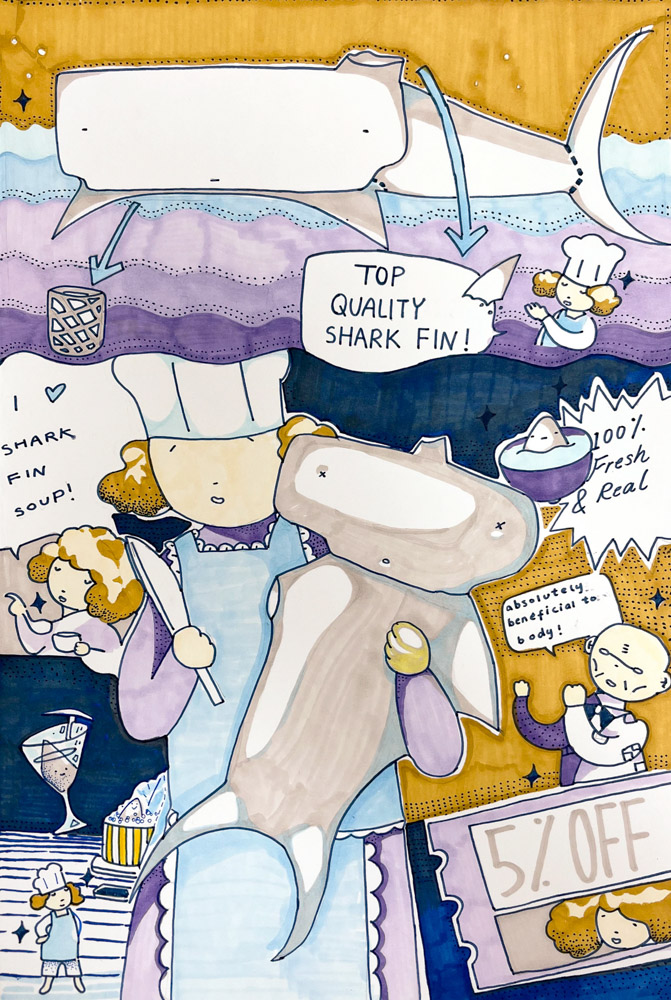
ARTIST'S STATEMENT: My piece is a menu. Menus could mean “luxury”, “joyfulness” and it provides a lot of options. I choose to put the Great Hammerhead into the menu and to make it a popular main dish. I used a flattering way to illustrate information on the menu, contrasting with violence in the background, giving the whole picture a sense of sarcasm as viewers look at this picture closely. The Great Hammerhead is facing severe problems like global warming, littering and worst of all: over-fishing. I chose to research on Great Hammerhead because of their unique appearance. Shark fins are the only reason people hunt sharks. It is considered a delicacy in many cuisines, despite it being nutritionally lacking. The shark fin will be beautifully placed in dishes for people to take photos while the finless shark sinks to the bottom of the ocean.
Winners & Finalists Ages 15-19:
First Place (15-19): "We Are Next" by Boram Shim, Age 16, United States of America
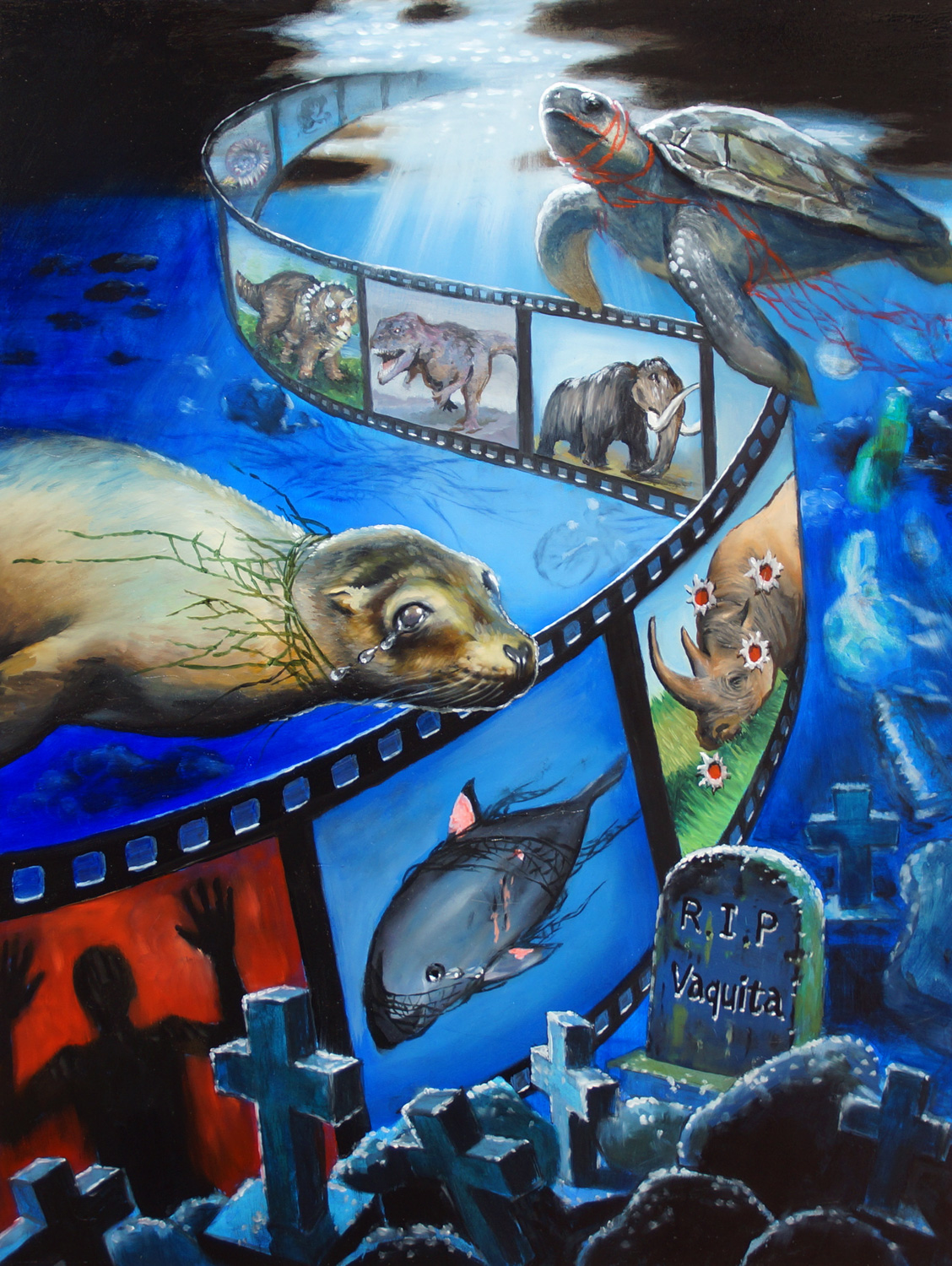
ARTIST’S STATEMENT: Humans would be the ones getting extinct at the end of the sixth extinction. I portrayed the extinct animals, an endangered dolphin, and a person lining up in a film tape as a warning that it will eventually be our turn to be extinct, like a scene in a filmstrip that would inevitably be played in chronological order. Unlike the five previous mass extinctions that occurred due to environmental pressures, “the sixth extinction” is driven by human activities like oil spills, ocean trash, and net entanglements. Vaquita is on the verge of extinction—only ten left—due to illegal fishing and entanglement in gillnets. Moreover, less than 10,000 Kemp’s Ridley Turtles are left due to pollution, overfishing, and humans’ use of artificial light. Furthermore, only 1570 Hawaiian Monk Seals are left due to net entanglements. Finally, tombstones symbolize the deaths of humans following the destruction of marine ecosystems.