search-icon
There and Back Again, a Scientist’s Journey

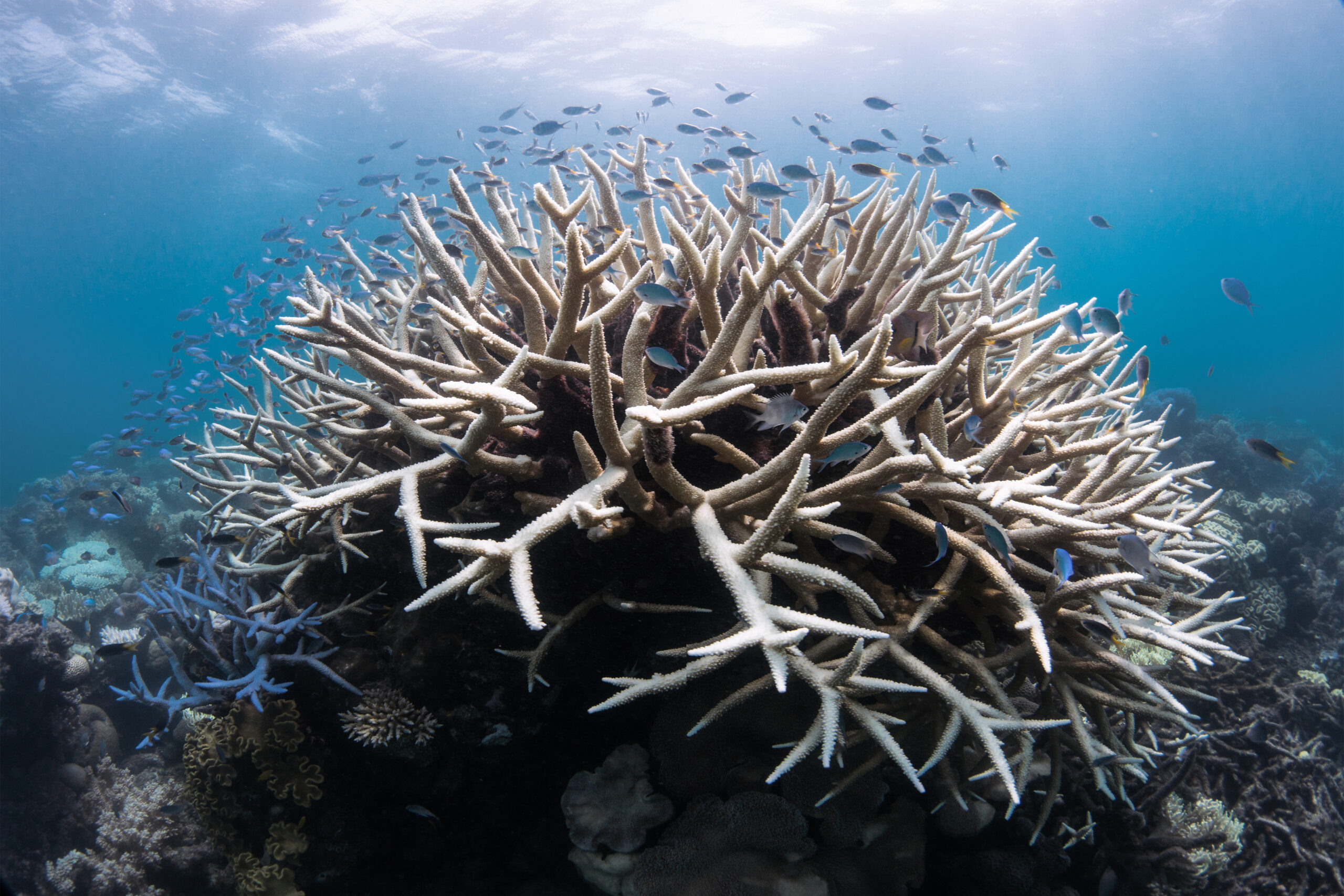
In 1998, we visited Rangiroa Atoll shortly after sea temperatures rose 6 degrees greater than summer norms and caused massive coral bleaching. Virtually all of the branching coral Pocillopora died and a quarter of the mound-shaped coral, Porites, lost almost all their ‘skin’. Many of these mound-shaped corals were several hundred years old but were reduced to fragments of their former selves in a matter of months. It’s a little like an oak forest being reduced to mere oak saplings.
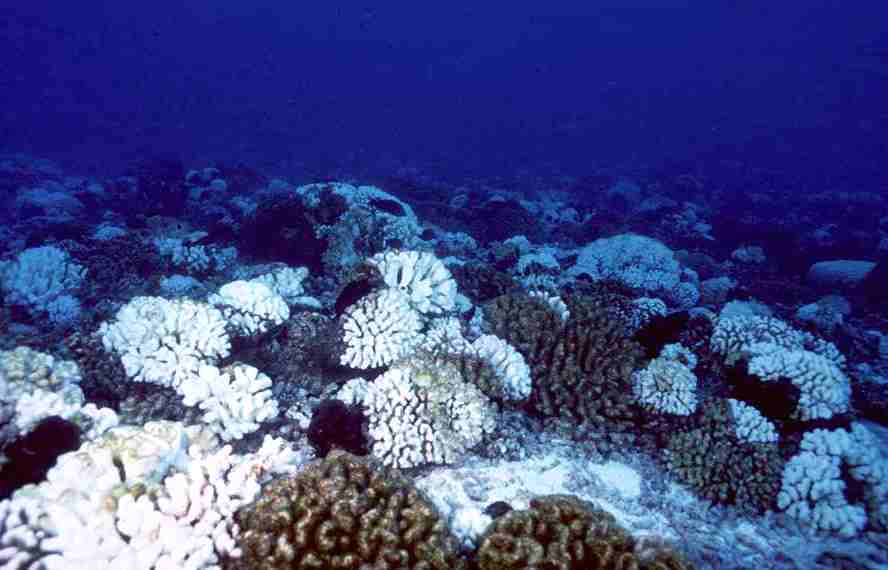
Bleached Pocillopora colonies in 1998
Bleached Pocillopora colonies in Rangiroa in 1998
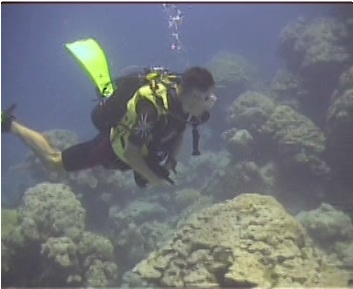
Dr. Pete Mumby diving by dead Porites colonies
Dr. Peter Mumby diving by dead Porites colonies in 1998

Rangiroa Reef Recovery

Revisiting these reefs fifteen years later, we found incredible recovery. The branching corals have rebounded in profusion but surprisingly, the Porites have also recovered. This is new to science – we had no idea that these long-lived corals could recover so dramatically. It seems that the little fragments of living coral managed to regrow over the dead skeleton. One way to visualize this is to imagine that you peeled back an orange to leave just a tiny piece of peel. That represents what the coral bleaching did to the coral surface. Now imagine that the remaining fragment of orange peel grew back leaving you with the original orange.
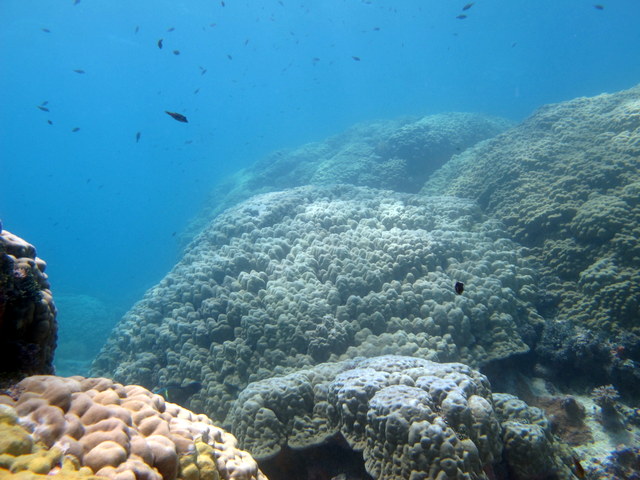
Rangiroa Reef Recovery: Large healthy Porites colonies at Rangiroa atoll. There were the same colonies that had suffered a mortality event in 1998 and are mostly healthy today.


Finding that some corals have great regenerative capability gives us hope that corals are more vigilant towards climate change impacts than we thought.
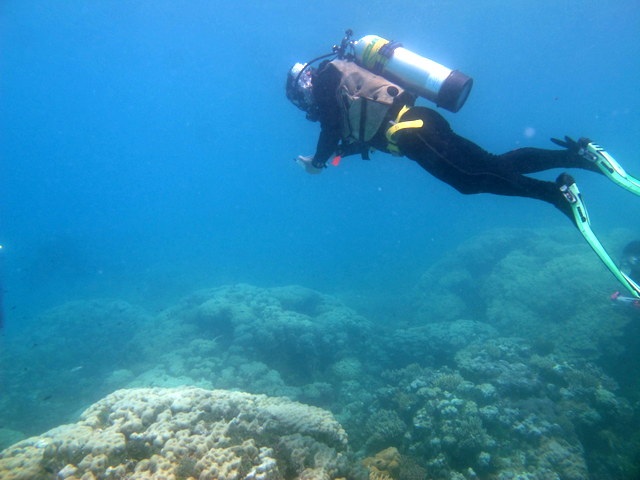
Dr. Pete Mumby observing the same reef on this mission; an incredible story of reef recovery.
Dr. Peter Mumby observing the same reef on this mission.

(Photos by 1 – Prof. Jean Jaubert; 3-4 Brian Beck)

To follow along and see more photos, please visit us on Facebook

Related Posts

Ten Years of B.A.M.: Rooted in Partnership, Growing in Purpose

Ten years ago, the Bahamas Awareness of Mangroves (B.A.M.) program began with a simple but meaningful commitment: to connect Bahamian students with the mangrove ecosystems that shape and protect their island home.

Since 2015, B.A.M. has been implemented in partnership with Friends of the Environment, whose dedication to environmental stewardship in Abaco has made this program possible year after year. Together, we have worked alongside Patrick J. Bethel High School and Forest Heights Academy to bring hands-on mangrove science into classrooms and out into the field.

What makes ten years remarkable is not just longevity — it is consistency…

Read More

From Mangrove Mud to Meaningful Work: Desta’s J.A.M.I.N. Journey

Some students I remember for their grades, their quick answers, or a moment that made the whole class laugh. Others I remember for the way they stepped into the mangroves.

Desta was the kind of student who thrived outdoors. While some students hesitated at the edge of the mud, he walked right in. And when he inevitably got stuck — because everyone does — he didn’t get frustrated. He laughed. Covered in mud, holding mangrove propagules in his hands, he embraced the experience fully.

Even then, it was clear that he was connecting with the environment in a way that went beyond the lesson plan…

Read More