I meet my colleagues at Alligator Head Foundation (AHF) at 7am to gather materials that will help us to monitor sea turtle nests. Despite the early morning hour, there is a contagious enthusiasm in all who are going to search for sea turtle nests. We pile into two vehicles and drive to the beach.
We drive down a gravel road getting the first glimpse of the Jamaican turquoise blue water glimmering in the sunlight. Gathering our supplies, we walk across a wooden plank straddling a small ravine that leads to a small sandy beach in a quiet little cove, which is a perfect location for sea turtles to lay their eggs.
Francine Cousins, a conservation officer at Alligator Head Foundation looks for turtle tracks that could lead us to a nest. The weekend’s tides have washed away the evidence, so she grabs a thin rounded stick and looks for disturbed areas of sand. When she finds one, she gently begins poking her stick through the sand, feeling for areas where the sand easily gives way. She methodically and repeatedly pokes the sand until she strikes gold. She finds an area where the stick easily slides through the sand. Alligator Head Foundation’s employees, Floyd and Kymani anxiously, but carefully, begin removing the sand until a tiny round white egg, the size of a golf ball, appears.
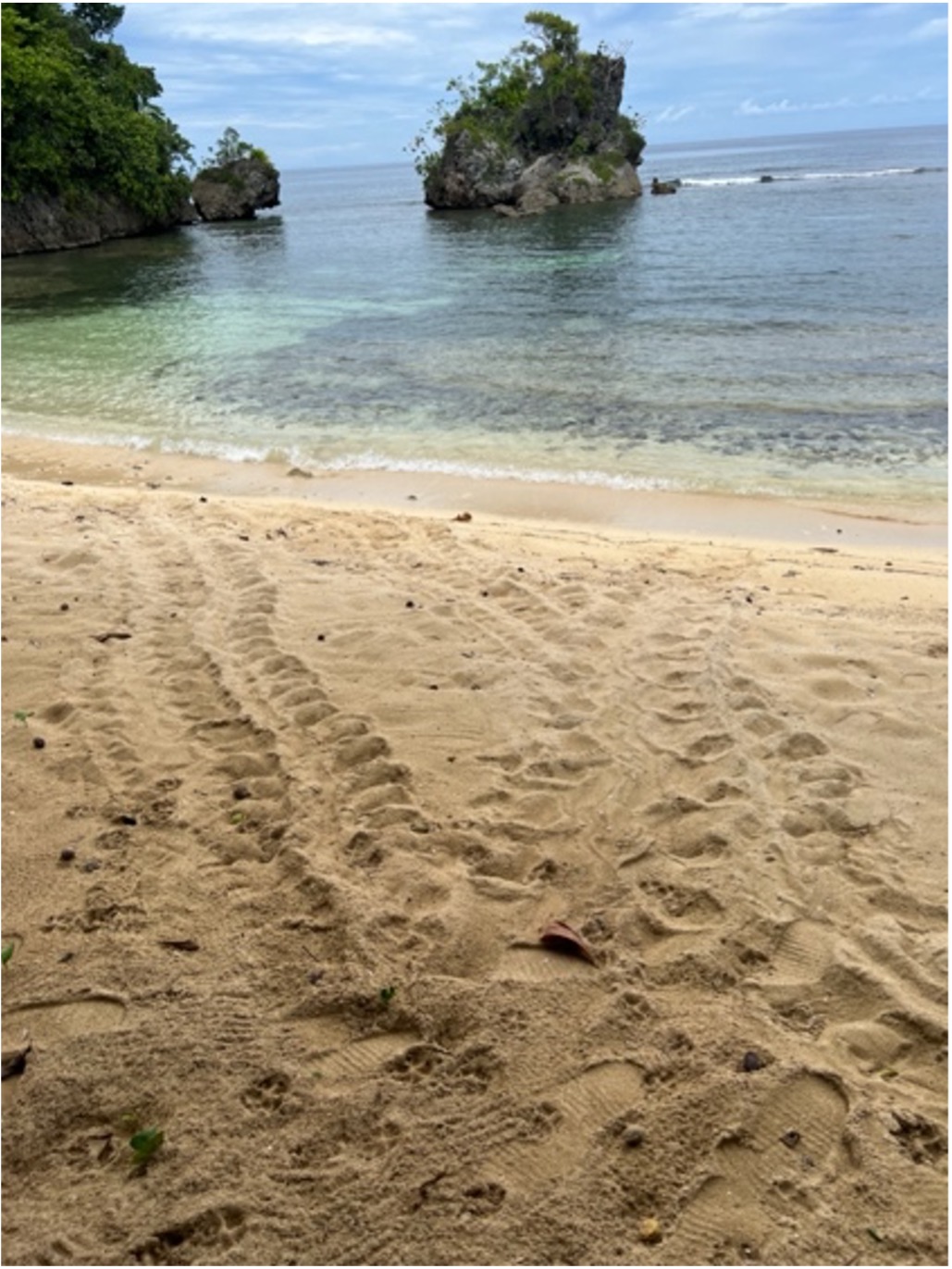
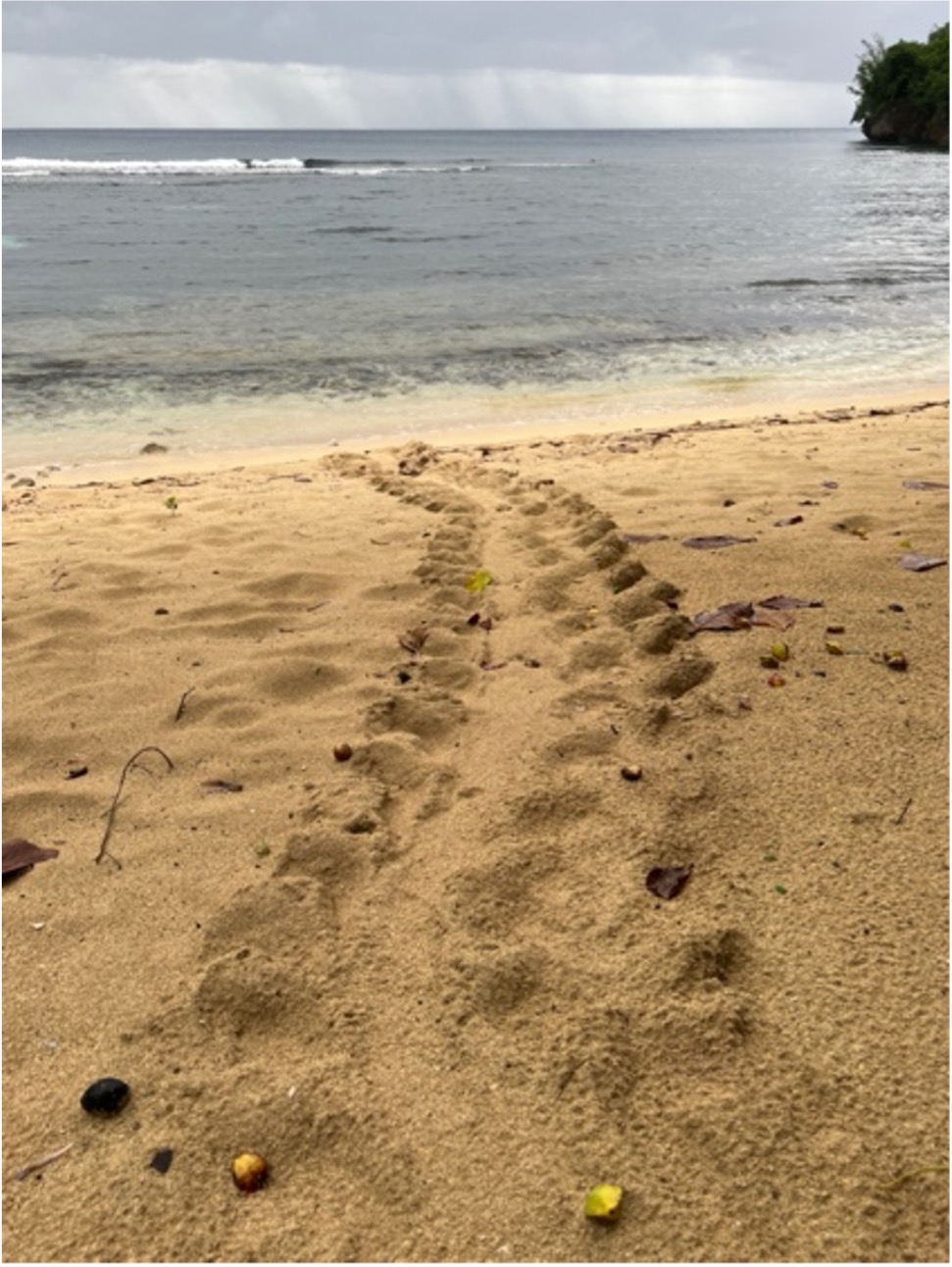
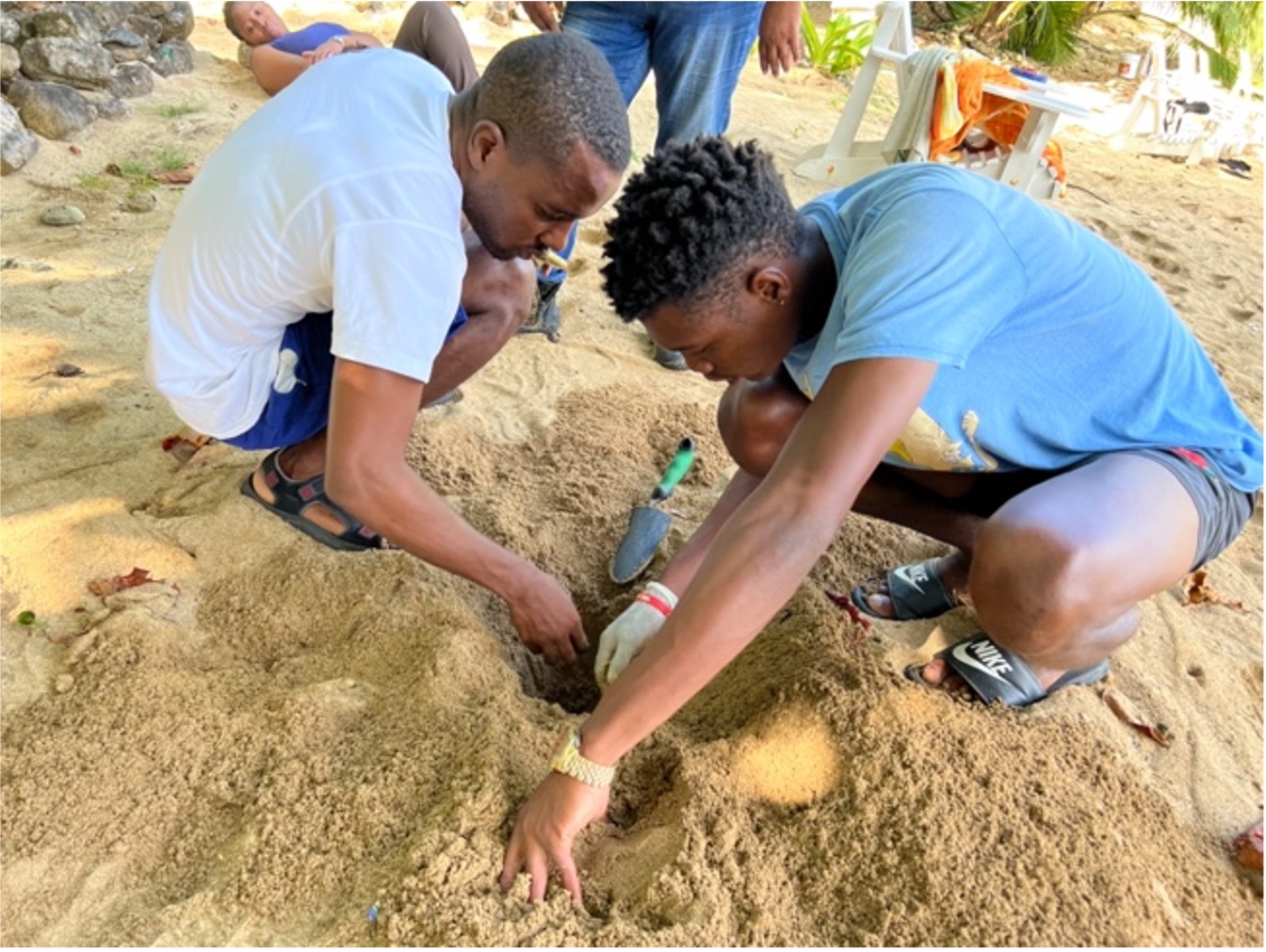
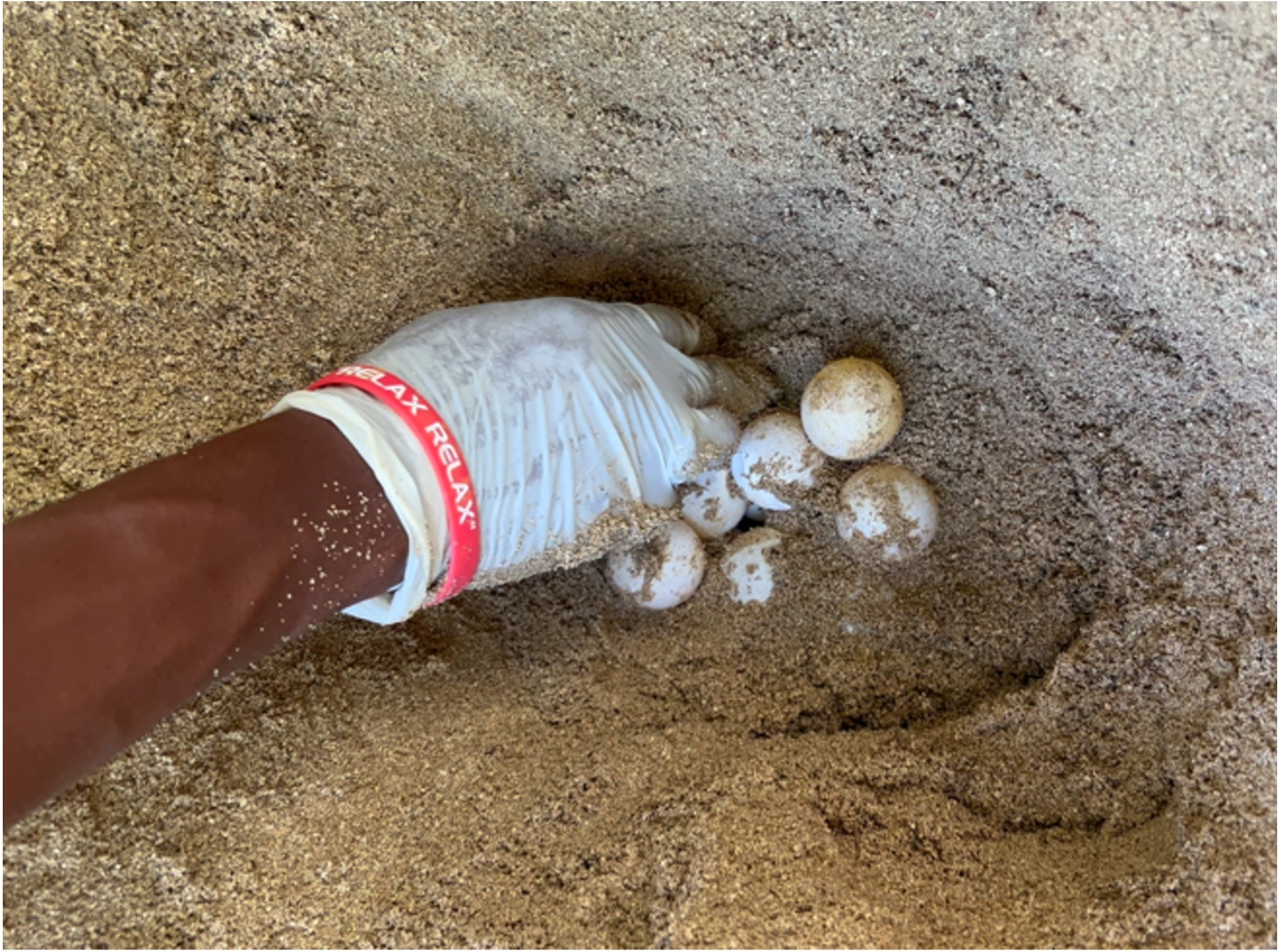
Unfortunately, this nest is in the tidal zone which means that the eggs could be destroyed if left alone. Despite the excitement, there’s more work to do. Francine, Floyd, and Kymani begin looking for other nests leaving Denise Henry, Research Programme Manager at AHF to excavate and count the eggs. Saskia, a master’s student evaluating the J.A.M.I.N. program, and I, assist her in doing the job. Although it’s not my first time doing this, it still is as breathtaking as the first.
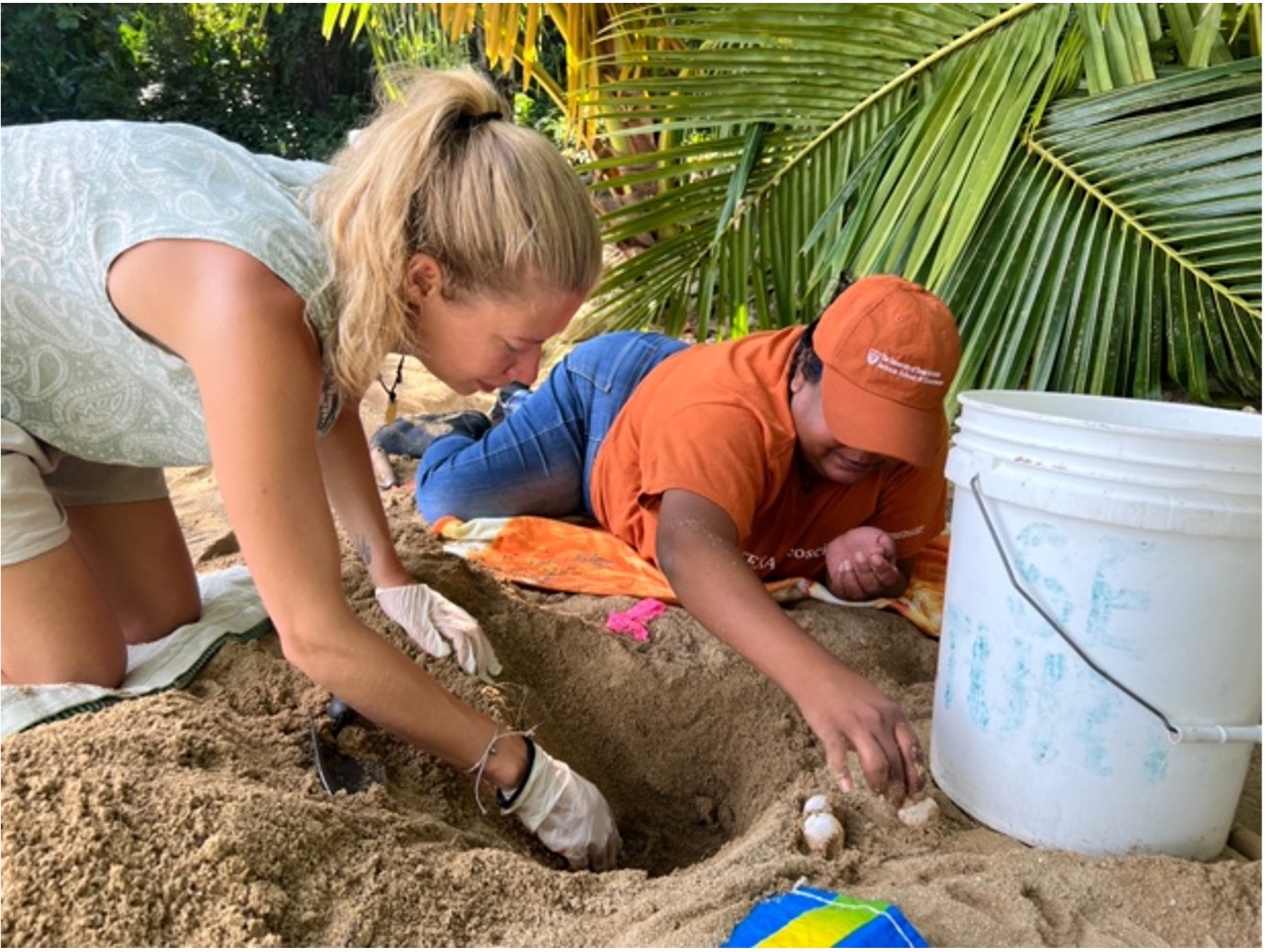
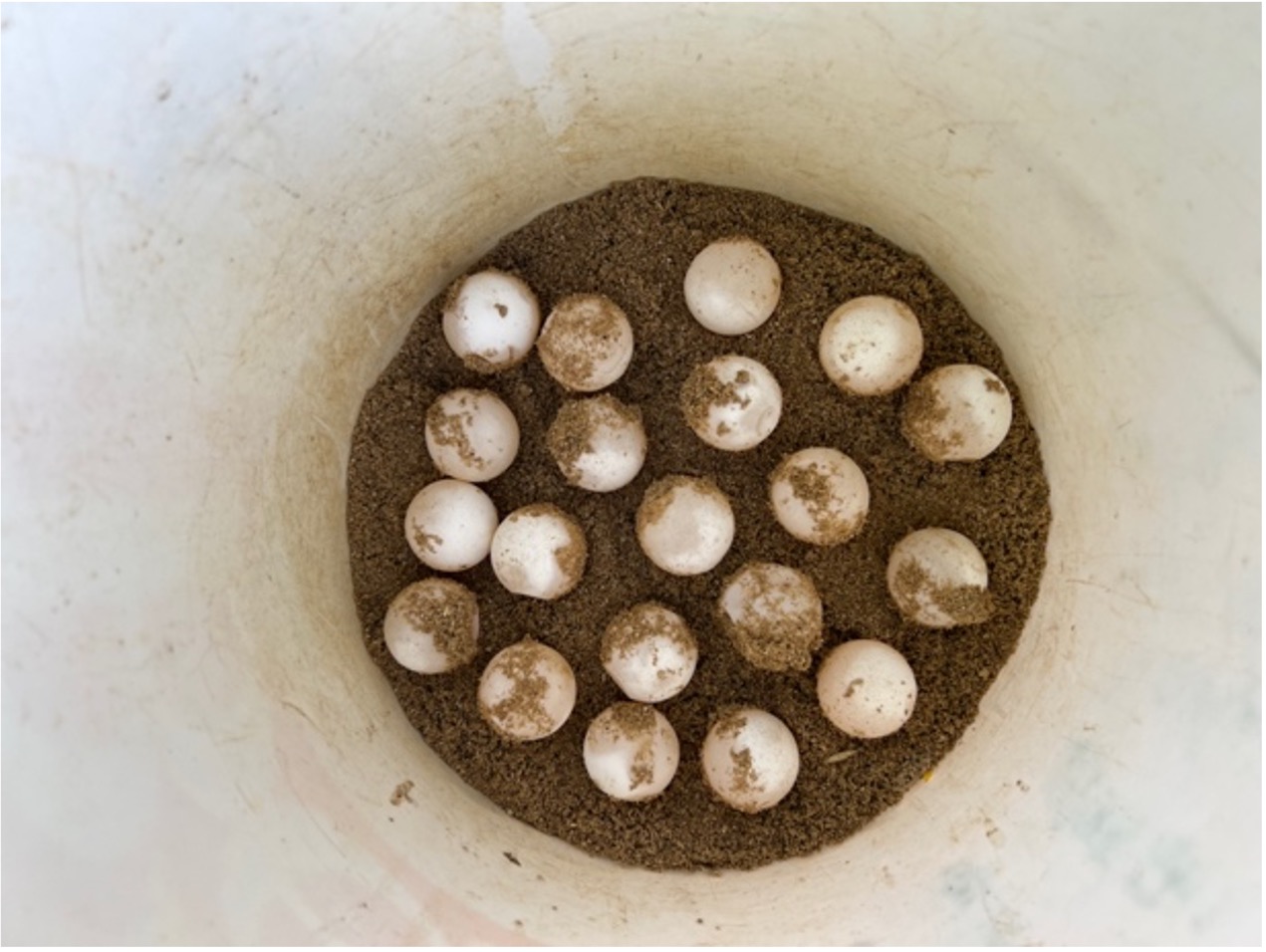
We count 105 eggs in total, mark the GPS location, and measure the depth of the nest. The eggs will be taken to the Alligator Head Foundation, where they will be placed in sterilized incubators. Using gloves, I gently place each egg in the bucket in the reverse order that they were in the nest, so that when they are relocated to the incubator, the eggs are in the same position that they were laid.
After completing our task, we realize that Francine has found another nest. This one is above the tide line and in a safe location. The nest is left for nature run its course; however, AHF staff take a GPS location and covers up any evidence so that predators and poachers will not find it.
For more than 100 million years, these magnificent creatures have played a vital role in marine and beach ecosystems, but sea turtles are endangered around the world. Alligator Head Foundation realizes the importance of sea turtles to Jamaican ecosystems and the greater Caribbean. As such, they have created the Sea Turtle Monitoring Programme to aid in researching the sea turtle population and implementing conservation strategies that will help to conserve sea turtle nests, eggs, and adults. I was honored to be able to participate in such a meaningful program that ensures the survival of these critically important animals.
Missed the first blog in this series? Check out “Time Out for Turtles – Part 1” to learn more about Alligator Head Foundation’s work to conserve sea turtles in Jamaica.