Expedition Log: Tonga – Day 3
Hi there! Melinda Campbell here. I am the Foundation’s new Education Programs Specialist. I was hired as an additional writer of our Coral Reef Ecology Curriculum and to generally help out our Director of Education, Amy Heemsoth. This means I get to take a break from my computer keyboard and fly out to Tonga to evaluate knowledge retention and changes in the students of Vava’u.
Previously, I taught high school science in a couple of schools in Baltimore County, Maryland and at Waianae High School in Hawaii. I have a Master’s degree in Marine Studies from the University of Queensland, Australia and a Master of Arts in Teaching from Towson University, where I also earned my BS in Biology.
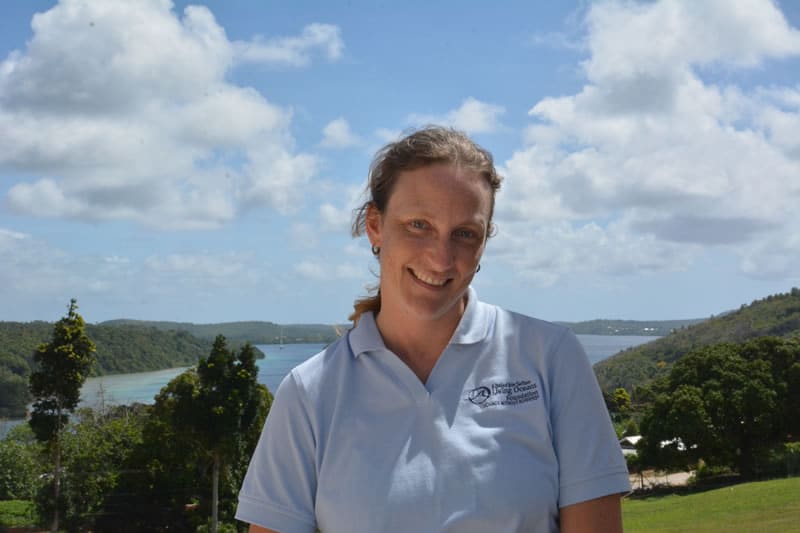
Melinda Campbell, our Education Programs Specialist, in Tonga.
Although this is the third trip to Tonga for the Foundation, it is my first time here. I am excited to be a part of the education team, sharing information about coral reefs and determining future needs for the schools.
Having travelled and lived a bit in the Polynesian triangle, I nodded my head and thought, “sure, sure” when I heard the nick-name for the Kingdom of Tonga — the Friendly Islands. I have lived the “aloha” way, so this seemed like one of those things people just say. From the moment I arrived, I quickly learned that, although the name came by accident, the Tongans more than live up to it. Everyone smiles and says hello, or “Malo!” They inquire as to where you are from and how you like their islands. They especially want to make sure you are loving your time on their islands. And how could you not? Tongans are not only friendly, but beautiful, curious, and intelligent.
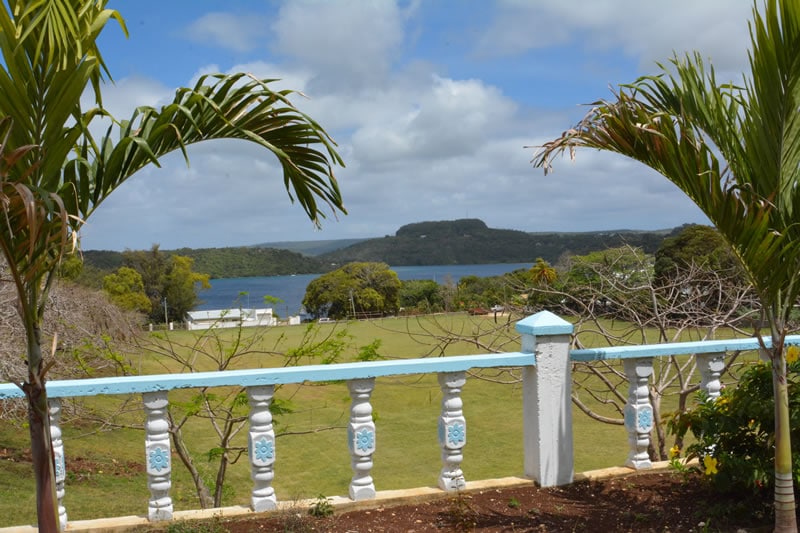
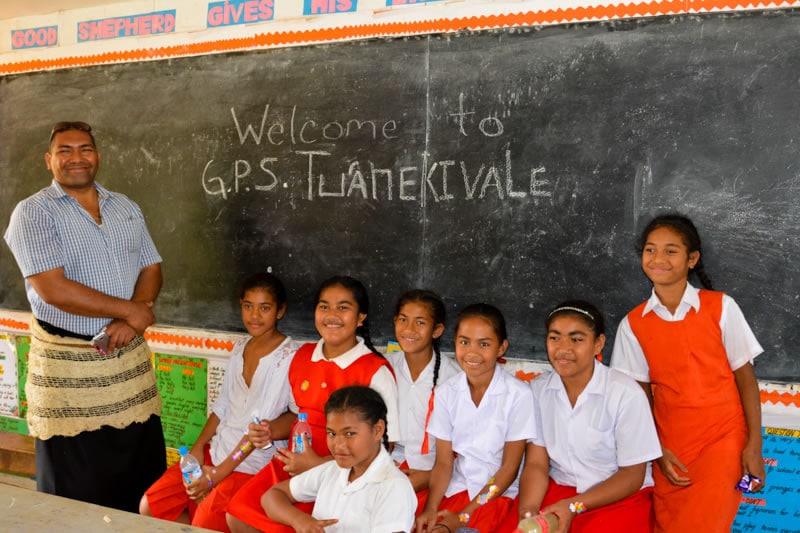
The view both in and out of the classrooms of Tonga is beautiful.
The nick name, Friendly Islands, dates back to James Cook’s “discovery” of the islands. It turns out that he arrived during a festival. Upon arrival, the locals gave Captain Cook food and gifts. He thought this was normally how people were welcomed, and the nick-name stuck, even once he realized their friendly gestures were just due to the festival.
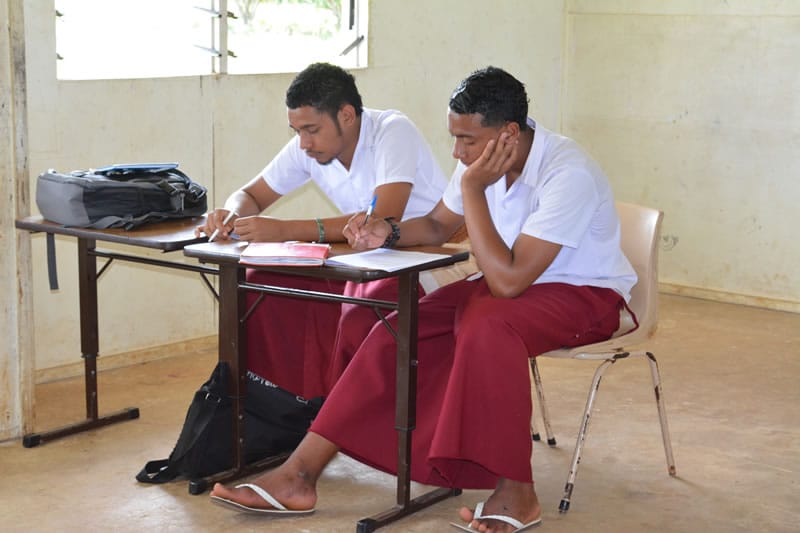
The Friendly Islands embodied: these two gentlemen shared a chair for a bit to make sure both Amy and I had somewhere to sit until their teacher could bring more chairs to the classroom.
Photos by Amy Heemsoth & Melinda Campbell