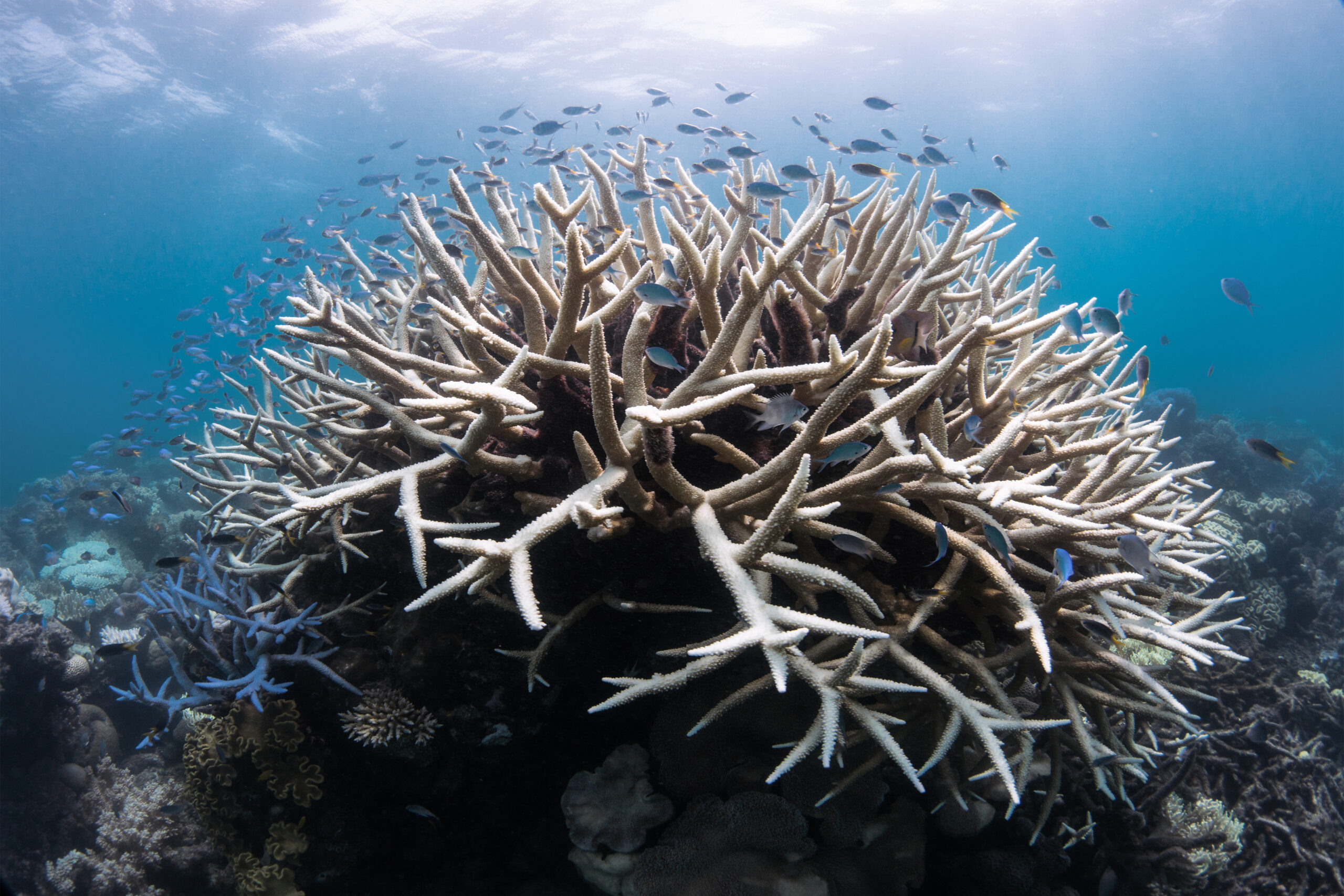
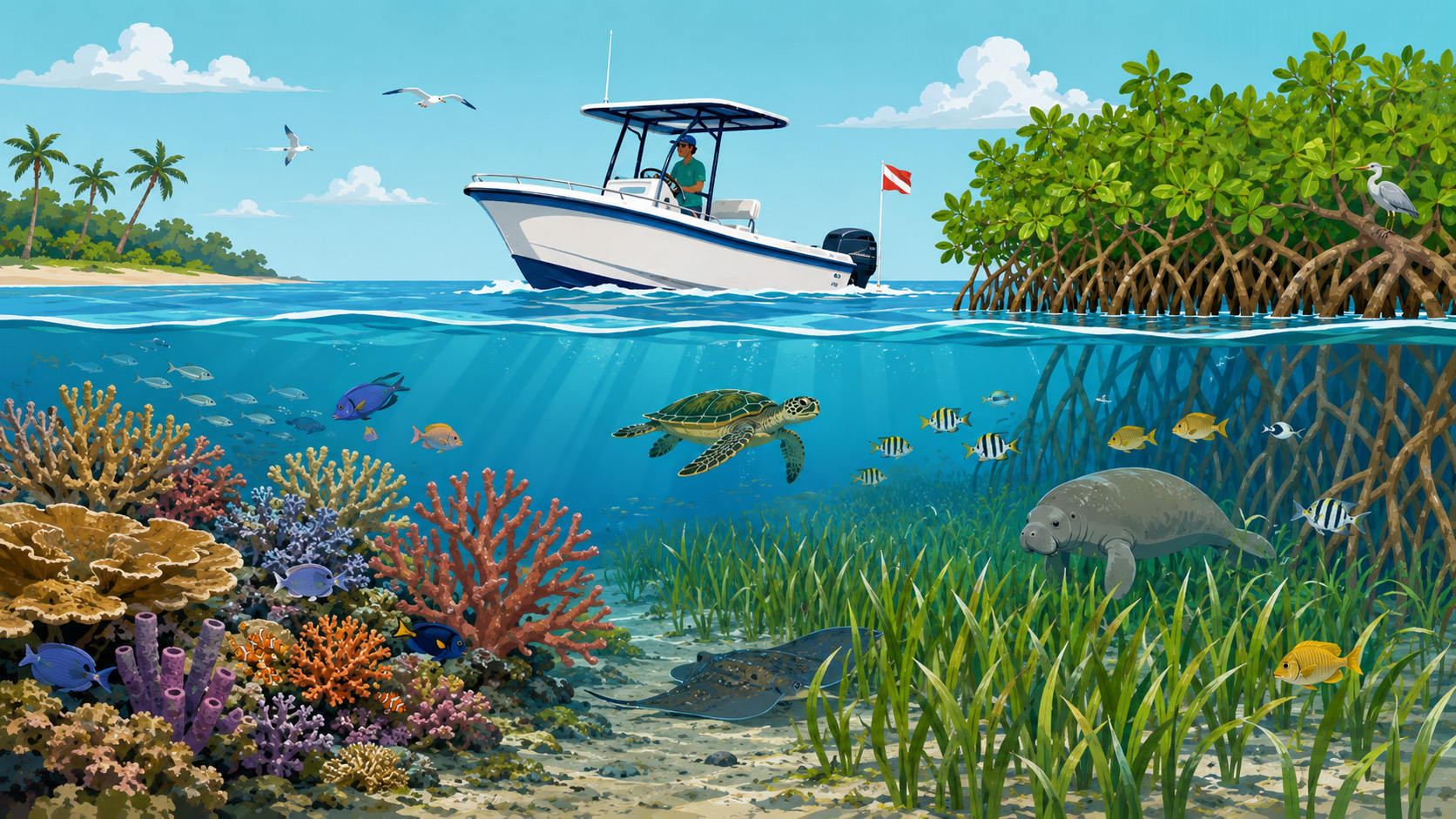
Upon arrival in Rurutu we made a shocking discovery – the reefs were nearly devoid of living coral. We learned that the island had been devastated by a bad outbreak of crown of thorns starfish (COTS outbreak) that occurred in 2006-2007. All corals were consumed nearly in their entirety from very shallow water to 40 m or deeper. Colonies remained in growth position, although piles of rubble were present in sand channels and grooves between coral heads and coral spurs.
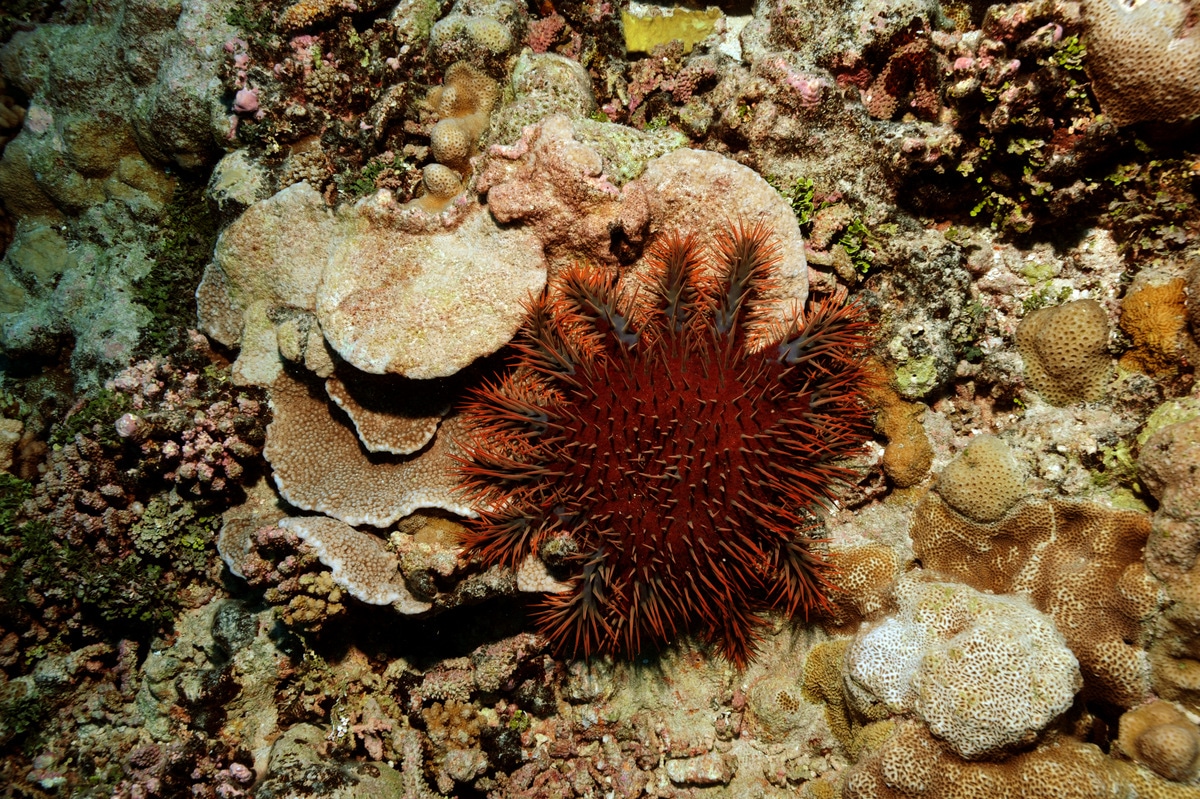
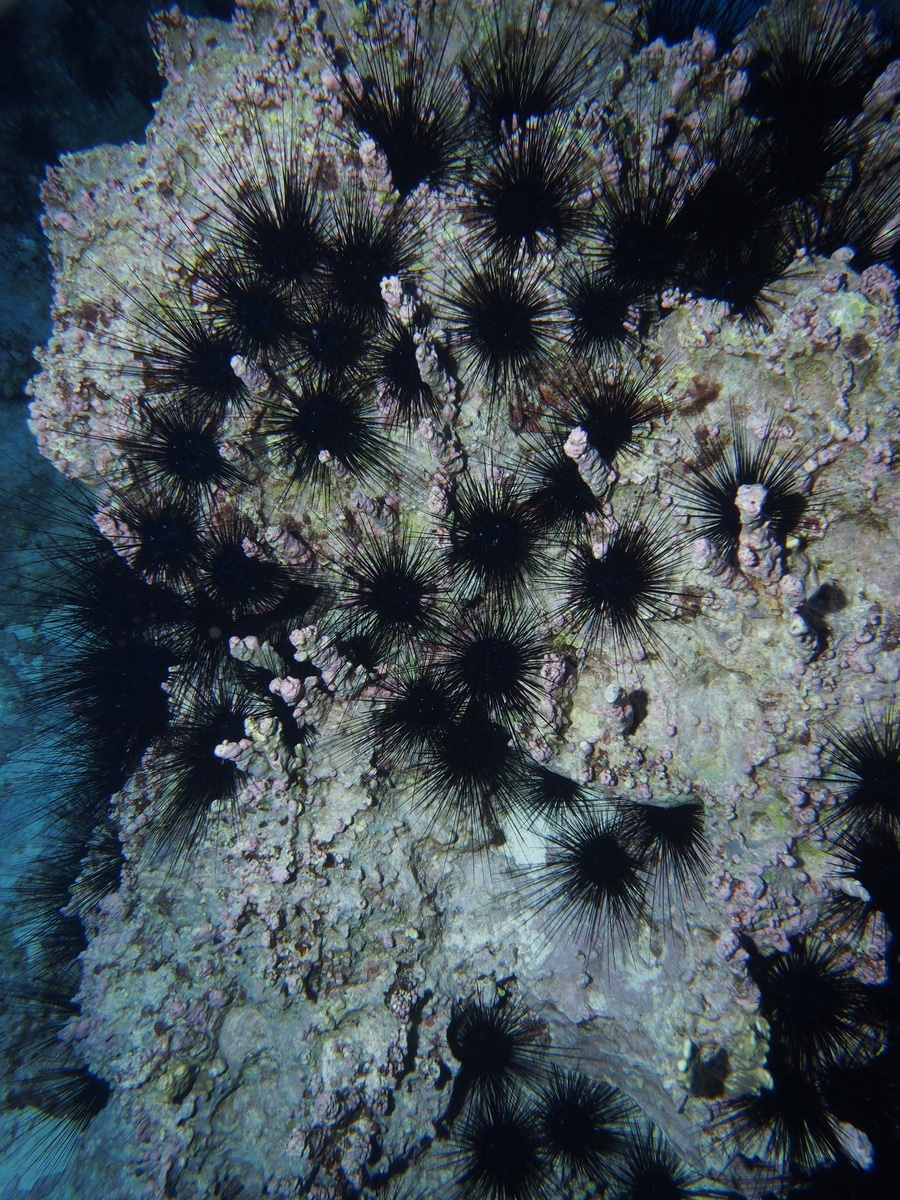
Unlike Society Islands, there were very few tissue remnants left on colonies, and only low numbers of recruits present due to the COTS outbreak. Much of the deeper framework consisted of very large and very old mountainous colonies of pore coral (Porites lobata) which grow only a cm or so per year. Because these colonies had few remaining tissue remnants, their recovery is likely to take decades. What was remarkable was the low amount of algae and the dense populations of sea urchins (in deeper areas we counted hundreds in each 10m x 1m belt transect). This may be good and bad for the corals (dead corals were covered in nice pink coralline algae, but there was a lot of erosion of the skeletons).
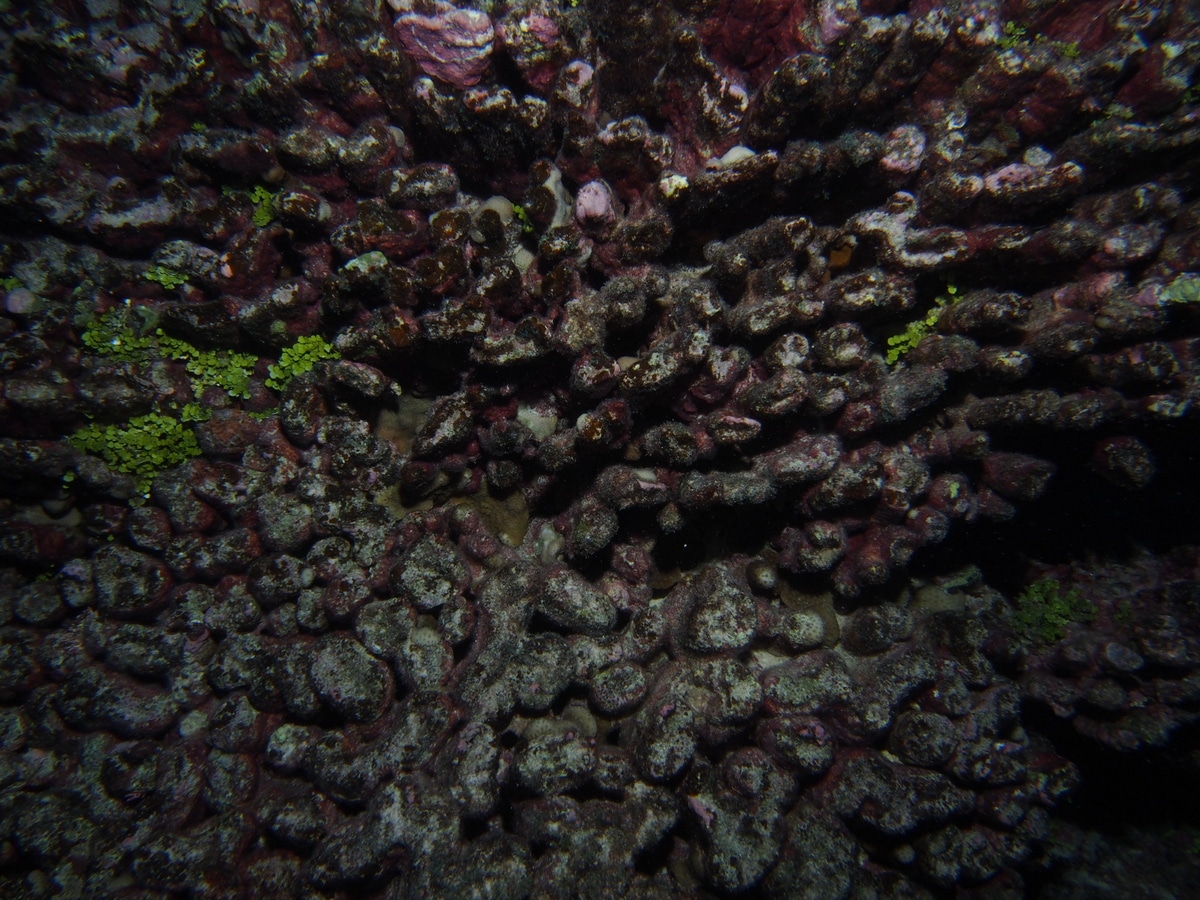
Our next stop, 82 miles away, was Rimatara. The reef was similar in that there was virtually no living coral. Local divers indicated a COTS outbreak had also occurred, but more recently – the last crown of thorns starfish were spotted only a year ago. What was different was a lower number of sea urchins, much more algae and a complete absence of new baby corals. The positive though, the large Porites colonies often had tissue remnants, suggesting they may recover more quickly.
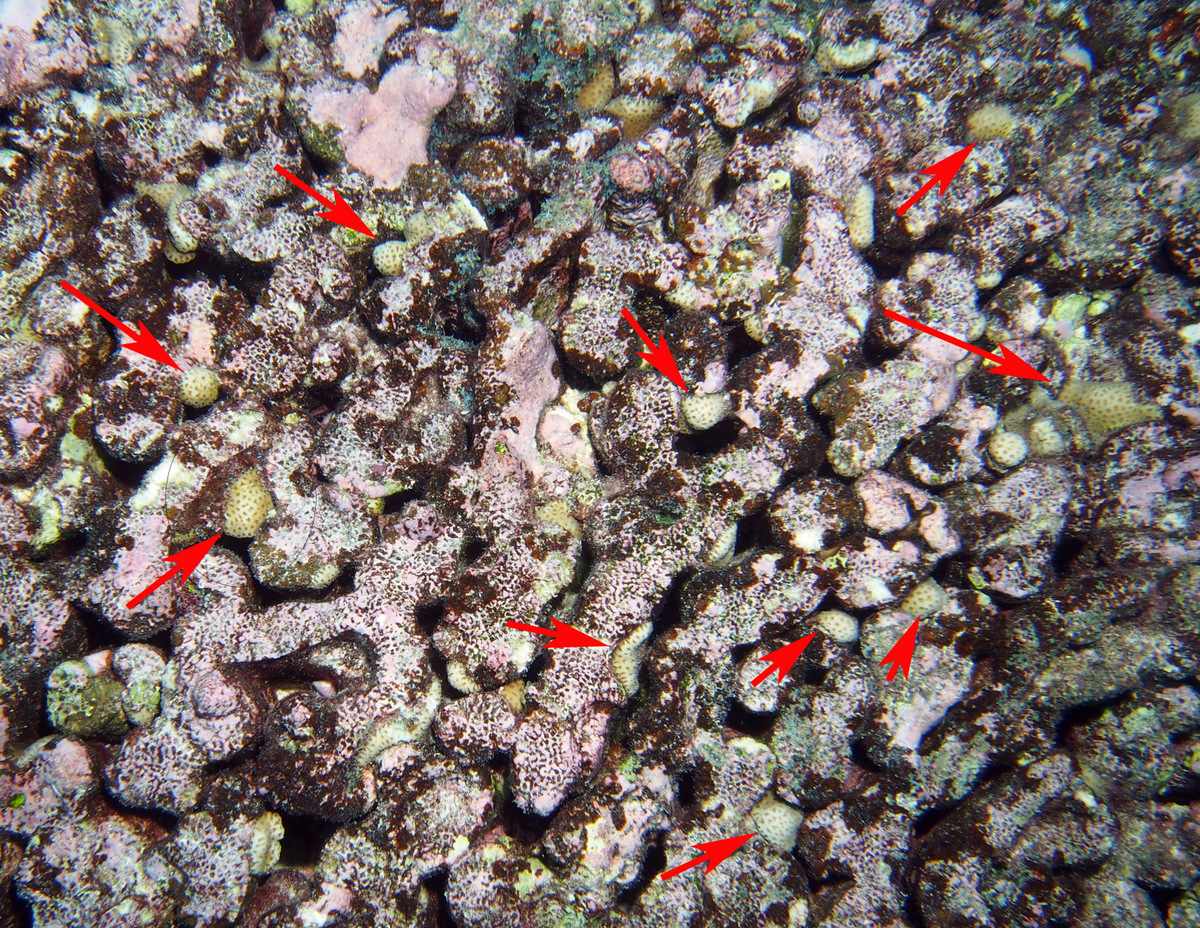
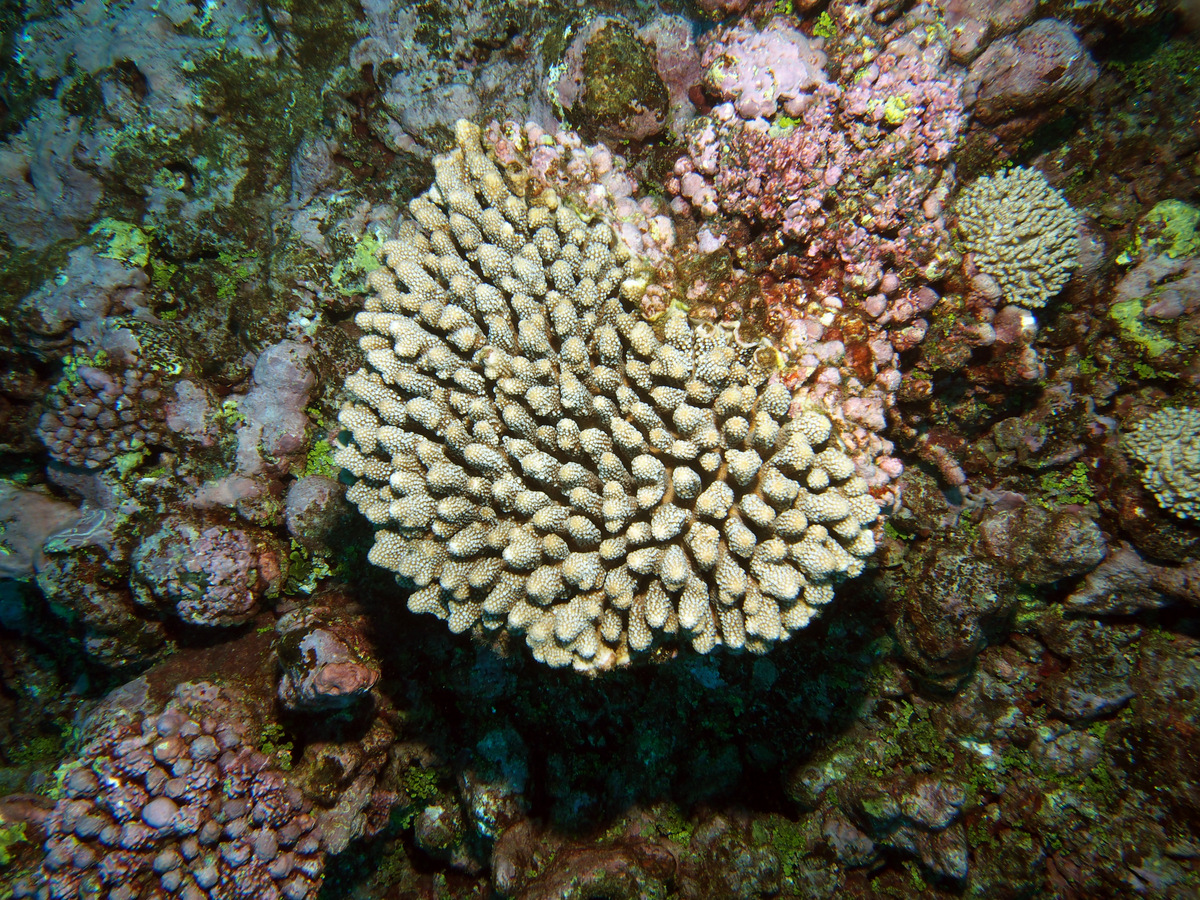
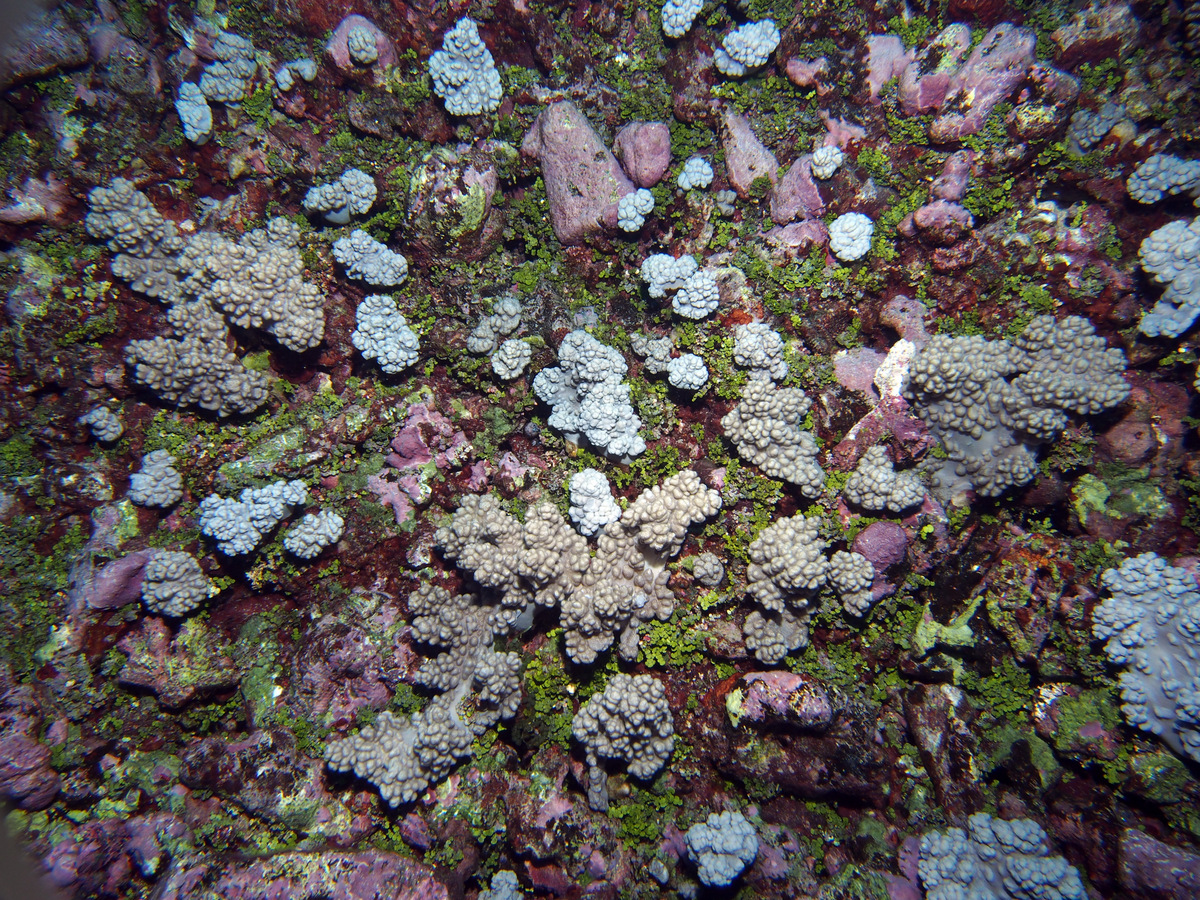
In both COTS outbreak locations a few survivors were found – basically two species – some larger colonies of cauliflower coral (Pocillopora verrucosa) and stout finger coral (Acropora humilis). Coral cover was less than 0.1%.
Because these islands are so small, they lack lagoonal habitats, and devastation by a COTS outbreak affected the entire island, new corals will not come from local sources – they require an outside source. This may take a while though, as the closest island is Tubuai, 115 miles to the southeast and Marie, 120 miles to the northwest. Currents during winter (June-September) are predominantly from the west to the east, while spawning occurs around December when most of the water flows from east to the west. Fortunately, Tubuai has not been affected by a COTS outbreak and it has a very healthy coral population which could provide new corals that can recolonize the reefs of Rurutu.
(Photos by Andrew Bruckner)
To follow along and see more photos, please visit us on Facebook!