The response to our 2025 Science Without Borders® Challenge has been overwhelming! We’ve been blown away by the sheer number of submissions we received from aspiring young scientists and artists worldwide. Last week, we proudly unveiled the finalists in the 11-14 age group, and now, we’re ecstatic to announce the finalists in the 15-19 year-old category.
These gifted students come from all over the globe, including The Bahamas, Canada, China, Greece, Japan, Indonesia, Korea, Thailand, and the United States. Their artwork brings the 2025 theme, “Marine Keystone Species,” to life in extraordinary ways. From intricate illustrations of krill and coral to impactful portrayals of sharks, sea otters, polar bears, mangroves, and more, each piece highlights the essential roles these species play in maintaining ocean balance and biodiversity.
Without further ado, please meet our talented 15-19 year old finalists! These exceptional artists have not only showcased their incredible talents but also their unwavering passion for marine conservation.
15-19 Year-Old Finalists
"Seal's Fate" by Gianna Zhang, Age 17, United States of America
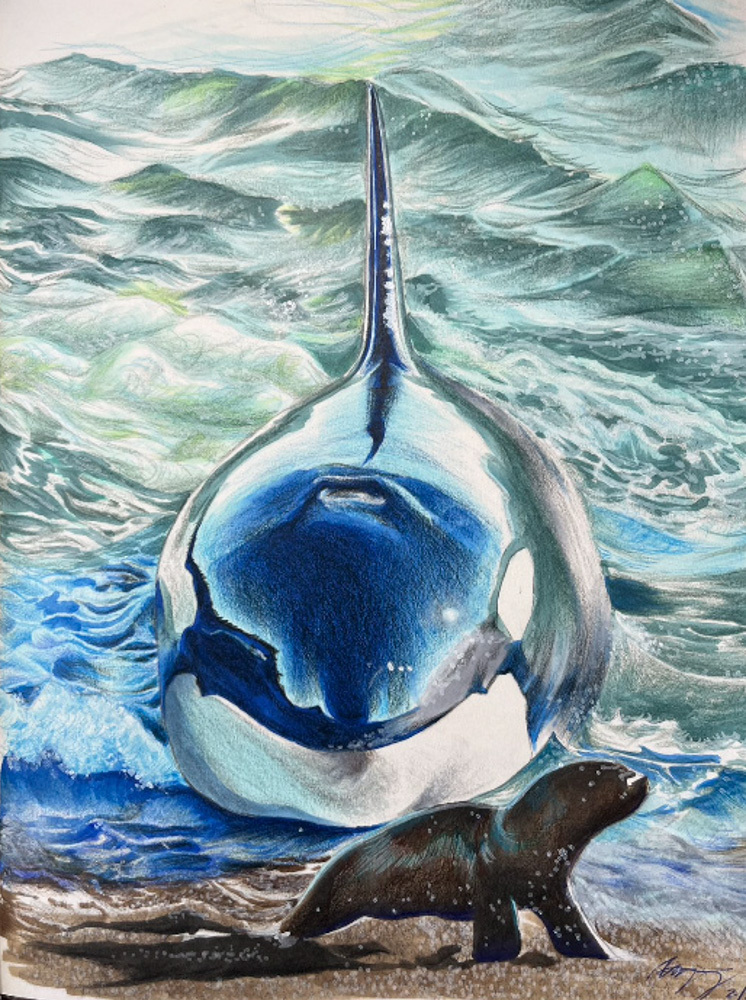
ARTIST'S STATEMENT: My artwork depicts the Orca/Killer whale, a powerful marine keystone species, as it preys on a seal along a rugged shoreline. Orcas are known for their cruel, almost murderous nature, as they prey on large mammals like seals, dolphins, and even each other. Without their presence, prey populations could grow unchecked, leading to collapses of fish, squid, and crustacean populations -- resources vital to many other organisms in ocean food chains. This piece captures the intensity and overlooked intelligence of orca predation, as it highlights the technique of intentional stranding, a hunting strategy demonstrating remarkable adaptability. The composition itself -- with the Orca looming in the background, fixated on a terrified seal -- showcases the predator's eerie presence, its essential ecological role, and the foreshadowed fate of the prey. By showcasing/choosing this apex predator, my artwork aims to emphasize the Orca's impact as a keystone species in balancing marine ecosystems.