The response to our 2025 Science Without Borders® Challenge has been overwhelming! We’ve been blown away by the sheer number of submissions we received from aspiring young scientists and artists worldwide. Last week, we proudly unveiled the finalists in the 11-14 age group, and now, we’re ecstatic to announce the finalists in the 15-19 year-old category.
These gifted students come from all over the globe, including The Bahamas, Canada, China, Greece, Japan, Indonesia, Korea, Thailand, and the United States. Their artwork brings the 2025 theme, “Marine Keystone Species,” to life in extraordinary ways. From intricate illustrations of krill and coral to impactful portrayals of sharks, sea otters, polar bears, mangroves, and more, each piece highlights the essential roles these species play in maintaining ocean balance and biodiversity.
Without further ado, please meet our talented 15-19 year old finalists! These exceptional artists have not only showcased their incredible talents but also their unwavering passion for marine conservation.
15-19 Year-Old Finalists
"Symphony of the Sea: The Critical Role of Key Species" by Muhammad Faris Izzudin, Age 17, Indonesia
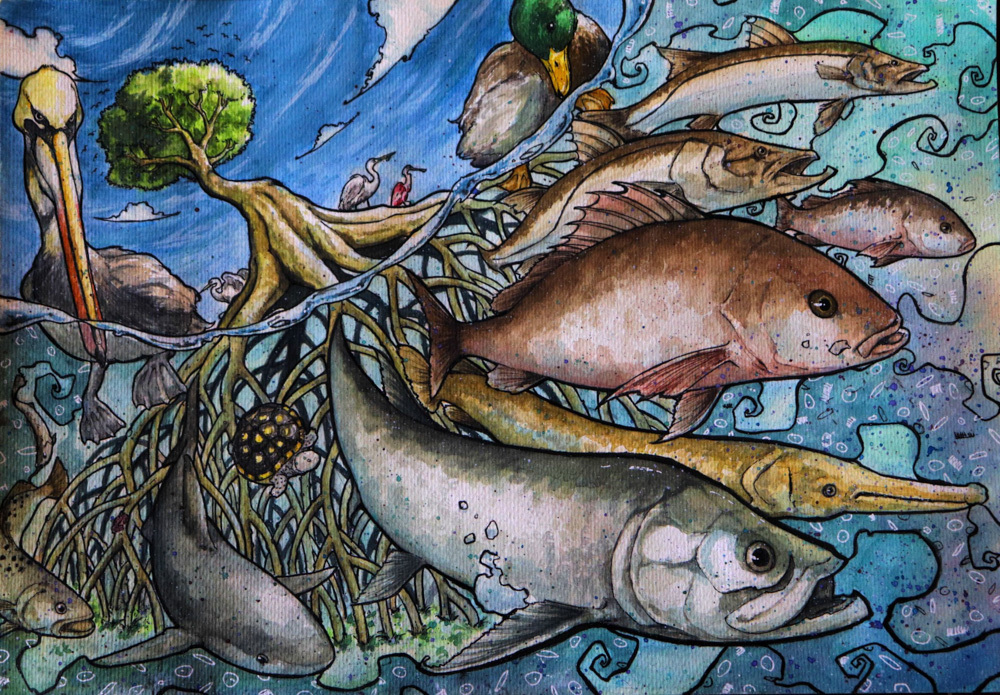
ARTIST'S STATEMENT: The artwork depicts a dynamic marine ecosystem with several key species in it, such as Tarpon, a large silver fish that is ecologically and economically important. Snapper as a carnivore influencing the coastal ecosystem. Snook, a long silver fish that contributes to the food web in estuaries and mangroves. In addition, there is the Alligator Gar as a fresh and brackish water apex predator, keeping other fish populations healthy. Then there is the Bull Shark as a marine predator having an important role in a healthy coral reef ecosystem.