The response to our 2025 Science Without Borders® Challenge has been overwhelming! We’ve been blown away by the sheer number of submissions we received from aspiring young scientists and artists worldwide. Last week, we proudly unveiled the finalists in the 11-14 age group, and now, we’re ecstatic to announce the finalists in the 15-19 year-old category.
These gifted students come from all over the globe, including The Bahamas, Canada, China, Greece, Japan, Indonesia, Korea, Thailand, and the United States. Their artwork brings the 2025 theme, “Marine Keystone Species,” to life in extraordinary ways. From intricate illustrations of krill and coral to impactful portrayals of sharks, sea otters, polar bears, mangroves, and more, each piece highlights the essential roles these species play in maintaining ocean balance and biodiversity.
Without further ado, please meet our talented 15-19 year old finalists! These exceptional artists have not only showcased their incredible talents but also their unwavering passion for marine conservation.
15-19 Year-Old Finalists
1st Place (15-19 years old): "The Keeper" by Hyungjun Chin, Age 18, Republic of Korea
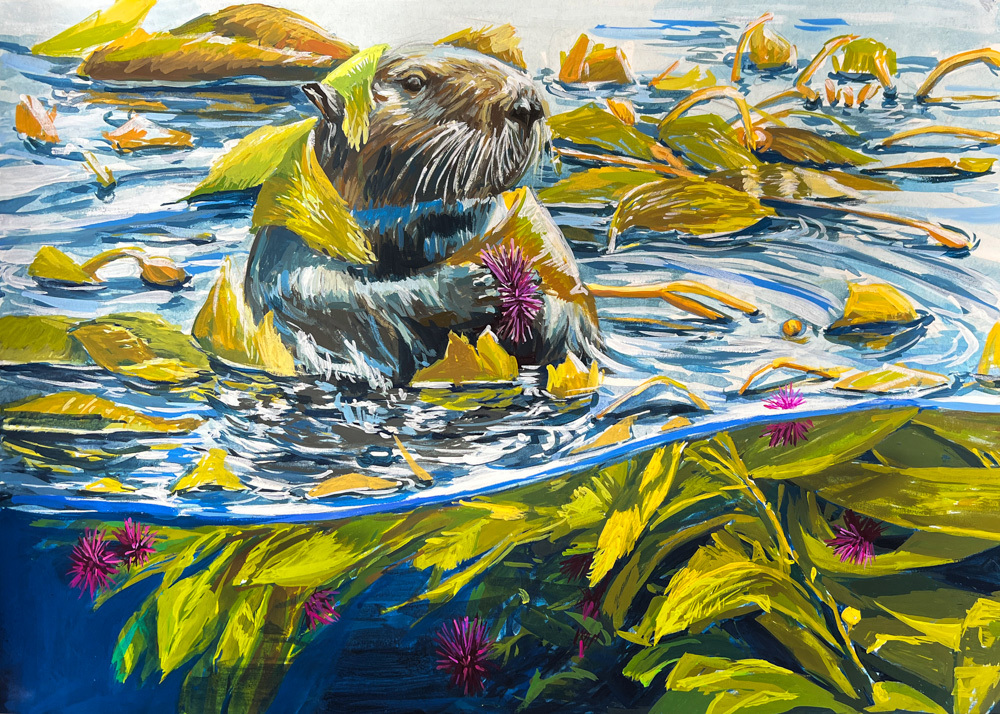
ARTIST'S STATEMENT: Sea otters are a keystone species crucial for maintaining marine ecosystems by controlling sea urchin populations and protecting kelp forests. In California, their decline led to a surge in sea urchins, resulting in overgrazed kelp forests and the creation of "urchin barrens." Conversely, areas where sea otters are protected have seen decreased urchin populations and thriving kelp forests, benefiting diverse marine life. In this painting, I represent the interconnectedness of sea otters, sea urchins, and kelp forests by depicting an otter hunting a sea urchin. This scene captures both underwater and above-water perspectives, emphasizing the vitality of the kelp forest and the otter’s essential role in ecological balance. The stark contrast between the purple sea urchins and golden kelp highlights the tension between destruction and preservation, underscoring the otter's significant environmental impact.